

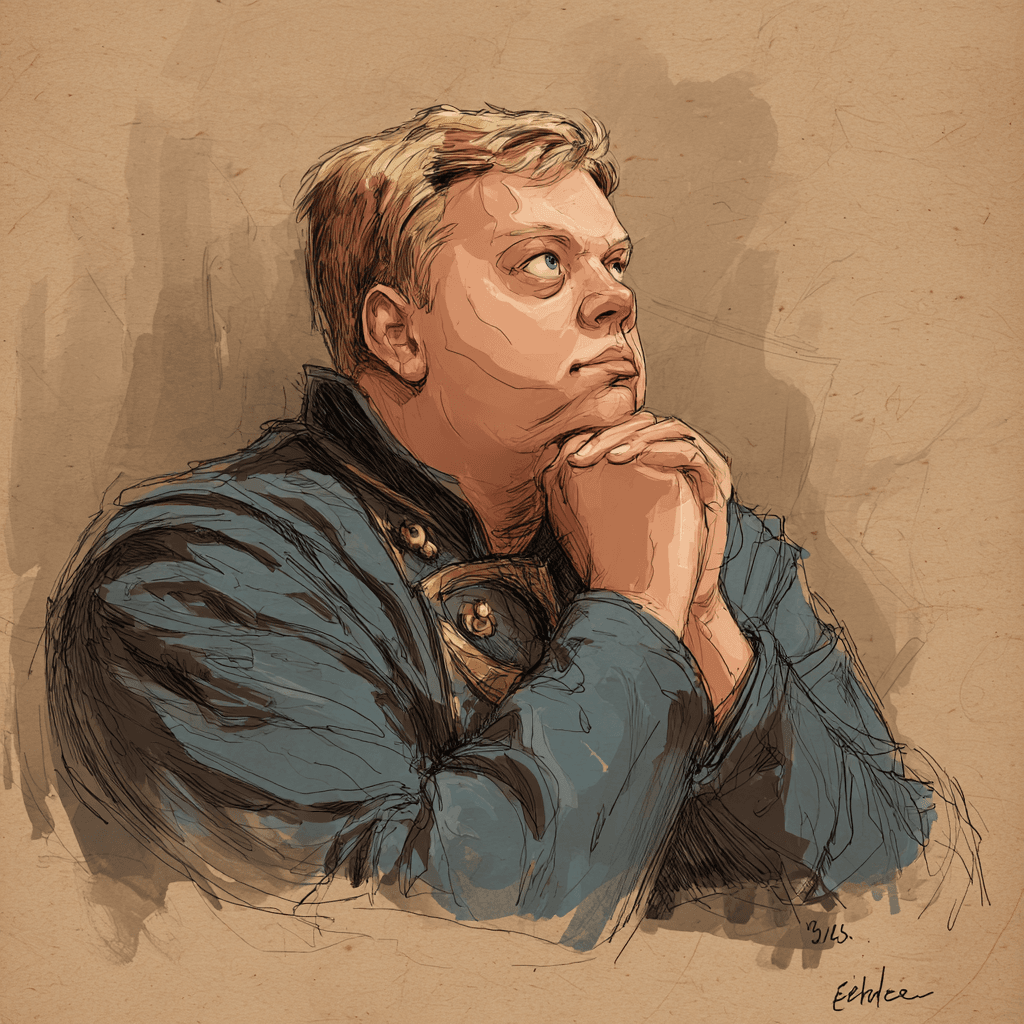
New to Disco Elysium through Epic’s 24‑hour freebie? Here’s a spoiler‑free guide to difficulty modes, building your detective, understanding dialogue checks, and using the Thought Cabinet so you actually finish and enjoy it.
If you just grabbed Disco Elysium: The Final Cut from the Epic Games Store’s 24‑hour free window, you have one of the best RPGs of the last decade sitting in your library. You also have a game that can feel opaque if you treat it like a typical combat‑heavy RPG.
Disco Elysium is about talking, thinking, failing, and role‑playing a disaster of a detective as he claws his way through a murder investigation. This guide is spoiler‑free and aimed at helping you enjoy that free copy instead of bouncing off it in the first hour.
Claim it, install it, don’t stress the timer
Epic’s holiday giveaway rotates one free “mystery game” every 24 hours. Disco Elysium: The Final Cut is in that slot for a single day; once you’ve claimed it, it is yours permanently. Even if you are not ready to start immediately, grab it during the window so you can install and play later at your own pace.
Once you are in, the game puts you through character creation and throws you into Martinaise with almost no hand‑holding. That is intentional. The trick is understanding what the game is actually asking you to decide.
Picking a difficulty mode
On a new game, Disco Elysium asks for a difficulty before you even finish making your detective. This setting quietly changes how forgiving the invisible dice are.
On Easy, more of your early skill checks succeed and the penalties for risky behavior are softer. This makes it the most welcoming choice if you mostly care about experiencing the story, hearing the voice acting, and not getting stuck. It still lets you fail often, but you will rarely slam into a wall.
On Normal, the game expects you to lean into your build, accept failure as part of the story, and pay attention to modifiers before you roll. This is the intended experience for many players and a good pick if you like tabletop RPGs.
On Hardcore, checks are less forgiving and resources like health, morale and money are tighter. This mode is best saved for a second or third playthrough when you understand how the world and timetable work.
If you are brand new and coming in through the Epic freebie, Easy or Normal will let you feel the writing and systems without turning the first few days of in‑game time into a slog.
Understanding the four stats without min‑maxing
After difficulty, the game asks you to shape your detective’s inner life with four core attributes: Intellect, Psyche, Physique, and Motorics. Each one governs six skills. This can look like a min‑max puzzle, but there is no build that “breaks” the story or locks you out of victory.
Intellect fuels logic, visual calculus, and your ability to process clues. A high‑Intellect cop is sharp, analytical, and very good at reconstructing crime scenes, but may overthink and alienate people.
Psyche governs empathy, authority, and your relationship with ideology and emotions. Leaning into Psyche turns the investigation into a strange, often spiritual experience, full of hunches, emotional cues, and political tangents.
Physique covers your health, endurance, and raw presence. It makes physical tasks safer, keeps you alive during self‑inflicted mishaps, and lets your body argue with people before your brain catches up.
Motorics shapes perception, composure, and hand‑eye coordination. This build notices small details others miss and handles delicate or risky actions, but can spiral into anxiety and paranoia.
You can pick one of the premade archetypes or build your own, but do not chase a “perfect” character. The most memorable playthroughs come from committing to a personality and accepting where your detective is lacking.
How dialogue checks actually work
Almost everything in Disco Elysium is a skill check. When a line of dialogue or an action is tagged with a skill, the game rolls dice behind the scenes and adds your skill level plus any modifiers written in the interface.
White checks, marked in white, are repeatable. If you fail them now, you can usually return later with better stats, a helpful Thought, different clothing, or new information that changes the roll in your favor.
Red checks, marked in red, are one‑and‑done. Pass or fail, the outcome sticks and becomes part of your detective’s story. These are the moments where it pays to glance at your odds and decide whether you want to lean into chaos or play it safer.
Crucially, failing is not a game over. The writing bends to your failures. A botched check may humiliate you, cost you money, or injure your health or morale, but it can also unlock new scenes, Thoughts, and character beats that you would never see by playing perfectly.
If you feel paralyzed by choice, use a simple rule: if a red check plays to your strengths, it is usually worth trying. If it leans on a stat you have dumped, consider walking away and coming back later or accepting that your detective will stumble through it in character.
Health, morale, and why cigarettes matter
Your detective has two fragile resources: health and morale. Health tracks physical harm while morale tracks psychological strain. Losing all of either can end the current run of the day and send you back to your last save.
Aggressive choices, substance abuse, and certain failures can chip away at these bars. So can pushing your body beyond what your low Physique build can handle. On the other hand, empathetic choices that undercut your Authority can dent your morale.
You can restore both resources with items you find, buy, or loot from the environment. Cigarettes, booze, and drugs often provide short‑term bonuses at a long‑term cost, mirroring the way your detective copes with his past. Early on, it is fine to lean on these to get through tough moments, but try not to use them as a crutch for every check. Their downsides stack up.
If you are nervous about failing out of the game, do not hesitate to quicksave before particularly risky red checks, especially while you are still learning how harsh certain consequences can be.
The Thought Cabinet: your inner skill tree
The Thought Cabinet is Disco Elysium’s most distinctive system. As you talk, think, and fail, your detective latches onto big ideas called Thoughts. You can internalize these in your Thought Cabinet over in‑game time.
While a Thought is internalizing, it might impose a penalty or change your inner monologue. Once it completes, it becomes a permanent modifier that can raise learning caps, provide flat bonuses or unlock new dialogue. Some Thoughts are ideological, pushing you toward certain political stances. Others are personal, tied to your past or your coping mechanisms.
For a new player, the important thing is that there is no universally “correct” set of Thoughts. They are extensions of the personality you role‑play. If you notice that your detective keeps circling around a theme in conversations, consider embracing the related Thought to deepen that role.
You can also forget Thoughts later by spending a skill point, freeing up a slot if an old idea no longer fits the person your detective has become. Treat the Cabinet as an evolving journal of who you are, not a rigid build guide.
Role‑playing your disaster cop
Disco Elysium works best if you let go of the instinct to optimize and instead decide what kind of mess you want to inhabit.
You can lean fully into competence and try to be the one sane man in a broken city, but the game is surprisingly generous to absolute wrecks. Playing a hungover cop who overshares, cries in public, or dives into doomed political debates can reveal scenes a straight‑laced run never touches.
When a skill pipes up during dialogue, it is your inner voice speaking. Logic, Inland Empire, Electrochemistry and the rest are all aspects of your psyche arguing for attention. Listening to them can guide your choices, but you do not have to obey them. Picking against their advice is a valid way to define your detective.
If you find yourself overwhelmed, focus your decisions around a few simple personal rules. Maybe you always help the vulnerable, never take bribes, or lean into every strange supernatural tangent. These self‑imposed constraints help the investigation feel like a coherent arc rather than a menu of disconnected options.
Time, days, and not getting stuck
Time in Disco Elysium only moves forward during conversations, reading, or certain actions. Walking around and thinking does not eat up the clock. Use this to your advantage by exploring freely, clicking on points of interest, and talking to everyone without worrying about wasting hours.
Major events unfold over several in‑game days. Early on, your main goal should be to make progress on obvious leads, earn enough money for lodging, and avoid completely ignoring your partner. If a character tells you something is only available later, trust that there will be time.
If you feel lost, open your journal and follow one of the smaller tasks. Many of them are optional, but almost all reward you with experience, money, or new angles on the central case.
Difficulty, build, and Thoughts working together
Your chosen difficulty influences how often your skills succeed. Your attribute spread shapes what kinds of options appear in the first place. The Thought Cabinet then reinforces or subverts that initial direction as you go.
For example, a high‑Psyche, low‑Physique detective on Normal difficulty might breeze through emotional confrontations but fail at basic physical feats. If that player internalizes a Thought that boosts Volition and shrinks Half Light, they will double down on calm resolve over raw intimidation. On Easy, the same build will pass more checks and feel more like a flawed hero than a walking breakdown.
Seeing how these elements interact is the heart of Disco Elysium. The game is happiest when your stats, your Thoughts, and your choices all push in the same direction, not toward some abstract definition of strength, but toward a sharply drawn version of your detective.
If this is your first Epic freebie like this, stick with it
Epic’s daily giveaways often include big, explosive games that explain themselves in a single trailer. Disco Elysium is not that. It starts as a man in his underwear, in a trashed room, arguing with his own necktie.
Give it a few in‑game days. Accept that you will fail checks, say regrettable things, and sometimes feel completely lost. That discomfort is part of the story the game is trying to tell about memory, trauma, and the possibility of change.
If you let your detective be a person rather than a build, your free copy from Epic will turn into a playthrough you remember long after the holiday promo ends.