
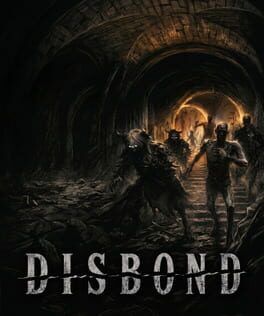

Disbond has a free Steam Next Fest demo from October 19 to 26. Here is what shooter fans should check before wishlisting the solo-developed zombie FPS.
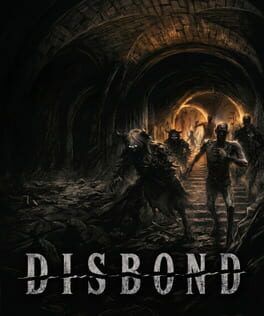
Image: IGDB
Store links: Disbond on Steam
A free demo puts Disbond’s infection pitch in front of shooter players
Disbond is using Steam Next Fest to answer the only question that really matters for a multiplayer zombie FPS: is getting turned into the monster actually fun? According to HappyGamer, solo developer Galin pitched Disbond around a grudge with the old Counter-Strike: Source zombie mod, where, in his words, “everyone hated being the zombie.” The Disbond demo is available on Steam during Steam Next Fest, which runs October 19 to 26, 2026, according to HappyGamer, Back2Gaming, Inven Global, Virus, and GamingDebugged.
That timing gives the game a useful test window. Disbond is not out yet, with HappyGamer reporting that Steam lists the full release as “Coming soon.” Back2Gaming says players can wishlist Disbond on Steam, but the provided source material does not list a price, final release date, publisher, or console plan. HappyGamer adds that Steam currently lists Windows as the only platform.
For FPS players, the Disbond Steam Next Fest demo is less about checking a box on a festival queue and more about stress-testing a design bet. Infection modes have always lived or died on momentum. Humans need enough tools to hold a line without creating an untouchable bunker, and infected players need enough agency to feel dangerous before the round is already over. Disbond is selling itself on giving both sides classes and skills, so the demo needs to prove the role swap is a second phase of the match rather than a consolation prize.
The round structure is familiar, but the pressure curve is the hook
Multiple outlets describe the same core setup. Everyone begins a round as a human. After 20 seconds, one player becomes a zombie. From there, anyone bitten by a zombie also turns, so the human team shrinks as the infected side grows. Virus phrases the tension cleanly: someone is already infected, but nobody knows who until the change happens.
That opening matters. Twenty seconds is short enough to stop teams from settling into a solved defensive pattern, but long enough for suspicion, positioning, and early routing to matter. In an infection shooter, the first converted player is effectively the round’s opening pick. If that player can isolate a weak angle or punish a greedy rotation, the whole lobby changes tempo. If the initial zombie gets farmed with no counterplay, the mode risks becoming target practice until the numbers flip.
The demo should make that answer visible fast. Watch whether human players naturally clump, scatter, or rush predefined strongholds. Watch whether the first zombie has enough mobility, durability, disguise potential, or map knowledge to start the chain. Inven Global reports that Disbond gives distinct classes and skills to both humans and zombies, while Virus reports eight classes split across the factions. Those systems are the difference between a party mode and a repeatable multiplayer loop.
Classes could solve the zombie-side problem, if they create real jobs
The strongest reported idea in Disbond is that the zombie side is being treated as playable class design instead of a penalty state. HappyGamer says Galin’s pitch was built directly around fixing the old zombie-mod frustration, and Inven Global reports that the developer focused on fun over realism while drawing inspiration from Unreal Tournament, Doom, Quake, Counter-Strike 1.6, and Counter-Strike: Source’s Zombie Mode.
Virus reports that Disbond has four human classes and four zombie classes, each with abilities. It gives two examples: Architect can place cheaper props and use them for traps or disguises, while Demon can double jump and briefly turn into a survivor. HappyGamer’s account notes that the press email it received did not list individual classes, so the public coverage is uneven on the class roster. What is consistent across sources is the larger claim: both sides have distinct roles rather than a simple humans-shoot, zombies-run structure.
That is where shooter fans should focus in the Disbond demo. Class count means little if one option becomes mandatory and the rest exist as lobby decoration. The human side needs roles that interact with map control, escape routing, and barricade economy. The zombie side needs jobs that break defensive habits without feeling like cheap hard counters. A class that can disguise itself as a survivor, as Virus reports for Demon, immediately raises questions about readability. Can humans identify the fake through movement, audio, timing, or team awareness, or does it become random betrayal? A class-based infection FPS needs deception, but it also needs counterplay that skilled players can learn.
Survival and Escape ask for different gunfight habits
Disbond’s maps are reported to come in two types. HappyGamer and Inven Global describe Survival maps as holdout spaces where humans barricade and survive against the infected. They describe Escape maps as routes where players push toward an end point while zombies chase and pressure them. Virus adds that Escape asks players to reach a goal on the other side of the map while fighting zombies and taking key positions.
Those two formats should not feel like reskins. Survival tests whether static defense is interactive. If every round becomes humans stacking props into the same doorway, the skill ceiling will flatten. If zombies can create pressure from multiple lanes, spend abilities to break setups, or exploit destructible routes, the mode gets room to breathe. Virus reports that physical objects play a major role, with humans placing them for barricades and zombies using them to create routes to areas they otherwise could not access. Virus also says part of the environment can be destroyed, meaning strong defensive positions may degrade over the round.
Escape has a different problem. Chases are only interesting if pacing stays unstable. GamingDebugged reports that Disbond includes map traversal tools such as cannons, ziplines, and teleports, plus weapons bought using kill currency. Those details point to a game that wants movement routes and fight economy to matter, not a straight hallway sprint. In the demo, the best sign will be whether teams have multiple viable timings: slow and fortified, fast and risky, or split pressure around key positions. If one optimal path dominates after a few rounds, wishlisting becomes a question of how many maps and tools the full game can add before launch.
The solo-developed scope is ambitious, and the demo has to show its seams honestly
Back2Gaming reports that Disbond is developed entirely by one person, citing a September 23, 2026 developer announcement. HappyGamer also reports that Galin said he built the multiplayer zombie FPS on his own. That context matters because Disbond is taking on several hard problems at once: multiplayer readability, asymmetrical balance, physics props, destructible environments, bots, class abilities, and up to 32-player matches.
Virus reports Disbond supports up to 32 players, with bots filling positions when there are not enough players. It also reports matches last about 30 minutes through rounds of up to five minutes. For a solo developer, that is a big networking and design workload. The sources provided do not include hands-on performance testing, server details, regional matchmaking information, system requirements, or netcode claims. So the practical read is simple: treat the Disbond Steam demo as a technical audition.
In a shooter, rough edges are not equal. Placeholder art or limited UI polish can be survivable in a festival demo. Input delay, hit registration issues, unreadable enemy animations, rubber-banding, broken spawn logic, and bot behavior that warps the match are much more serious. If the demo is populated, test how melee infection reads under pressure. If it is not, see whether bots create useful rounds or merely fill the scoreboard. Virus says bots can fill empty positions, which is good for access, but infection modes need believable pressure and routing to teach the real game.
No unlock grind is a smart call for this kind of FPS
One of the more competitive-friendly details comes from Virus, which reports that each round starts without classic grinding, leveling, or unlocking that would give experienced players an advantage. GamingDebugged similarly says skill is the focus and that there is no unlock grind or progression system in sight. For an infection shooter launching through a demo, that is the right direction.
Progression can be useful for retention, but it can poison an asymmetrical mode quickly if veterans enter with stronger tools while new players are still learning sightlines and class tells. Disbond already has enough volatility through the 20-second infection trigger, class abilities, barricade construction, and shifting team sizes. Keeping round power tied to play inside the match, such as GamingDebugged’s reported kill currency for weapon buying, gives the game a cleaner competitive baseline.
The demo should show whether that economy snowballs too hard. If the best human aimers can farm early currency and lock down the map before zombies have answers, the infection fantasy breaks. If zombie momentum becomes unstoppable after the first bite, human weapon choices may feel decorative. Good infection balance lets both sides feel like they are one smart play away from swinging the round.
What to test before you wishlist Disbond on Steam
If you are coming to the Disbond Steam demo as a shooter player, do not judge it only on whether the premise sounds fun. Use the Next Fest window to check the fundamentals that determine whether the full game has legs. First, test gunfeel. The sources position Disbond around old-school shooter roots, with Inven Global and HappyGamer both citing inspirations like Unreal Tournament, Doom, Quake, and Counter-Strike 1.6. That sets an expectation for clear movement, fast reads, and responsive fights. The demo needs to feel sharp enough to support that lineage.
Second, test the zombie experience on purpose. Let yourself get infected in a few rounds. Try the mobility tools, class abilities, flank routes, and any disguise or pressure options the demo exposes. Disbond’s pitch depends on the zombie side being a role worth playing, and the only useful question is whether you would still stay in the lobby after turning.
Third, test map flow across both reported formats. Survival should create tense defensive decisions without one unbeatable room. Escape should force forward movement without becoming chaos that ignores aim and positioning. If the demo includes only a slice of the full map pool, remember HappyGamer’s note that Galin offered a full-version Steam key with all maps, which suggests the demo may not represent the entire finished set.
Confirmed details are enough to make Disbond worth a look during Steam Next Fest: the demo is free during the October 19 to 26 event, the game is a solo-developed multiplayer zombie FPS, Steam is the wishlist destination, Windows is the only platform reported in the provided material, and the full release is still listed as coming soon. The open questions are the ones that matter most for an FPS: netcode, hit registration, class balance, map durability, bot quality, and whether 32-player infection chaos can stay readable. That is exactly what the Disbond demo should help players decide before they wishlist.