
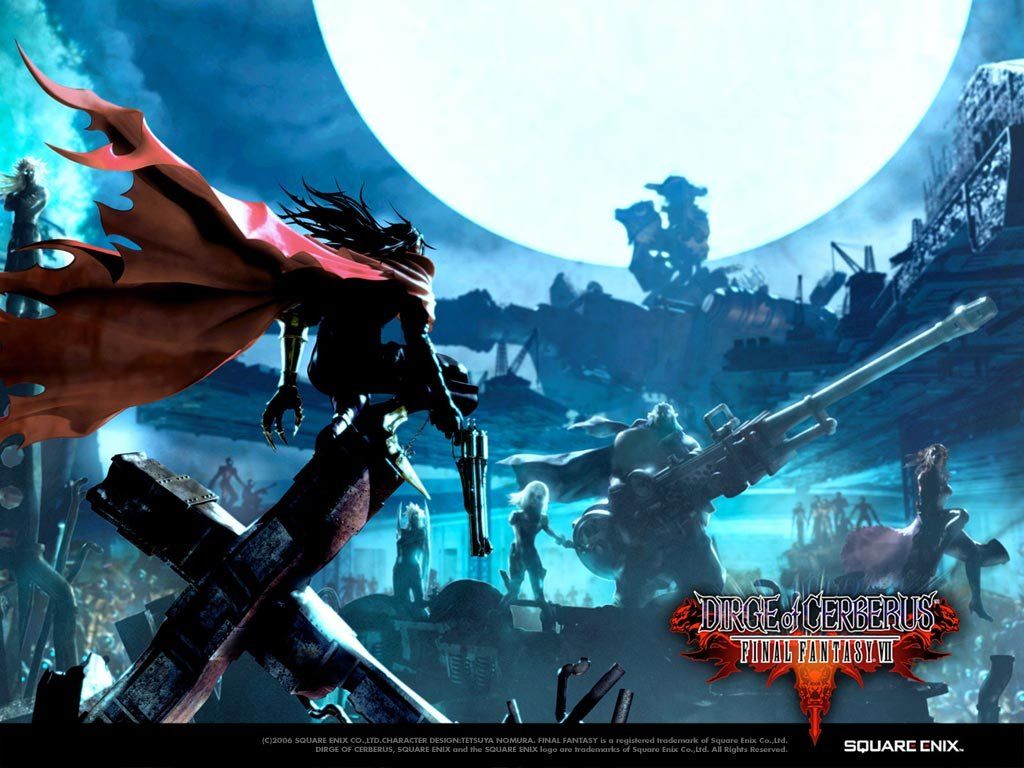
Twenty years after its Japanese launch, Dirge of Cerberus remains the strangest Final Fantasy 7 spinoff: a Vincent Valentine shooter with real RPG systems, tangled Compilation lore, and no confirmed modern release.
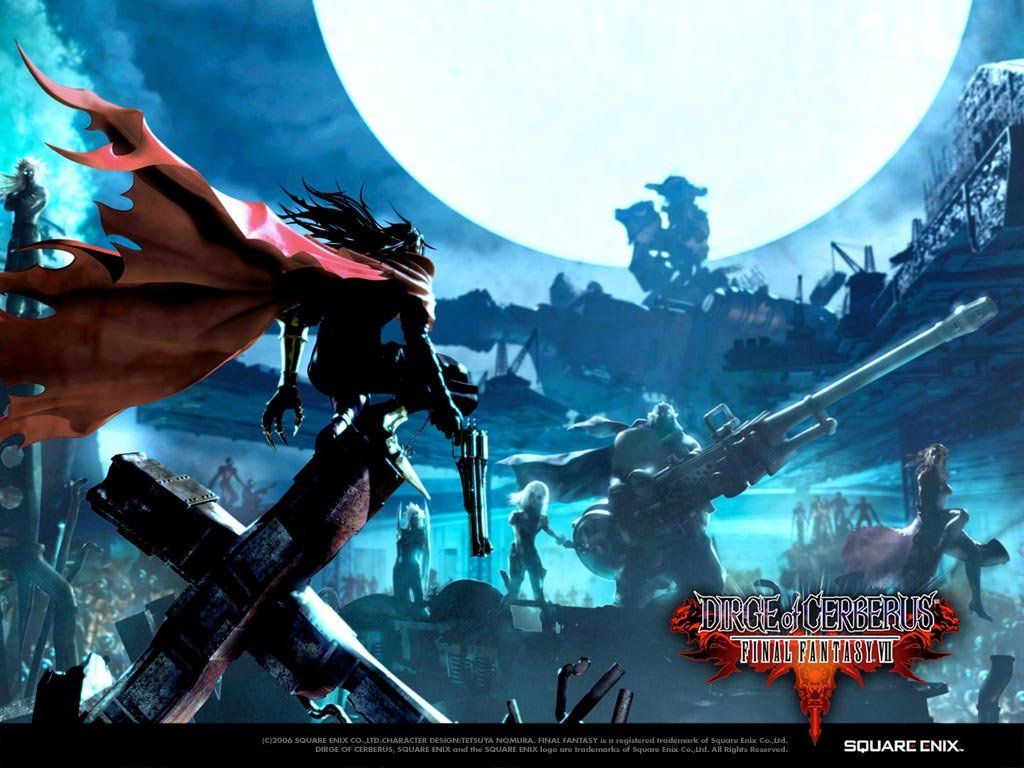
Image: sea.ign.com
The Dirge of Cerberus anniversary arrives without a modern lifeline
Dirge of Cerberus: Final Fantasy VII turns 20 in 2026, counting from its January 26, 2006 Japanese release date listed by Wikipedia, and the anniversary lands in a strange position: the game is old enough to be reassessed, lore-relevant enough to keep coming up in Final Fantasy VII conversations, and still absent from the source record as a confirmed modern rerelease.
Wikipedia’s listing identifies Dirge of Cerberus as a PlayStation 2 game developed and published by Square Enix, with subsequent North American and European releases in 2006 and an International version in Japan in 2008. None of the provided source material includes a Square Enix announcement for a remaster, remake, PC port, subscription release, price, platform list, or anniversary edition. For readers searching the Dirge of Cerberus anniversary hoping for a clean way to play it alongside modern Final Fantasy VII games, that is the practical answer: there is no confirmed new release here.
That absence creates the real story. Dirge of Cerberus is not obscure because it lacks a hook. It stars Vincent Valentine, expands Shinra’s hidden experiments, introduces Deepground, and builds an entire action game around gun customization. It is obscure because the thing it tried to be in 2006 remains difficult to package in 2026: a third-person shooter sequel to one of the most famous RPGs ever made, carrying important lore inside a game whose genre, reception, and version history all complicate a straightforward comeback.
A Final Fantasy 7 spinoff from Square Enix’s experimental era
Polygon frames the mid-2000s as an unusually experimental period for Final Fantasy 7, before the shared-universe model became routine across media. Square Enix was expanding the world of the 1997 game across formats and genres: Advent Children continued Cloud’s story as a CGI film, Before Crisis made the Turks protagonists in a Japan-exclusive mobile game before smartphones were commonplace, Last Order retold the Nibelheim Incident as anime, and Crisis Core reworked Final Fantasy into an action RPG centered on Zack Fair.
Dirge of Cerberus belongs to that same Compilation of Final Fantasy VII push, which the Final Fantasy Wiki describes as a sub-franchise built around prequels and sequels that expand the original game’s world and story. But even inside that already unusual lineup, FF7 Dirge of Cerberus stands apart. Crisis Core could still be understood as an RPG translation of Final Fantasy 7’s character drama. Advent Children used film to sell spectacle and aftermath. Dirge of Cerberus took Vincent, the optional party member most closely associated with firearms, and asked whether Final Fantasy’s progression logic could survive inside a shooter.
That decision is the core of its lingering oddness. The game was not a side story in the familiar mechanical language of Final Fantasy 7. It made the player inhabit the Compilation through over-the-shoulder gunplay, real-time combat, and mission-like levels. Polygon calls it one of Square Enix’s bold experiments, and that description fits because the game was not merely changing perspective. It was testing whether the RPG audience would follow a beloved world into a form associated at the time with Max Payne, Dead to Rights, Gungrave, and Resident Evil 4, titles Polygon cites as part of the era’s shooter and action backdrop.
Vincent Valentine was the right character for the wrong commercial problem
On paper, Vincent was the most defensible Final Fantasy 7 character to build a shooter around. In the original party, he already fights with guns. His visual identity is all cloak, gauntlet, and gothic restraint. A brooding firearm specialist fits the mid-2000s appetite for darker action heroes far more naturally than Cloud, Tifa, Aerith, or Barret would have fit the same structure.
The development record still shows how awkward that pivot was. Wikipedia describes Dirge of Cerberus as the first shooter game in the Final Fantasy series, and says the staff encountered various problems during development. The same summary says producer Yoshinori Kitase found the experience challenging, and that the team added role-playing elements to make the game more entertaining for traditional fans of the main series. That detail matters because it reveals the central design compromise: Square Enix was not simply making a shooter with Final Fantasy branding. It was trying to reassure RPG players while also chasing a style of play that worked by very different rules.
The international release history adds another layer. Wikipedia notes that when Dirge of Cerberus was released outside Japan, several aspects of gameplay were modified to make it more appealing, and that Square Enix later republished the game in Japan in 2008 with the Western updates as Dirge of Cerberus International. That is a useful clue for why bringing it forward is not as simple as celebrating an anniversary with a store listing. Even at the time, Square Enix treated the game as something that needed adjustment for different audiences.
The progression systems are stronger than the game’s reputation suggests
The reason Dirge of Cerberus remains worth discussing from an RPG perspective is that its most interesting ideas live in its progression systems, not in the novelty of seeing Vincent shoot soldiers. Polygon points to the weapon customization as one of the game’s more ambitious features, noting that instead of handing Vincent a simple chain of stronger guns, the game lets players customize three gun slots with frames, barrels, scopes, materia, and accessories.
That structure is pure Final Fantasy thinking translated into a firearm interface. A frame changes the identity of a weapon. A barrel and scope push it toward different combat ranges and handling priorities. Materia keeps the shooter connected to the series’ language of magic and elemental utility. Accessories give the build another layer beyond raw damage. The result, at least in concept, is a progression model built around loadout decisions rather than a single upward stat ladder.
Polygon also tempers that praise, saying the shooting feels dated by 2026 standards, enemy AI is not revolutionary, and some levels overstay their welcome. Those criticisms are important because they show the divide between Dirge of Cerberus as a system design curiosity and Dirge of Cerberus as an action game someone might buy today. The customization gives players meaningful knobs to turn, but the surrounding shooter fundamentals were already contested at release and have aged in a genre where aim feel, encounter design, enemy behavior, and pacing are judged harshly.
That is also why a modern rerelease would invite harder questions than a standard resolution bump. If Square Enix preserved Dirge of Cerberus exactly, it would be preserving the dated parts along with the interesting ones. If it reworked the feel of combat, it would be moving toward remake territory, where every adjustment risks changing the identity of a game whose main historical value is its strange hybrid design.
Its lore is consequential, messy, and hard to detach from the Compilation
Dirge of Cerberus is set three years after the events of the original Final Fantasy VII, according to Wikipedia, and focuses on Vincent Valentine as he is targeted by Deepground, a mysterious organization planning to awaken Omega, a creature with the ability to destroy the Planet. That premise gives the game a sequel-sized threat rather than a disposable side mission. It is not a small character vignette tucked safely away from the main mythology.
The Final Fantasy Wiki’s Dirge of Cerberus pages reinforce how much bespoke material the game carries. Its character coverage separates Deepground, the World Regenesis Organization, flashback figures, and multiplayer-related characters. Its enemy listing groups foes into monsters, Deepground, Machine Assault Units, Tsviets, and Omega. Even without treating every wiki detail as editorial interpretation, the structure of those listings shows the scope of the material Square Enix attached to this one PlayStation 2 release.
That scope is part of the problem. Dirge of Cerberus gives Vincent a fuller dramatic arc tied to guilt, Lucrecia, Shinra’s experiments, and his own transformation, as Polygon describes in its anniversary reassessment. It also introduces Deepground as a hidden military force beneath Midgar, expanding Shinra’s sins into another layer of secret infrastructure. For lore-focused players, those are reasons to want the game preserved. For Square Enix, they are also reasons a rerelease would put some of the Compilation’s most divisive and densely serialized ideas back in front of a broad audience.
The modern Final Fantasy 7 audience is larger and more varied than the group that followed every Compilation release in the 2000s. Some players know the original game. Some know the later remakes. Some know Crisis Core. Many have never touched Before Crisis or Dirge of Cerberus. A clean revival would need to decide whether Dirge stands as historical context, an essential sequel, or a curiosity for players who want every branch of the Compilation.
Square Enix has not given a confirmed reason, but the risk is visible
The provided sources do not include a statement from Square Enix explaining why Dirge of Cerberus has not been brought forward with a modern release. Any direct claim about the company’s internal reasoning would be speculation. What the sources do confirm is enough to explain why this specific Final Fantasy 7 spinoff is a difficult candidate.
First, its reception was not clean. Wikipedia says Dirge of Cerberus received a mixed critical reaction, while Polygon notes that it drew a level of derision beyond other Compilation projects. Second, its genre creates an expectation problem. A third-person shooter in the Final Fantasy VII universe may have been a bold fit for Vincent, but it also placed the game in comparison with action titles whose strengths were very different from Square Enix’s traditional RPG expertise. Third, its versions differ. The Western releases modified gameplay, and the 2008 Japanese International version incorporated those updates, which raises the immediate preservation question of which Dirge of Cerberus a modern audience should get.
There is also the multiplayer complication. Wikipedia lists the game as both single-player and multiplayer, and the Final Fantasy Wiki has separate multiplayer story and character categories. The provided material does not detail the current status or technical implementation of that mode, so it would be wrong to make claims about server requirements or restoration plans. Still, from a product perspective, any modern release would need to clarify whether it includes, omits, replaces, or archives multiplayer content. That is a heavier lift than rereleasing a self-contained single-player RPG.
Seen that way, the lack of a confirmed anniversary release is less surprising. Dirge of Cerberus is valuable as history, but history is not the same thing as an easy commercial pitch. A faithful port would expose a new audience to old shooter friction. A remaster would still need to make version and feature decisions. A full remake would demand design resources for a project with a documented mixed reception.
How players should approach FF7 Dirge of Cerberus now
If you are trying to keep up with Final Fantasy VII games in 2026, treat Dirge of Cerberus as an important but unresolved branch of the Compilation rather than as a title with an anniversary comeback on the calendar. The confirmed source record supports its original PS2 release history, its International revision in Japan, its role as a Vincent Valentine sequel set three years after Final Fantasy VII, and its mixed reputation. It does not support any current release date, platform, price, preorder page, upgrade path, or performance target.
For lore completionists, Dirge remains significant because it deals with Vincent directly and introduces Deepground and Omega into the wider FF7 mythology. For systems-minded players, it is worth remembering because its gun-building approach tried to express RPG choice through frames, barrels, scopes, materia, and accessories. For action players coming to it fresh, Polygon’s caveats about dated shooting, limited enemy AI, and uneven level pacing should set expectations.
That combination explains why the game still fascinates. Dirge of Cerberus is the Final Fantasy 7 spinoff that feels least natural and, for that reason, most revealing. It shows Square Enix at a moment when the company was willing to stretch Final Fantasy VII into film, anime, mobile storytelling, action RPG design, and third-person shooting. Twenty years later, the question is no longer whether the experiment was smooth. It was not. The question is whether Square Enix sees enough value in preserving the strangest part of the Compilation for players who want the full, uneven shape of Final Fantasy VII’s expanded universe.