
Breaking down The Dark Pictures Anthology: Directive 8020’s May 12 launch date, its paranoid sci‑fi setting, new co‑op structure, and how it stacks up against Until Dawn and the rest of Supermassive’s horror catalog.
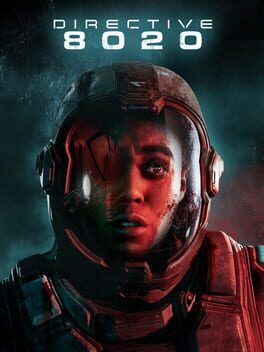
Supermassive’s long‑teased space horror finally has a locked‑in arrival window. The Dark Pictures Anthology: Directive 8020 lands on PS5, Xbox Series X|S, and PC on May 12, 2026, after slipping out of its original 2025 slot. With that date comes a clearer picture of what this first "Season 2" chapter in The Dark Pictures actually is: a paranoid sci‑fi whodunnit about identity, trust, and the cost of command when the thing you’re fighting can wear your face.
Directive 8020 is still very much a Supermassive game, with branching paths, five playable leads, and horrible, permanent ways for them to die. But its shift from haunted ghost towns and cursed warzones to deep‑space colonization gives the team license to stretch in ways the anthology hasn’t before, both narratively and structurally.
A new mission for The Dark Pictures
Where Man of Medan riffed on ghost‑ship urban legends, Little Hope brought folk horror to a foggy New England town, and House of Ashes dug into underground creature feature territory, Directive 8020 leaves Earth behind. The story is set 12 light years away around Tau Ceti f, with humanity hitching its hopes to the colony ship Cassiopeia after Earth’s decline.
The voyage doesn’t go as planned. Cassiopeia crash‑lands, the crew is marooned between the broken ship and an unnervingly quiet alien world, and something else is there with them. Supermassive has been open about the inspirations this time, pointing straight at John Carpenter’s The Thing. An alien entity capable of creating perfect doppelgangers infiltrates the crew, and the horror isn’t just about being hunted, but about being replaced.
Previous Dark Pictures entries flirted with paranoia, but they were usually built around a cast that slowly comes to realize there is a monster or a curse. Directive 8020 starts from the premise that the threat has already seeped into every interaction. When you step into a dialogue choice here, you are not just steering relationships; you are constantly asking whether the person across from you is still the person you met at the beginning of the mission.
Visually and thematically, that makes this the most clinical and modern of the anthology’s settings. Sterile corridors, sealed airlocks, suits and helmets fogged with breath, harsh white light giving way to sickly green and crimson when things go wrong. There are sequences on the surface of Tau Ceti f as well, but everything shown so far frames the planet less as a place to explore and more as a vast, indifferent backdrop to the breakdown of a tiny human community that never should have come here.
Supermassive goes all‑in on sci‑fi body horror
Supermassive’s horror has usually leaned on ghosts, cults, and folkloric creatures, often recontextualized in more grounded ways by the finale. Directive 8020 is the first time the studio is centering overt alien biology, and it looks to be leaning into body horror in a way that makes even House of Ashes’ subterranean monsters feel restrained.
That doppelganger premise is key. It allows for a kind of horror that can play out in quiet, domestic scenes in the ship’s mess hall as easily as during frantic chases. A crewmate can come back from a routine maintenance task and seem a little off. A character you controlled a chapter ago might not be the same thing you are talking to now. The game can weaponize close‑up facial capture and micro‑expression in a way that plays to Supermassive’s strengths, turning long, lingering dialogue shots into moments of dread.
It also positions Directive 8020 as a story about contagion and corruption, questions Supermassive has dabbled in but never foregrounded. The Cassiopeia is not just a haunted house in space; it is a petri dish where fear, mistrust, and infection all spread at once. The more the crew fractures, the easier it becomes for the alien presence to hide in plain sight.
Co‑op on the Cassiopeia: how multiplayer works this time
The Dark Pictures Anthology has always been secretly built for company. Shared‑controller movie nights and the official Movie Night mode turned Until Dawn’s spiritual successors into party staples for the right crowd. Directive 8020 pushes into more structured co‑op while still keeping that living room chaos intact.
At launch, Directive 8020 supports solo play and up to five players in local shared‑controller co‑op, continuing the anthology’s tradition of assigning specific protagonists to specific players. Each person becomes the guardian of their chosen character’s fate, taking over the pad whenever that crewmember’s chapter begins. Supermassive structures scenes so that players will routinely see situations only from their character’s limited perspective, which feels especially potent in a story that hinges on uncertainty and mistrust.
Online co‑op is also in the mix, but in a different way. Instead of dropping at launch, Supermassive is rolling it out in a free post‑launch update. Once it arrives, you can expect a mode more in line with the anthology’s earlier Shared Story option, where two players inhabit different characters in overlapping timelines. On a ship where an alien presence is impersonating crew, it’s not hard to imagine how effective that can be.
Picture one player seeing a crewmate walk into engineering for a supposedly routine fix, while the other has already watched that same crewmate die horribly in an earlier scene. Voice chat becomes an in‑universe argument about who to trust, and the script can lean into fragmented information to create conflict not just between characters, but between the players driving them.
Co‑op also ties directly into Directive 8020’s new structural hook, Turning Points. These are specific decision nodes where the game lets you rewind and reconsider a choice without starting from scratch. In solo play, that is essentially a built‑in second chance system that sits somewhere between a visual novel save scum and a roguelite meta progression. In co‑op, it becomes an instant, heated debate about whether to accept the awful thing that just happened or risk an even worse outcome by rolling back.
Supermassive has stressed that Turning Points are optional. You can disable them entirely for a harsher, more traditional Dark Pictures experience where every slip of the thumb or panicked QTE failure is permanent. For players who loved the merciless finality of an Until Dawn session, that switch goes a long way toward accommodating both approaches.
How Directive 8020 sits alongside Until Dawn
Any new Supermassive horror project still has to answer to Until Dawn. It is the studio’s breakout hit, the one that proved there was an audience for lavish, performance‑driven slasher homages you play with a controller. The Dark Pictures Anthology has spent years trying to bottle that same lightning in a more experimental, seasonal format, with mixed success. Directive 8020 feels like the first time the anthology has the production values and conceptual focus to stand toe‑to‑toe with its older cousin rather than just evoke it.
Like Until Dawn, Directive 8020 builds itself around a tight ensemble cast and a single terrible night, even if the setting has hopped from an isolated mountain lodge to an off‑world colony ship. The emphasis on performance, including recognizable screen talent fronting the crew, brings back that sense of playing a prestige TV miniseries where everyone might die.
Structurally, though, Directive 8020 is more aggressive. Until Dawn’s branching was dense but hidden, mostly locked to one playthrough at a time. The Dark Pictures games pulled that structure into the open with their Curator, their obvious "bearing" notifications, and menus tracking who lived and died. Directive 8020 adds Turning Points to that toolbox, effectively making the timeline itself part of the horror. The ability to rewind a disastrous call in a crisis is powerful, but the act of choosing whether to do so forces players to confront their own attachment to these characters in a way Until Dawn left more abstract.
The sci‑fi angle also shifts what Supermassive can do with tone. Until Dawn was a love letter to teen slashers, forever returning to the rhythms of that subgenre. Directive 8020 sits closer to cosmic and body horror, with room for philosophical questions about what makes a person "them," what humanity is owed by the universe, and how far we should go to secure a future once Earth has failed. That does not mean it will be subtle, Supermassive’s work rarely is, but it gives the script more space to be weird and alien in ways the mountain cabin and small town settings simply could not.
If Until Dawn was the studio’s Scream, Directive 8020 aims for something closer to The Thing spliced with a doomed colonization story. That is a big tonal swing, and it helps the anthology as a whole feel less like a parade of genre exercises and more like a laboratory where Supermassive can try out different flavors of horror.
Expectations heading into May
With the May 12 release date set and a pre‑order Deluxe upgrade tossing in cosmetic packs, filters, and behind‑the‑scenes extras, Directive 8020 is positioned as a statement piece for the new Dark Pictures season. It follows several anthology entries that, while often enjoyable in couch co‑op, struggled with pacing, production budget, or twists that undercut their own scares.
Directive 8020’s setting and premise counter those weaknesses on paper. A single, confined location with a small, clearly defined cast plays to Supermassive’s strengths, while an alien threat that can mimic anyone naturally supports both replayability and tense multiplayer arguments. The promise of robust local co‑op out of the gate and online co‑op shortly after gives the game a long tail, especially for players who treat these releases as annual horror night events.
The real question is whether the studio can tighten up its familiar rough spots in animation timing, QTE clarity, and ending cohesion. If it can, Directive 8020 has a strong shot at being talked about in the same breath as Until Dawn, not just as "the one in space" but as the rare anthology chapter that feels like an essential horror story in its own right.
For now, the Cassiopeia is on a collision course with launch week. Supermassive has seven months to convince horror fans that their next nightmare should trade creaking floorboards for humming bulkheads and the blowing snow of Blackwood Mountain for the howling emptiness between the stars. On the strength of the premise, the co‑op focus, and that release date finally locked in, Directive 8020 looks like the boldest Dark Pictures experiment yet.