
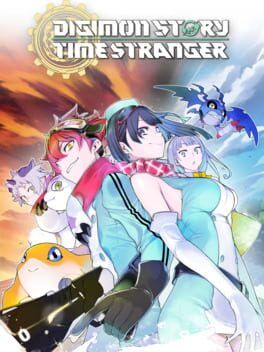

How Digimon Story Time Stranger’s Switch and Switch 2 ports fit into Bandai Namco’s cross‑gen strategy, what the new versions include, and how the series is answering modern monster‑collecting rivals.
Bandai Namco is turning Digimon Story Time Stranger into a proper cross‑gen flagship. After clearing a million sales on PS5, Xbox Series X|S, and PC, the time‑hopping RPG is finally heading to Nintendo’s ecosystem on July 10, landing on both Switch and Switch 2 with a surprisingly consumer‑friendly upgrade plan and performance options.
For Digimon fans who have been watching the series sit out the original Switch for years, this is the big catch‑up moment. For everyone else, it is a chance to see how Bandai Namco plans to position Digimon against the next wave of monster‑collecting competition on Nintendo hardware.
What Digimon Story Time Stranger Actually Is
Time Stranger is the latest entry in the Digimon Story line, following Cyber Sleuth and Hacker’s Memory. It mixes classic JRPG structure with monster raising and a setting that jumps between real‑world cityscapes and the Digital World.
You play as an ADAMAS agent, an investigator pulled into a crisis that threatens to collapse both the Human World and Digital World across multiple eras. The campaign is built around hopping through time, cleaning up paradoxes, and tracking a mystery villain whose actions are rewriting history. That structure lets the game move you between grounded locations, more abstract digital dungeons, and alternate versions of familiar areas that change as the plot spirals out.
Moment to moment, Time Stranger plays like a turn‑based party RPG. You recruit, train, and Digivolve a roster of more than 450 Digimon, building teams around type matchups, status setups, and combo skills. Battles are arranged on a turn order timeline, so controlling speed and exploiting weaknesses is as important as raw level grinding. A lot of the long‑term depth comes from the evolution web. You can steer a single partner through multiple branches, de‑evolving and re‑evolving to chase different passives or forms, which gives the late game a strong sense of tinkering rather than just pushing up numbers.
Outside combat, the Digifarm returns as a management hub. You drop partners into different farm islands, assign them training or quest tasks, and decorate with items that can influence growth or drop rates. Story pacing is fairly linear, but side cases and farm requests provide extra context on the world and give veterans some of the low‑key character moments the series is known for.
For newcomers, the key point is that Time Stranger is a self‑contained story. You do not need to have played any prior Digimon Story game to follow the plot, and the narrative spends time reintroducing the Digital World and its rules without drowning you in continuity.
What The Switch And Switch 2 Ports Actually Include
Bandai Namco is not treating the Nintendo versions as cut‑down afterthoughts. Content wise, Switch and Switch 2 get the full package that debuted on other platforms.
All of the main story, side quests, and Digifarm systems are present, along with the full roster of 450 plus Digimon and the same robust Digivolution grid. The digital Deluxe and Ultimate editions come across intact too, complete with Cyber Sleuth callback costumes, bonus missions, and Season Pass access to the three planned DLC packs that add new story episodes and additional Digimon.
The interesting part is how Bandai Namco is handling performance and upgrades between Switch and Switch 2.
Switch 2 Graphics Modes And Performance Targets
On Switch 2, Time Stranger offers two distinct modes. Quality mode pushes resolution and image treatment as far as Nintendo’s new hardware allows. Docked, the game targets up to 4K with HDR support at 30 frames per second. In handheld, Quality mode runs at 1080p at 30 frames per second. It is aimed at players who care more about crisp character models and clean UI than high frame rates.
Performance mode dials visuals back to a 1080p target in both docked and handheld, but raises the frame rate ceiling to 60 frames per second. For a turn‑based game, smoothness might not sound essential, yet the difference is still meaningful when you layer in flashy attack animations, busy UIs, and heavy particle effects in multi‑Digimon battles. Coming from the more modest PS4‑era Cyber Sleuth releases, seeing a Digimon Story game approach 60 on a Nintendo handheld is a notable step up.
The Nintendo Life and Bandai Namco breakdowns line up with what the PS5 version already offers, where a 60fps performance mode is also available. From a tech perspective, Time Stranger on Switch 2 is clearly built as a peer to the other current‑gen builds instead of a downgraded port.
How The Original Switch Version Runs
On the original Switch, Time Stranger is closer to a conventional late‑system port. Resolution targets are lower than Switch 2, and the focus is on delivering a stable 30 frames per second rather than chasing higher performance. Visual settings are pared back and you do not get the in‑game toggle between Quality and Performance.
The upside is that you still get the complete content slate rather than a trimmed monster count or missing side systems. For players who are used to big third‑party RPGs feeling compromised on Switch, that alone will matter more than pixel counts.
Free Switch 2 Upgrade And Why It Matters
The real headline for long‑term fans is the upgrade policy. If you buy the standard Switch version, physical or digital, you are not locked to that older hardware profile forever.
Bandai Namco has confirmed that running the Switch version on a Switch 2 lets you download a free update that brings it up to feature parity with the native Switch 2 release. That upgrade unlocks the same Quality and Performance graphics modes and reworks resolution and effects targeting for the newer system. It mirrors the approach the publisher took with Dragon Ball Z: Sparking! ZERO.
For players, this solves a common cross‑gen dilemma. You can safely pick up Time Stranger on your existing Switch at launch, knowing that the cartridge or digital license will also serve as your Switch 2 version when you upgrade the console. There is no separate fee, no cross‑gen bundle, and no double dipping.
For collectors, the situation is even more favorable. On Switch, Time Stranger ships as a traditional cartridge release. On Switch 2, Bandai Namco is going with a Game‑Key Card, essentially a code in a box. That means the original Switch cart is the only truly physical edition on Nintendo hardware, and it doubles as the key to the upgraded experience later.
As the wider industry experiments with paid next‑gen patches and limited‑time entitlements, Time Stranger stands out as quietly generous. It signals that Bandai Namco wants Digimon to feel like a long‑term resident of the Switch 2 ecosystem rather than a short‑term cash‑in on the transition.
Bandai Namco’s Cross‑Gen Strategy In Practice
Taken together, the Switch rollout shows a clear pattern in how Bandai Namco is handling cross‑gen on Nintendo. First, the company waits until it has a clear view of Switch 2’s capabilities and marketplace, instead of rushing out a compromised original Switch version. Then it designs the Switch 2 build as a proper current‑gen port with multiple modes and feature parity with PS5 and Xbox Series.
Crucially, it keeps the original Switch in the conversation through a free upgrade path and a full content match. That approach lowers the barrier for existing hardware owners, while still encouraging early adoption of Switch 2 through obvious visual and performance gains.
For Digimon in particular, this is about rebuilding presence on Nintendo hardware. Cyber Sleuth found a large audience on PS4 and Vita before eventually trickling to Switch. Time Stranger is arriving in a different environment, where Switch 2 is launching with the biggest third‑party lineup Nintendo has ever touted. Being there on day one, with a version that feels like it belongs next to other modern JRPGs in the library, is part of making Digimon Story a pillar instead of a niche import.
How Time Stranger Positions Digimon Against Modern Rivals
Time Stranger is not just competing with nostalgia. It is landing in a market where monster‑collecting games are more varied and crowded than ever, from mainline Pokémon and its spin‑offs to indie takes that emphasize survival, crafting, or competitive battling.
Bandai Namco’s strategy leans on a few specific angles.
First, Time Stranger doubles down on narrative ambition. Where many monster‑collecting games use story as a light framework for gym runs or league climbs, Digimon Story treats its plot as the spine of the whole experience. The ADAMAS agent premise, time travel structure, and heavier emotional beats target players who want a full JRPG campaign that just happens to be built around raising creatures.
Second, the game highlights its scale and flexibility in partner building. Over 450 Digimon and a heavily branched evolution chart are the series answer to demands for deeper team customization. The ability to shift a partner up and down evolution stages, inherit moves, and chase specific passive skills gives the system a lab‑like feel. On current‑gen hardware, including Switch 2, that breadth looks and runs more like a modern console RPG instead of a handheld‑bound spinoff.
Third, Digimon is leaning into value and technical parity. Where some competitors are tying higher resolutions or 60fps modes to paid next‑gen upgrades, Time Stranger folds the better performance in for free if you stay within the Nintendo family. Expressly matching PS5’s 60fps performance mode on Switch 2 sends a simple message. If you want to play Digimon on Nintendo hardware, you are not getting a second‑class version.
Finally, the Digifarm and ADAMAS investigation framing keep Time Stranger distinct from the familiar badge‑collecting loop. You are not just climbing a predictable ladder, you are managing a small ecosystem of partners, patching temporal anomalies, and digging through case files that weave back into the main plot. That is the sort of texture that can attract RPG fans who have bounced off more formulaic monster games.
With its Switch and Switch 2 versions, Time Stranger is positioned as the most modern and accessible Digimon Story release yet, designed to sit comfortably next to whatever Nintendo and its competitors throw at the monster‑collecting space over the next few years.