
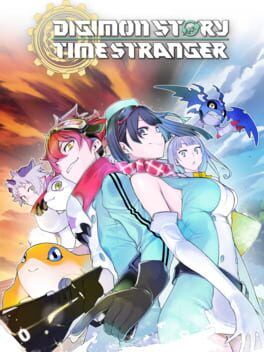
Everything new and returning tamers should know about Digimon Story Time Stranger on Nintendo Switch and Switch 2, from story and systems to pre‑order bonuses, version differences and how it stacks up against modern monster‑collecting rivals.
What is Digimon Story Time Stranger?
Digimon Story Time Stranger is the latest RPG in Bandai Namco’s long‑running Digimon Story series. Developed by Media.Vision, it blends classic turn‑based battles with deep monster raising and a heavier narrative focus than most monster‑collecting games.
You play as an agent of a secret organization in the near future. After a mysterious explosion devastates the city and an unknown creature appears, your character suddenly wakes up eight years in the past. From there the story jumps across time and parallel worlds as you try to stop the world’s collapse, uncover who that creature really is, and figure out how you and your partner Digimon fit into the disaster.
If you have never touched Digimon before, Time Stranger is written as a self‑contained story. There are callbacks and cameos for long‑time fans, but you do not need to know the anime or previous games to follow the plot.
How the game actually plays
Time Stranger is a single‑player, turn‑based RPG. Battles are party‑based, with you fielding a squad of Digimon that act on a timeline system. Skills, speed stats, buffs and debuffs all affect turn order, which makes planning ahead and exploiting weaknesses feel closer to a traditional JRPG than a simple rock‑paper‑scissors matchup.
Outside combat you explore hubs, dungeons and story scenes in the human world and Digital World. Quests unlock new areas, recruitable Digimon, evolution lines and side stories with your party members. The game leans into Digimon’s core hook: that these creatures evolve alongside their human partners and can change form in multiple ways rather than following a single, linear path.
Digimon raising, evolution and roster size
Digimon Story games live or die on their raising systems, and Time Stranger goes hard here.
The roster includes more than 450 trainable Digimon, the largest line‑up in the series so far. You hatch or capture them, then train and battle to unlock branching Digivolution lines. Level, stats, equipment, moves learned and even certain story flags can influence which forms become available.
Crucially, you can also De‑Digivolve. That means rolling a Digimon back to a previous stage to re‑distribute growth, chase a different branch of its evolution tree or squeeze out better endgame stats. It is a loop of experiment, reset and push further that scratches the same itch as breeding and IV tuning in Pokémon, but with more visible, dramatic form changes.
If you like building specialized teams for boss fights or PvE challenge content, Time Stranger gives you a large toolbox of passives, inherited skills and multi‑stage evolutions to play with.
Story recap for newcomers
You do not need to marathon older titles, but it helps to understand where Time Stranger sits tonally.
The Digimon Story line is separate from most of the anime and has been getting progressively darker and more character‑driven. Cyber Sleuth and Hacker’s Memory focused on conspiracy and hacker culture. Time Stranger continues that trend but shifts the spotlight to time travel and collapsing timelines.
Themes to expect include government secrecy, the ethics of experimenting on digital lifeforms, and how the bond with your partner Digimon changes across different versions of history. In typical Digimon fashion, there is plenty of lighthearted interaction with your team, but key story beats are closer to a sci‑fi JRPG than a Saturday‑morning monster show.
If you only remember Digimon as a 90s anime, Time Stranger will feel more like a modern JRPG that just happens to star Digimon rather than humans wielding generic monsters.
What is included on Nintendo Switch and Switch 2
On Nintendo hardware, Digimon Story Time Stranger is launching as a complete package with the full campaign and the same core content that shipped on PlayStation, Xbox and PC.
Both Nintendo Switch and Nintendo Switch 2 versions include:
A full single‑player story that covers the entire time‑loop mystery arc from the original release, with all main chapters and side cases.
The full roster of 450‑plus trainable Digimon, including post‑game and secret evolution lines.
The standard Digivolution and De‑Digivolution systems, team loadouts and battle mechanics from other platforms.
On top of that, Bandai Namco has confirmed post‑launch DLC for Nintendo systems that mirrors what is already out elsewhere. These DLC packs add new side episodes, costumes and extra Digimon lines. They are not on the cart and will roll out after launch, either standalone or as part of a season pass.
Switch vs Switch 2: graphics modes and version differences
Here is where things get specific, especially if you are choosing between standard Switch and Switch 2.
On Nintendo Switch:
The game is a dedicated Switch version tuned for handheld play. There is no in‑game toggle for Quality or Performance modes. Resolution and frame rate target stable play in both docked and handheld, with visual settings roughly in line with other late‑generation RPGs on the system. All content and gameplay systems are identical to other platforms, but without the higher‑end graphics options.
On Nintendo Switch 2:
There is a separate native Switch 2 version with two graphics options.
Quality Mode runs at up to 4K with HDR at 30 frames per second when docked on a compatible 4K HDR display. It focuses on sharper image quality and effects.
Performance Mode targets full HD at up to 60 frames per second for smoother animation and snappier battle pacing. This mode is also available in handheld, where HDR is supported on Switch 2’s screen.
The key wrinkle is that if you own the Nintendo Switch version but play it on a Switch 2 console and download the update data, you can still access graphical improvements that bring it in line with the native Switch 2 release, including the option to toggle between Quality and Performance. That lets you buy once and still benefit from your new hardware if you are upgrading consoles while keeping the same game version.
However, the two versions are sold separately on the Nintendo eShop and at retail. There is no free upgrade path from a Switch copy to a Switch 2 copy.
Save data and DLC compatibility
Nintendo and Bandai Namco have also outlined how saves and downloadable content work across both machines.
Save data can be moved between consoles, such as transferring your Switch save to a Switch 2 system, using Nintendo’s usual system transfer and cloud save tools where supported. That means if you start your adventure on a standard Switch console, your progress can come with you if you later buy a Switch 2.
Save data cannot be converted between software versions. A save created using the Switch version of Time Stranger will not load in the native Switch 2 version, and vice versa. Sticking to one software version avoids headaches.
DLC is version‑locked. Downloadable content purchased for the Switch version only works with that version, and DLC bought for the Switch 2 version only works with the Switch 2 build, even if you are playing on the same physical console. If you plan to buy a lot of DLC, decide which version you want to stick with before investing.
Pre‑order editions and bonuses
Bandai Namco and Nintendo are offering multiple ways to pick up Digimon Story Time Stranger on Switch systems.
Standard Edition is the base game. On Switch 1 and 2, pre‑ordering this edition gets you a bonus pack that includes extra trainable Digimon, a unique costume themed after a certain in‑universe school and an early‑game adventure item set to help with healing and training. Retailers list Agumon (Black) and Gabumon (Black) as part of this bundle, which are fan‑favorite variants that can be raised alongside the regular line.
Digital Deluxe Editions layer on an early DLC pack and cosmetic sets. These typically include an additional side episode and extra Digivolution paths, plus more costumes for both your human protagonist and partner Digimon.
Digital Ultimate or Premium Editions add the full season pass covering multiple post‑launch DLC drops. If you know you are going to stick with the game long term and want every extra side story and Digimon, this route is usually cheaper than buying DLC piecemeal.
Exact regional names and pricing can vary by storefront, but the core pattern is the same: base game, then Deluxe, then an all‑in option with the season pass. All pre‑order bonuses are time‑limited and may be sold separately later, but they are guaranteed if you buy before launch or while the pre‑order window is open.
How it stacks up against other monster‑collecting games on Nintendo
On Nintendo hardware, Digimon Story Time Stranger is walking into a very crowded genre. Pokémon, Monster Hunter Stories, Temtem, Nexomon and several indie creature‑collecting RPGs are all competing for your time. Here is how Time Stranger differentiates itself.
Compared to Pokémon Scarlet and Violet, Time Stranger trades fully open‑world exploration for more curated areas and dungeons, but it offers a denser story, more involved character arcs and a battle system that expects you to engage with buffs, debuffs and turn‑order manipulation. Evolution is more flexible too, with multiple branches and the ability to revert and re‑spec your partners instead of being locked into a single final form.
Compared to Monster Hunter Stories 2, which focuses on rider‑and‑monster bonds and semi‑open exploration, Time Stranger is more traditional JRPG in layout and tone. It stays closer to urban and sci‑fi environments alongside the Digital World, and the plot leans harder into time travel mystery rather than a globe‑trotting journey. Combat in Stories is rock‑paper‑scissors driven, while Time Stranger behaves like a classic turn‑based system with elemental matchups and skill synergy.
Compared to indie offerings like Temtem and Nexomon, Time Stranger brings a much larger budget, full Japanese voice work and more elaborate cutscenes, but it is strictly single‑player. There is no emphasis on competitive PvP ladders or MMO‑like structure. If you mainly want a long, story‑driven monster RPG to sink dozens of hours into by yourself, it positions itself as the prestige option in that lane on Switch.
Where it really shines is in the Digimon flavor. Branching evolution, the ability for a cute rookie to grow into a radically different mega form depending on your choices, and the overarching human‑Digimon relationships set it apart from Pokémon‑style trainer‑and‑pet dynamics. If that kind of emotionally driven monster raising appeals to you, Time Stranger may land harder than its peers.
Should newcomers start with Time Stranger on Switch?
If you only own a standard Switch and want a deep monster‑raising RPG, Time Stranger holds up well against modern competitors. You give up high‑end resolution and frame rate, but the full roster, all systems and the complete narrative are intact. It is a substantial, self‑contained story that does not require prior series knowledge.
If you plan to buy a Switch 2 or already have one on pre‑order, the native Switch 2 version is the best way to play, particularly for the 60 FPS Performance Mode. Just commit to one version from day one, especially if you are eyeing the season pass or multiple DLC drops.
For Digimon veterans, this is the most ambitious Story entry to date, finally hitting Nintendo hardware with all the systems that made the console and PC versions a cult favorite. For newcomers curious about Digimon as an alternative to Pokémon on a Nintendo handheld, Digimon Story Time Stranger on Switch or Switch 2 is a strong entry point with a darker tone, deeper evolution systems and enough flexibility to reward experimentation over dozens of hours.