
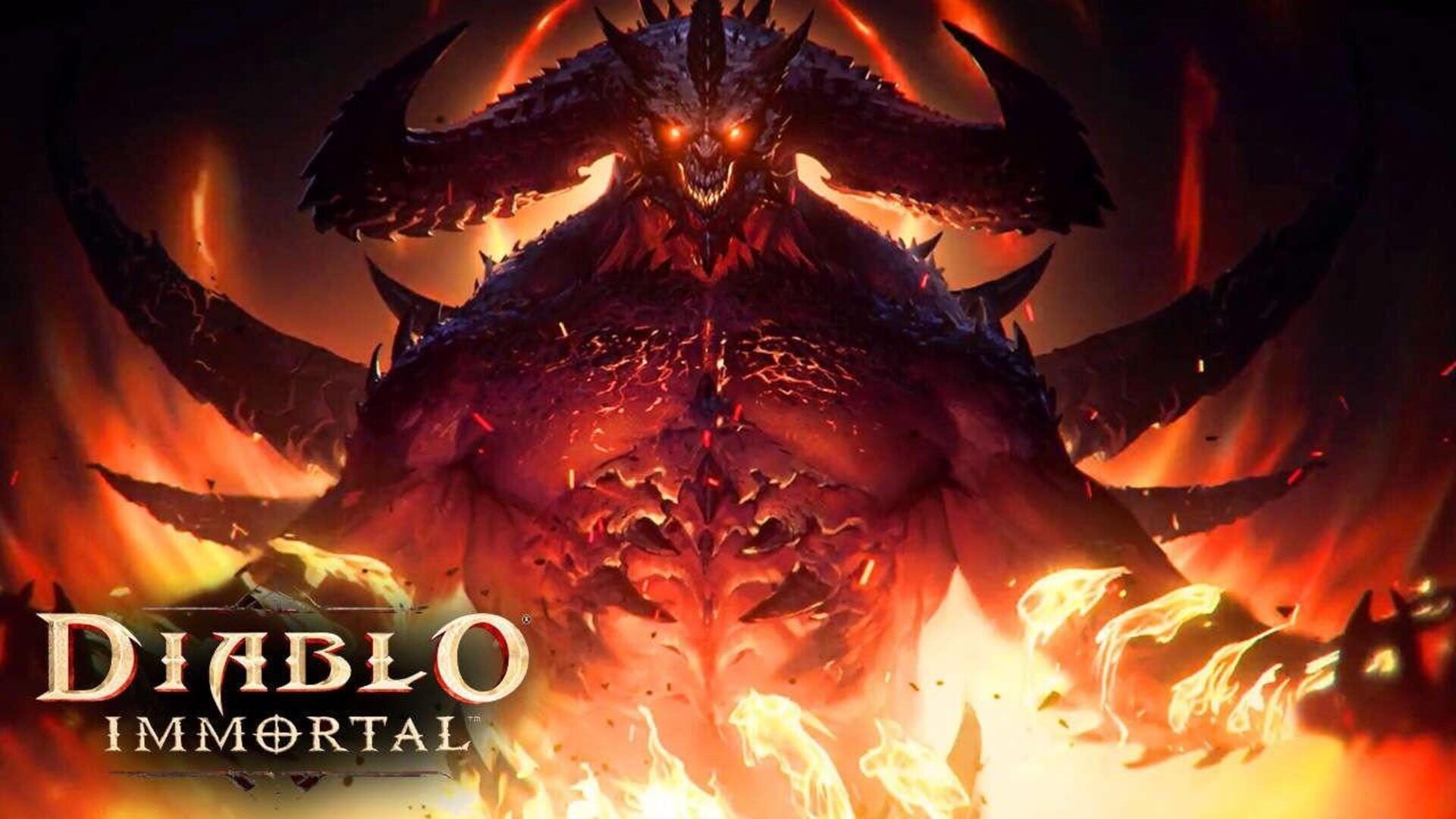
A deep dive into Diablo Immortal’s upcoming Warlock class, how its summon-heavy kit fits Diablo’s class identity, and why the Bloodied Jewel update matters for long-term meta health and player retention.
Diablo Immortal is about to get its 10th class, and it might be the most system-heavy addition the mobile ARPG has seen yet. The Warlock drops alongside the Bloodied Jewel update on June 17, bringing demonology, portals, and high-risk self-sacrifice mechanics that could shift both PvE and PvP metas.
This is not just another caster that trades health for damage. Between its central Soulgorger companion, layered summoning kit, and a slate of new legendary items and gems, the Warlock is Blizzard’s attempt to give Immortal a true “pet commander” playstyle with long-term build depth.
A Summon-First Design That Plays Like A Mini-Raid
Blizzard’s official reveal frames the Warlock as a summoner first, a caster second. Almost everything in the kit exists to feed or enable something else. The class revolves around three pillars: summoned demons, the Soulgorger, and sacrificial magic.
Basic skills like Lunatic Rush call in suicide bombers that hurl themselves at mobs, while higher-level abilities add larger and stranger demons to the roster, from Bloodlords to Rasplet Hulks. These are not simple fire-and-forget pets. Many summons are tuned as short-lived tools that either set up combos or fuel the Soulgorger.
Soulgorger is the real signature mechanic. It is a permanent demonic companion that levels up not through XP bars but through devouring your other summoned demons. Sacrificing your lesser minions to empower the Soulgorger gives the class a distinctive pacing: you flood the screen with fodder, consume them at the right moment, then ride the spike from your empowered partner.
In practice, that means Warlock rotations will feel less like a classic cooldown cycle and more like a mini-raid phase. You build the field, cash it in through devour mechanics, and hit a window where your Soulgorger stuns, leaps, or heals harder depending on its evolution path. The class asks you to think ahead, not just about what you are casting but about what you are feeding.
Sacrificing Health As A Core Resource, Not A Gimmick
The other defining thread is self-sacrifice. Diablo has flirted with health-for-power trades before, but Warlock takes it much further. Several abilities lean on the idea that your life total is expendable if the damage window is worth it, and Blizzard leans into health manipulation between player and pet.
The reveal highlights skills and legendary effects that let you drain your own HP to supercharge hellfire attacks or transfer vitality into the Soulgorger. The ability to funnel life between master and demon turns survivability into an active mini-game. In high-end content this will likely separate casual Warlock players from the ones pushing leaderboards.
On paper it opens room for very sharp build identities. You can imagine:
Aggressive builds that run minimal defenses, using health-draining legendaries plus strong heal-on-devour cycles from Soulgorger. These aim to burst down enemy waves or PvP targets before the health deficit catches up.
Safety-focused builds that invest heavily in lifesteal, shields and pet-based healing, using sacrifice sparingly for controlled burst windows. Those will appeal to group players who need to stay alive for long boss phases.
In both cases, health stops being just a bar to keep topped off and becomes a spending resource, aligned with the class fantasy of a Warlock willing to give up everything for power.
Portals, Mobility And Control As A Group Identity
Diablo Immortal has lacked a true support-flavored controller class. Necromancer brought pets and curses, but its toolkit is grounded, with limited ability to rearrange the battlefield for an entire party. The Warlock edges into that niche.
Brimstone Gateway allows the Warlock to place teleport portals that allies can use, letting four-player groups reposition through dungeons or PvP arenas in ways no other class can. Burning Ascent, which lets you ride a flying demon through combat, doubles as a damage and movement tool, opening routes over terrain and around enemy formations.
Combined with curses and debuffs woven into many fire and shadow spells, Warlock has the potential to function as a soft support in Immortal’s ecosystem. It won’t replace Crusader’s auras or Monk’s shielding, but the ability to reposition the group, amplify damage taken by enemies, and bring reliable crowd control makes it a natural fit for organized groups hunting fast clears.
In a game where speed and efficiency define the late-game grind, that kind of toolkit gives the Warlock a strong case for a permanent spot in meta compositions.
Warlock’s Place In Diablo’s Broader Class Identity
From a franchise perspective, the Warlock is a bridge between Diablo Immortal and Diablo IV’s Lord of Hatred expansion. Blizzard is clearly trying to standardize what “Warlock” means in Sanctuary. The shared identity across games is clear: a summoner who wields Hell’s power directly, manipulates their own life force, and leans into demonic pacts.
Within Immortal’s roster, that puts Warlock in an interesting overlap with Necromancer and Wizard. The Necromancer already covers the classic corpse and skeleton summoner archetype, while Wizard is the pure spell-slinger that manipulates the battlefield through elemental power.
Warlock carves out space between them by changing what it summons, how it sustains, and what risks it asks the player to accept. Where Necromancer raises the dead, Warlock calls demons from the Hells and is explicitly tied to the Vizjerei’s forbidden practices. Where Wizard bends arcane power, Warlock rides literal demons and warps space for allies.
That lore-rooted distinction matters for more than story flavor. It dictates how the class feels moment to moment. Necromancer armies emerge from corpses left behind and are often reactive. Warlock’s hordes are proactive tools you summon at will, then willingly destroy to grow something worse. In tone and mechanics, it plays closer to a dark general than a battlefield scavenger.
The Bloodied Jewel: A Meta Reset In Disguise
The Bloodied Jewel update is not just about a new class and a new zone in Lut Gholein. Blizzard is using it as a soft reset for several aging systems that have quietly shaped the meta for the last couple of years.
Legendary essences and older set items that see little use are being retired from the active loot pool. They become legacy gear that still exists in player inventories but no longer functions as live, evolving build pieces. This is significant for a game built around incremental power hunting. By pulling low-usage options out of the drop table, Blizzard is tightening the viable loot space and making it more likely that new players and returning veterans see relevant items faster.
The same logic applies to set items. Fan favorites like Windloft Perfection and Skybreaker’s Bolt are being converted into legacy sets, clearing room for future itemization that better reflects the current design direction. For Warlocks, launching in a post-refresh item environment means their early meta will not be polluted by outdated, under-tuned set bonuses.
The Paragon cap increase to 1500, paired with catch-up XP for anyone below server level, also points to a recognition that the endgame had calcified. A higher ceiling and more generous catch-up give late adopters, including players tempted back by Warlock, a clearer path into competitive content. That is crucial if Blizzard wants this class to feel accessible instead of locked behind a mountain of grind.
How Warlock Could Shift PvE And PvP
In PvE, the most immediate impact is likely to show up in dungeon and raid metas. A class that can both supply sustained demon damage and amplify party throughput with curses and portals will slot well into speed-farm squads.
Expect early Warlock mains to experiment with pure summoner builds built around massive demon uptime, feeding the Soulgorger for boss phases and pairing with hellfire nukes like Hellfire Bolt and Infernal Eruption to clear trash at range while keeping the player body relatively safe. If Blizzard’s new legendaries effectively support this identity, the Warlock could become the go-to brain of many four-player compositions, orchestrating fights from the back line.
In PvP, the risk-reward health mechanic becomes a lot more volatile. Trading life for power only works if you can avoid getting instantly punished. Portals, leaps and demon bodies can act as soft defenses, but how forgiving the class feels will depend heavily on tuning. If burst windows from empowered Soulgorger and stacked hellfire skills line up cleanly with crowd control, Warlock could become a terrifying opener class that decides fights before the enemy has time to react.
On the other hand, if health sacrifice values are overtuned, Warlocks may find themselves dying through their own greed, which tends to keep PvP representation low. Blizzard will likely spend the first few balance passes making sure sacrifice modifiers scale reasonably in competitive modes, possibly with separate PvP coefficients.
Player Retention: More Than Just A New Class Smell
New classes reliably spike logins in live-service ARPGs. Blizzard knows this and is wrapping the Warlock’s launch in a wide array of time-limited hooks. Origin quests, trial dungeons with preset builds, Fractured Plane test drives, and even a Warlock race event try to make the class feel like a moment, not just a menu addition.
The more interesting retention play, though, sits in the long tail. Warlock is designed with a large number of build levers: summon choice, Soulgorger evolution, sacrifice intensity, fire vs shadow damage emphasis, and legendary item synergies. That kind of combinatorial depth tends to keep theorycrafters busy and generates guides, videos, and community discussion for months.
Couple that with the broader Bloodied Jewel changes and you get a healthier environment for new or returning players. A cleaner drop pool, revamped Paragon cap, and fresh endgame targets in Lut Gholein reduce some of the overwhelm that often hits lapsed players when they reinstall. If your first experience back is an immediately impactful new class in a famous Diablo city, your odds of sticking around through the season climb.
That said, everything will hinge on how monetization intersects with Warlock optimization. If the strongest sacrificial and Soulgorger-focused legendaries are heavily gated behind paywalled crests or new gem tiers, the community may view the class as another trap for big spenders rather than a fresh way to play. Balancing free and paid acquisition paths for key Warlock items will be critical to converting launch curiosity into sustained engagement.
A Crucial Test For Diablo Immortal’s Future
Warlock and the Bloodied Jewel patch together form one of the most important updates Diablo Immortal has seen since launch. They combine mechanical innovation, nostalgic setting, and long-overdue system cleanup into a single package.
If Blizzard sticks the landing, the game could come out of Patch 5.0 with a revitalized meta anchored by a complex, expressive new class and a clearer progression environment. Done poorly, Warlock risks becoming a gimmicky pet class overshadowed by older, more efficient archetypes.
For now, the design signals are promising. A permanent demon partner that grows by devouring your own minions, battlefield-altering portals, and a health bar that doubles as a power battery all give Warlock a clear identity in the Diablo pantheon. Whether that identity translates into a new long-term favorite for Immortal’s playerbase will be one of the most interesting things to watch once the Bloodied Jewel drops.