
Breaking down Diablo 4: Lord of Hatred’s opening gameplay: the voyage to Skovos, Paladin feel and flow, early combat pacing, and what Blizzard is hinting about the expansion’s tone and structure.
Blizzard has finally cracked open Diablo 4: Lord of Hatred with a slice of raw opening gameplay, and it is a clearer mission statement than any blog or dev stream. Played as the new Paladin class, the first stretch into Skovos lays out how Blizzard wants this expansion to feel: more directed, more theatrical, and more confident about what Diablo 4 actually is.
A solemn voyage to Skovos
The expansion opens not with a quick dungeon crawl, but with a slow burn trip toward Skovos. The camera lingers on stormy seas and distant, haunted coasts while characters trade hushed dialogue about Mephisto, faith, and what is left of hope after Lilith’s fall. It is still Diablo 4, but the framing leans harder into melancholy pilgrimage rather than frantic chase.
Skovos itself emerges as a sharp contrast to the ash and rot of the base game. Where Fractured Peaks and Hawezar drown you in snow and swamp, Skovos greets you with rain-slick stone, overgrown ruins, and coastal cliffs where civilization clings to the edge of the world. The colors are richer, yet the mood is even more foreboding. This is not a vacation island, it is a holy land that has been living with terror for a very long time.
That arrival sequence quietly signals how Blizzard wants Lord of Hatred to be structured. The opening plays almost like an act break in a dark fantasy series, with careful staging, clear geography, and a stronger sense that you are stepping into a specific culture. It suggests Skovos will not just be a new map chunk, but a place with its own identity and spiritual politics that tie directly into Mephisto’s return.
The Paladin feels like a statement class
Using the Paladin in this first look is not an accident. From the first swings, the class comes across as Blizzard’s reply to players who wanted a sturdier, more deliberate frontliner with real battlefield presence.
The rhythm of Paladin combat is slower but purposeful. Basic attacks hit with audible weight, and skills slot neatly into distinct roles: gap-closing lunges, sweeping arcs that clear packs, and sanctified bursts that crackle with light. You can see the design intent in how often the Paladin is encouraged to stand their ground rather than kite endlessly. The class reads as a walking anchor that defines the fight, instead of a glass cannon trying to stay one step ahead.
Visually the Paladin leans into classical holy warrior imagery, but with Diablo’s grim filter. Shields grind through claws and bone, golden light breaks against the black and red of Mephisto’s influence, and even the most triumphant move still feels like borrowed grace instead of flashy superhero power. That tone matters, because it reinforces the broader expansion vibe: righteous, but never clean.
Early combat sets a more deliberate pace
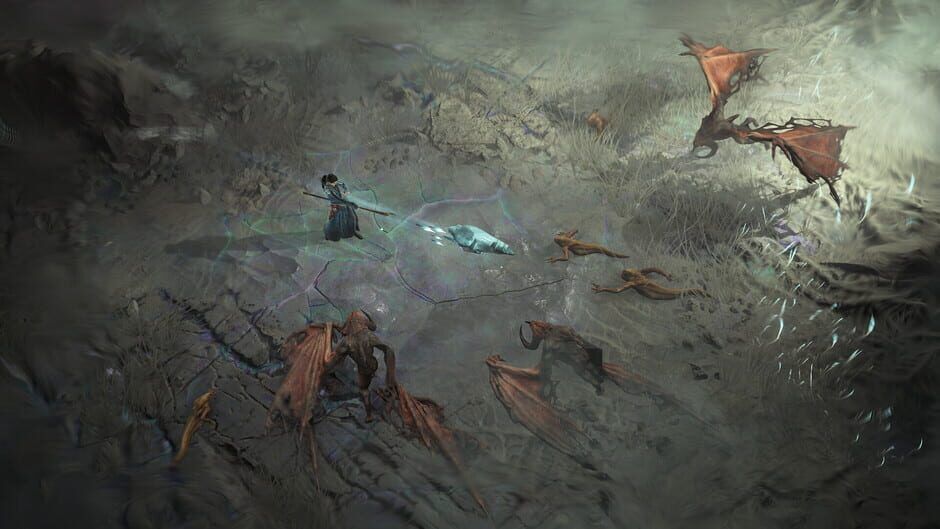
The first encounters in Skovos take advantage of this new tempo. Rather than immediately swarming the player with chaos, the game feeds in smaller groups that test spacing, blocks, and positioning. Enemies telegraph heavier swings with clearer animations, inviting the kind of timed counters and mitigation that Paladin kits thrive on.
You can already see adjustments compared to Diablo 4’s launch era combat. Trash mobs still die in satisfying bursts when you line up skills, but they are more than pure fodder. Mixed packs that combine ranged pressure with sturdier frontline demons force small tactical choices about target priority. The game gives you space to make those calls instead of burying them in nonstop particle clutter.
This slower escalation has another benefit: it sells the stakes of Skovos. The first twisted cultists and corrupted creatures are scary because they are framed as an intrusion into sacred ground, not just another random spawn. Blizzard appears to be using encounter pacing to underline story beats, which was not always a strength of the base campaign.
The first boss as a mission statement
The early boss fight showcased in the gameplay feels like a miniature thesis for Lord of Hatred’s combat design. It is not an MMO-style mechanics checklist, but it is clearly more involved than a simple damage sponge.
The boss uses patterns that encourage you to move with intent rather than simply circle-strafe. Telegraphs are readable, with distinct windups and zones of danger, yet punishing enough that lazy play gets chipped down. This is where the Paladin’s identity hardens. Blocking and mitigating damage, choosing when to commit to melee windows, and using holy bursts at the right moment all matter.
Phase shifts and added hazards hint at Blizzard trying to hit a sweet spot between accessibility and mechanical clarity. Players who care about precision and learning patterns get something to chew on, but the fight is not so busy that it will shut the door on more casual story fans. Importantly, the boss feels thematically rooted in Skovos and Mephisto’s creeping influence, tying its move set and visual design to the narrative rather than feeling like a disconnected spectacle.
A darker, more focused tone for Sanctuary
Across this short slice, Blizzard seems determined to refine Diablo 4’s storytelling voice. The writing leans heavily into faith tested by horror, with the Paladin’s perspective adding a layer of religious conflict that feels distinct from the more personal tragedies of the base game. The mood is still apocalyptic, but it is filtered through the lens of an order that has sworn to stand firm, even as its symbols crumble.
Skovos looks set to be a crucible for that tone. The island’s sacred status, the hints of long-running spiritual tension, and the physical presence of Mephisto’s corruption suggest a story that is less about simply chasing a Prime Evil and more about what happens when holy places fail. If the rest of the expansion can maintain this focus, Lord of Hatred could become the most thematically coherent chapter Diablo 4 has had so far.
Structurally, the guided arrival, tighter quest framing, and deliberate combat pacing all suggest Blizzard wants this expansion to feel more like a crafted dark-fantasy campaign than a loose tour of content. The opening hours appear built to establish expectations: stronger class identities, clearer encounter design, a richer sense of place, and a story that is willing to sit with dread instead of just racing to the next atrocity.
If this slice is representative, Lord of Hatred is not trying to reinvent Diablo 4 so much as sharpen it. The voyage to Skovos, the grounded weight of the Paladin, and that first boss encounter all point in the same direction: a Sanctuary that finally knows the kind of horror and heroism it wants you to live through.