
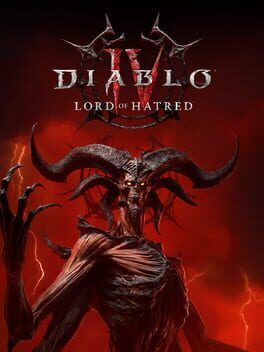

Blizzard’s April 2026 expansion brings back Mephisto, launches two new classes including a playable‑now Paladin, and layers in long‑requested systems like companions, War Plans and deeper endgame progression that might finally stabilize Diablo IV after years of balance churn.
April 28, 2026 is not just another seasonal reset for Diablo IV. With Lord of Hatred, Blizzard is positioning this second full expansion as a line in the sand after years of sweeping balance reworks and system overhauls. The pitch is simple but ambitious: finish the Mephisto arc, deliver the kind of endgame and buildcraft tools players have been asking for since launch, and lock in a version of Diablo IV that can grow horizontally instead of being rebuilt every few months.
Mephisto Finally Steps Out Of The Crystal
Lord of Hatred picks up after Vessel of Hatred and finally makes Mephisto the direct threat many players expected from Diablo IV’s early cinematics. No more disembodied whispers in a soulstone. The Prime Evil steps into the spotlight, driving a campaign that heads to Skovos and centers on Sanctuary’s very soul.
Skovos itself is a big part of why this expansion matters. Long teased in lore as the birthplace of the firstborn and the homeland of Lilith and Inarius, it has never actually been playable in a Diablo game until now. That alone gives Lord of Hatred a sense of closing the loop on long‑running story threads while also offering a fresh visual break from the familiar ruins and deserts of the base game.
Story payoffs only get you so far in an ARPG, though. What makes Lord of Hatred feel like a potential turning point is how aggressively Blizzard is tying the narrative escalation to systemic change.
Two New Classes, With Paladin In Early Access
Diablo IV’s class roster has felt increasingly constrained as the game’s meta swung back and forth through balance passes. Lord of Hatred tries to blast that door open by adding not one but two new classes.
The first is the long requested Paladin. In a twist on the usual expansion cadence, Paladin is playable immediately for anyone who pre‑purchases Lord of Hatred. Instead of waiting until April 2026, you can roll a Paladin now and start learning the class in live seasons.
That early access matters because it lets Blizzard tune one of its most iconic archetypes in the real game rather than in isolated test realms. Paladin historically defines a certain Diablo fantasy: a front‑line holy warrior that can serve as party anchor, aura battery and burst‑damage dealer all at once. Dropping that into Diablo IV’s evolving combat sandbox, then having more than a year of live data before the expansion hits, is a clear attempt to avoid another round of frantic post‑launch surgery.
The second new class remains under wraps, but simply having two fresh archetypes arrive alongside all the other systemic additions gives Lord of Hatred a scale more reminiscent of Diablo II’s Lord of Destruction than a typical seasonal update.
Companions, Talismans And The Return Of The Cube
If you have followed Diablo IV patches since launch, you can almost chart the community wish list: meaningful followers, some version of set gear, a real loot filter and a return of clever item crafting akin to Diablo II’s Horadric Cube.
Lord of Hatred lines those requests up and starts checking boxes.
Companions give solo players a bit of that traditional Diablo adventuring party feel, but they also answer a practical need in a game that leans heavily on crowd control and stagger windows. The promise of customizable followers that can complement your build could quietly become one of the expansion’s most important quality of life features, especially for leveling new characters or experimenting in fresh endgame modes.
The new Talisman system brings set‑style bonuses back into the itemization picture without rolling out old‑school, fully locked sets that crowd out everything else. Talismans aim to give you layers of conditional power spikes that can sit on top of your core legendaries and uniques, expanding build diversity instead of replacing it.
Then there is the Horadric Cube. Its return is more than nostalgia. In prior games, the Cube was a toolbox where players could reroll, upgrade and occasionally break the rules of item progression entirely. Reintroducing it in Diablo IV, at the same time as Talismans and a proper loot filter, signals that Blizzard is finally comfortable letting players fine‑tune their gear instead of relying purely on ever‑taller piles of random drops.
Taken together, these systems push Diablo IV closer to the long‑requested ideal of a game about crafting the build you want instead of endlessly salvaging your tenth near‑miss drop.
War Plans And A More Directed Endgame
The endgame has always been where Diablo IV’s constant reworks felt most disruptive. One season you were chasing Nightmare Dungeons, the next you were funneling everything into Helltides, and each patch seemed to twist the efficiency calculus all over again.
Lord of Hatred attempts to stabilize that loop with War Plans. At a high level, War Plans let you design your own endgame focus by selecting activities you actually enjoy and then rewarding you for committing to them. These plans plug into brand new progression trees tied to each major endgame activity, so grinding Helltides, Nightmare Dungeons or the new modes no longer feels like a series of disconnected chores.
Echoing Hatred is the flashiest of those new modes, a horde‑style activity that leans into Diablo IV’s best strength: mowing through dense packs of enemies. Instead of endlessly rerunning the same dungeon tiles, Echoing Hatred throws escalating waves at your build and asks a simpler, more satisfying question: how long can you hold the line?
This is where Lord of Hatred’s promised class reworks and level cap increase come into play. All classes are getting expanded skill trees with new bonus variants, and the idea is that, once the dust settles, these systems will not be ripped up again in a few months. War Plans and activity trees are meant as a foundation that Blizzard can extend laterally, adding new nodes and activities without rewriting the rules for existing ones.
A Chance To Finally Settle Diablo IV’s Identity
Diablo IV has spent much of its life oscillating between different design philosophies. One patch emphasized slower, more tactical combat. Another pushed back toward faster, loot‑driven power trips. Endgame activities rose and fell in popularity, only for the next round of nerfs and buffs to reshuffle the deck.
Lord of Hatred feels like Blizzard’s attempt to define a long term shape for the game. Mephisto’s return and the journey to Skovos give the story a clear direction. Paladin and the mystery second class broaden the roster in ways that should stay relevant for years. Companions, Talismans, the Cube and a loot filter address persistent pain points in progression without blowing up existing builds.
Most importantly, systems like War Plans and activity skill trees signal a shift away from complete rebuilds toward additive updates. If Blizzard can resist the urge to rip up its foundations again, Lord of Hatred could mark the point where Diablo IV stops reinventing itself every season and finally grows into the long‑lived ARPG platform players hoped for at launch.
The expansion still has plenty to prove, especially around how generous its loot and Talismans really feel over hundreds of hours. But for the first time in a while, Diablo IV’s roadmap looks less like another round of triage and more like a plan.