
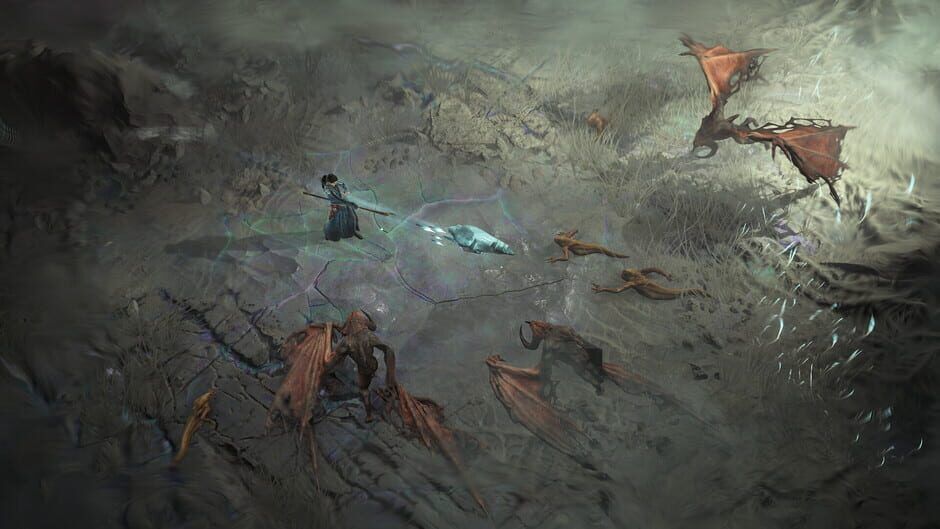

Breaking down Diablo IV’s Lord of Hatred expansion announcement: Mephisto’s comeback, the Skovos zone, fishing and companions, the surprise Paladin release, the mystery second class, and what an April 2026 launch means for Diablo 4’s long‑term health.
Blizzard used The Game Awards 2025 to finally pull back the curtain on Diablo IV’s second expansion, Lord of Hatred, and it is the clearest statement yet of what the game wants to be heading into 2026. Mephisto is back, Skovos is opening its shores, fishing is somehow canon, and a long‑rumored class just dropped into the live game months early.
Here is what Lord of Hatred looks like, how it fits into Diablo 4’s current course correction, and why April 28, 2026 could be the pivot point that defines the rest of this generation of Sanctuary.
Mephisto Steps Out Of The Wolf
If Diablo IV’s launch campaign was about Lilith’s tragic crusade, Lord of Hatred is about the devil you always knew was still out there. The expansion centers on Mephisto, Prime Evil of Hatred, finally dropping the “mysterious talking wolf” act and moving to open conflict.
Story details are still high level, but Blizzard is framing this as a direct continuation of the base game’s epilogue threads. The player will chase the fallout of Mephisto’s manipulation across a new continent‑sized zone, pulling on threads left dangling since the final walk through Sanctuary.
That focus matters because it roots Diablo IV back in classic Diablo stakes. Mephisto was last seen as the Act III boss in Diablo II, and bringing him to the forefront again ties Lord of Hatred to the series’ most iconic era. For lapsed fans, this is the “yes, it really is that Mephisto” hook that the first expansion did not quite have.
Skovos Finally Opens Its Gates
The hunt for Mephisto takes players to Skovos, a name old‑school fans have seen teased for years without ever getting to actually visit. The Skovos Isles have been referenced since Diablo III as a home of Amazon‑like warrior traditions and sea‑locked mysticism. Lord of Hatred finally turns the myth into a playable region.
Skovos is described as a lush archipelago saturated in both natural beauty and occult rot. Expect dense jungle interiors, coastal cities fortified against demonic incursions, and ruins that suggest Mephisto’s reach has been growing here far longer than Sanctuary realized.
In practical terms, Skovos is the expansion’s primary leveling and endgame field. It brings new Strongholds, world events, dungeons and likely a new World Boss rotation in line with how the first expansion widened the map. For a game that has often felt visually locked to its familiar regions, Skovos is an opportunity to establish a more vivid visual identity going into the back half of Diablo IV’s life.
Companions And A Less Lonely Sanctuary
One of the quieter but most important pieces of the Lord of Hatred pitch is companions. Diablo IV has flirted with followers through one‑off NPC allies and campaign‑only partners, but it has never leaned into a true companion system the way Diablo II or III did at various points.
Lord of Hatred is billed as taking “a significant step forward” here. While Blizzard has not laid out the full system yet, the expansion is framed around building bonds with new and returning allies as Mephisto’s crusade intensifies. That strongly hints at more permanent, customizable companions that persist beyond a single questline.
For moment‑to‑moment play, companions can smooth out solo runs, give build designers new knobs to turn, and make Sanctuary feel less like an empty MMO city and more like a world where adventurers form actual parties. If Blizzard follows through, this could be one of the more transformative quality‑of‑life changes, even if it does not headline the trailers.
Yes, Diablo IV Is Getting Fishing
Fishing has been a meme request in Diablo circles for years, the sort of jokey feature fans throw around whenever a developer asks what side activities they would like to see. Lord of Hatred makes that meme canon.
Fishing arrives as a fully supported side activity set across Skovos and, most likely, retrofitted into existing zones. Details are still light, but expect a system that feeds into crafting and economic loops. Even if the tone is grimdark, the idea of hauling eldritch horrors out of a blood‑tinted cove is exactly the kind of texture Diablo IV has sometimes lacked.
The more important angle is pacing. Diablo IV has spent its live service life learning how to give players breathers between endgame grind cycles. Fishing gives the game a low‑pressure layer where players can decompress, chase collections, and engage with Sanctuary on their own terms without constantly battling damage‑per‑second spreadsheets.
The Paladin Arrives Early
The headline from The Game Awards stage was not just “two new classes are coming,” but that one of them, the Paladin, is already here for anyone who prepurchases Lord of Hatred.
Blizzard has been dodging direct questions about a Paladin‑style kit since before launch. Diablo IV’s existing roster covered the series staples, but that hybrid of armored frontline and holy magic was the obvious missing piece. Lord of Hatred resolves that gap with a classic take on the class built for the game’s more deliberate, weighty combat.
The new Paladin is positioned as a melee‑focused, Light‑empowered warrior who blends big, satisfying weapon swings with radiant magic. Expect a kit that leans into auras, consecrated ground and direct smite‑style abilities, with tools that let Paladins act as both self‑sufficient solo clears and group anchors in high‑tier endgame content.
Letting players roll a Paladin months before the expansion launches accomplishes several things. It gives Blizzard valuable live data on balance and class fantasy long before Mephisto’s campaign goes live. It also sends a direct message to the community that future expansions will not wall their most anticipated toys behind distant dates. If the Paladin lands well, it becomes a real selling point for returning veterans who have been waiting for a reason to reinstall.
The Mystery Second Class
Lord of Hatred ships with a second new class on day one, but Blizzard is not ready to name it yet. Official messaging pokes fun at this with “Sir Yet to be Revealed” jokes, but the strategy is deliberate.
Holding back the reveal buys Blizzard time to read the room on Paladin reception and the broader meta. Diablo IV has already gone through several sweeping balance passes since launch, and pairing a more traditional holy knight with something weirder gives Blizzard flexibility. Whether the second class ends up scratching a darker spellcaster itch, a pet‑heavy archetype or something completely new, it will arrive into a game that has had months to reshape itself around the Paladin.
From a live service perspective, the staggered hype cycle is smart. The Paladin pulls lapsed players in now, the second class reveal anchors the marketing ramp in the months before April, and the launch itself gets to present Lord of Hatred as a complete package rather than just “the Paladin expansion.”
Systems Overhaul: Loot Filters, Trees And Endgame
Underneath the flashy expansion bullet points is something veteran players may care about more than Mephisto or fishing. Lord of Hatred is bundled with what Blizzard is describing as major systems overhauls, including a long‑requested loot filter, updates to every class’s skill tree, and new endgame features.
The loot filter alone addresses one of Diablo IV’s most persistent pain points. As item power stacks up and the game showers players with drops, sifting through piles of gear has become more chore than chase. A proper filter will let players define what they care about and leave the rest on the ground. That not only makes grinding less tedious but lets high‑end players hunt for specific affix combinations with far less friction.
Skill tree updates arriving alongside two fresh classes suggest that Blizzard is using Lord of Hatred as an opportunity to unify its design language. If each class, old and new, is recontextualized around clearer fantasies and more expressive build paths, the meta heading into 2026 could look radically different from the game that launched.
New endgame features round out the package. Diablo IV’s first year proved that Helltides, Nightmare Dungeons and seasonal mechanics can only carry the treadmill so far. Lord of Hatred is positioned as a reset button, a chance to bolt on entirely new progression layers and repeatable activities that keep the loop fresh past the first few weeks of theorycrafting.
Release Timing And Price
Lord of Hatred launches on April 28, 2026, across all Diablo IV platforms. Preorders are already live, with three editions on offer: a $40 Standard Edition, a $60 Deluxe Edition and an $80 Ultimate Edition. On top of the new campaign, classes, Skovos and the system reworks, purchasing Lord of Hatred also folds in access to Diablo IV’s first expansion for players who sat that one out.
The date puts the expansion at a comfortable distance from the base game’s second anniversary and gives Blizzard a clear target to develop around. Seasons, mid‑year events and balance passes can all point at April as the moment everything gets reshuffled again.
What Lord of Hatred Means For Diablo IV In 2026
Viewed from a distance, Lord of Hatred is more than just another chapter. It looks like Blizzard’s statement of intent for Diablo IV’s middle years.
On the narrative side, focusing on Mephisto and Skovos pushes the game deeper into the franchise’s core mythology. That is a bet that longtime fans care most about classic Prime Evils and long‑teased regions, and it positions future expansions to potentially tackle the remaining cosmic heavyweights.
On the systems side, the combination of loot filters, revised skill trees, fishing, companions and new endgame layers suggests that Blizzard understands where the friction and fatigue have built up. Lord of Hatred is framed as a course correction toward a richer, more flexible action RPG rather than a strictly seasonal treadmill.
And then there are the classes. Dropping the Paladin early and pairing it with a secret second archetype gives Diablo IV the kind of headlining content that can actually move the needle with lapsed players. As the live service landscape crowds up heading into 2026, that may be the single most important piece.
If Blizzard can stick the landing, Lord of Hatred stands a real chance of turning Diablo IV from a game constantly patching itself into one that feels confidently built for the long haul. Mephisto may be the Lord of Hatred, but for Sanctuary’s future, this expansion reads much more like an act of rebuilding trust.