
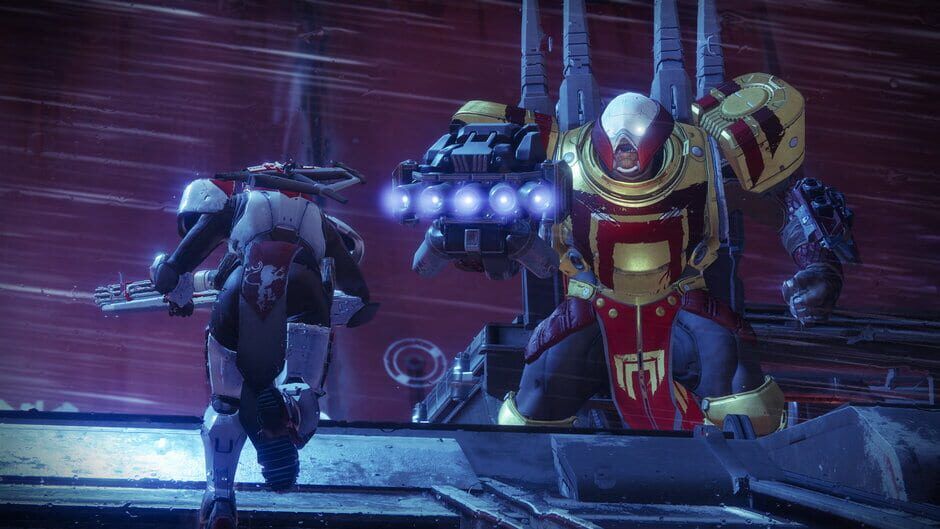

Bungie’s latest Destiny 2 delay and Todd Howard’s cautious AI comments show how big studios are treating AI as a background tool for testing and optimization, not a shortcut for storytelling. Here’s what that means for the future of games like Destiny 2, Starfield, and The Elder Scrolls 6.
Bungie’s decision to push Destiny 2’s next major update from March to June 9, 2026, while it undergoes “large revisions,” arrives at the same moment Todd Howard is talking publicly about how Bethesda is treating AI. Taken together, they sketch a picture of a AAA industry that is under pressure to move faster and cheaper, but is still very reluctant to let AI anywhere near the creative heart of its biggest games.
In Destiny 2’s case, the delay of the formerly titled Shadow and Order update is a clear signal that Bungie is still leaning on traditional iteration: more time in testing, more time in balance passes, more time revising systems like Weapon Tier Upgrading, Pantheon 2.0, and expanded Tiered Gear across raids and dungeons. For a live game that has struggled to hold on to players after The Final Shape, that extra time suggests Bungie is not yet ready to hand critical design work to automated systems that might accelerate iteration but also risk destabilizing a fragile sandbox.
On the other side, Todd Howard’s recent comments about AI on the Kinda Funny Gamescast outline Bethesda’s philosophy in unusually clear terms. He calls the current AI boom “certainly not a fad” and confirms that the studio is using AI, but only in the background. The tools are treated like analysts and assistants that sift huge amounts of player and game data, highlight problems, and free developers to focus on what he calls “handcrafted human intention.” Bethesda is not using AI to generate quests, dialogue, art, or worldbuilding, and Howard stresses that the studio is being “incredibly cautious” about avoiding anything that would override the creative intent of its designers and writers.
Put together, Bungie’s delay and Bethesda’s AI stance show a shared reality. These are studios shipping massive, complex games where a single balance tweak can ripple through raids, economies, or open worlds, and where production timelines are measured in years. AI is attractive as a way to tame complexity: automated test passes, smarter telemetry analysis, predictive models that flag tuning issues before they hit millions of players. Yet both companies are acting as if the reputational cost of getting creative AI wrong in a flagship game like Destiny 2, Starfield, or The Elder Scrolls 6 would be far worse than the cost of another delay.
For Destiny 2 specifically, that has concrete implications. Bungie is reworking a live game with years of legacy subclasses, exotics, and encounter design layered on top of each other. AI-assisted testing could conceivably simulate far more build combinations and encounter permutations than a human QA team ever could, surfacing outlier builds or degenerate farming routes before they go live. It could analyze engagement patterns to suggest where to place new progression hooks or how to tune the new Weapon Tier Upgrading grind to keep players active without tipping into burnout. But the studio still has to make the final call on how punishing a God Roll chase should feel, how a raid should crescendo, and what kind of fantasy a new exotic weapon should deliver. Those are creative judgments, not spreadsheet outputs.
Bethesda faces a related but different problem space with Starfield and The Elder Scrolls 6. Its worlds rely heavily on systems and emergent behavior powered by what used to be called “radiant AI.” Howard’s comments imply that modern AI could become another layer in that toolset, not an author. In practice, that likely means AI helping to validate world logic, catch broken quest chains, or stress test edge cases in sprawling open worlds. It might also be used to mine player behavior across Starfield to inform encounter density, pacing, and economic balance in The Elder Scrolls 6, identifying which types of activities quietly retain players and which ones look good on a feature list but get ignored.
For Starfield itself, where Bethesda has talked about ongoing updates and Creation Engine 2’s evolution, AI’s role is most plausibly centered on optimization rather than reinvention. Automated performance profiling, asset streaming analysis, and bug triage are all areas where AI tools can shorten feedback loops. That fits with Howard’s warning that players should temper expectations for any Starfield 2.0 style overhaul. A smarter toolchain makes it easier to ship incremental improvements, but it does not magically rewrite the game’s core structure or story. Those still require traditional, labor intensive changes that have to be weighed against the priority of building The Elder Scrolls 6.
Looking ahead to The Elder Scrolls 6, the caution around AI-driven content generation becomes even more important. This is a game that has to carry not just a franchise but Bethesda’s reputation for the next decade. Every decision about AI will be scrutinized by both players and other studios. If Bethesda continues to keep AI in the realm of data analysis and world checks, the upside is a more stable, better tuned game at launch, where quest logic breaks and balance disasters are less common. The trade off is that players probably should not expect AI-generated infinite quests, dynamic stories authored by a model, or procedurally written dialogue that adapts in real time. The promise here is a more reliable version of what Bethesda already does well, not a wholesale new paradigm.
Back at Bungie, the long gap to June 2026 implies a similar promise for Destiny 2’s future: slower, more deliberate, possibly more sustainable. With Steam numbers under pressure and new projects like Marathon demanding resources, efficiency matters more than ever. AI tools that help prioritize the highest impact fixes and features could be the difference between an update that quietly stabilizes the game and one that actually revives sentiment. Yet the studio appears committed to reserving actual creative authorship for its designers and narrative team, especially after community pushback any time the game feels too algorithmically tuned.
Zoomed out across the industry, these two examples point to an emerging consensus among major studios. AI is becoming part of the production pipeline for testing, optimization, and analytics, sitting alongside version control, telemetry, and build tools. It is not yet trusted as a creative collaborator for flagship releases. For players, that means the next era of Destiny 2, Starfield, and The Elder Scrolls 6 will likely feel familiar in their storytelling and quest design, but they may quietly benefit from fewer technical rough edges, tighter balance, and smarter live service adjustments.
The tension will be how far studios are willing to push AI on the invisible side of development. If Bungie and Bethesda can prove that these tools improve stability and responsiveness without dulling the human edge of their games, cautious adoption may become the norm for AAA production. For now, delays like Destiny 2’s big 2026 update and interviews like Howard’s serve as reminders that even as AI advances, the biggest, most scrutinized games in the world are still betting on people to make the calls that matter most.