

The award‑winning slice‑of‑life football story finally lands on Nintendo’s handheld, bringing 2002 World Cup fever, childhood mischief, and a powerful sense of community to Switch players.
Despelote has never really been a game about soccer. It is about the way soccer wraps itself around a city, the way a national team’s big moment seeps into every conversation, every empty lot and schoolyard. That is why its long‑awaited Nintendo Switch release feels like such a perfect match.
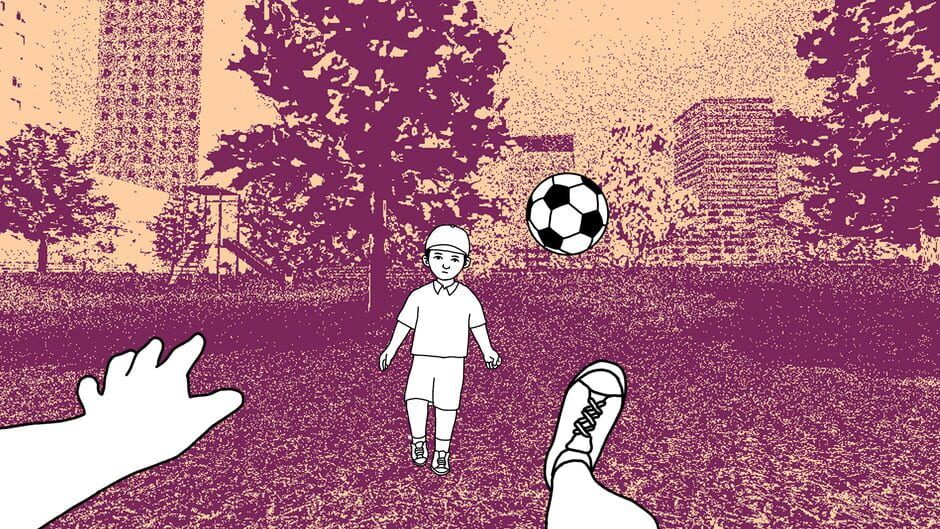
The game is a first‑person slice‑of‑life adventure set in Quito during Ecuador’s run‑up to qualifying for the 2002 World Cup. You see everything through the eyes of eight‑year‑old Julián, a kid whose entire world is school, family, friends, and a scuffed ball that never leaves his feet. Instead of menus and stat sheets, Despelote gives you streets, parks, buses, and cramped corner shops, then lets you see what happens when you nudge a ball through them.
On other platforms Despelote quickly earned a reputation as one of 2025’s standout indies. It holds a high‑80s aggregate on review sites and has picked up accolades including IGF awards, a Golden Joystick nod, and Game Awards nominations for Best Debut Indie and Games for Impact. Critics repeatedly highlight the same things. The natural dialogue and casual mischief feel pulled from a real childhood. Its short two‑to‑three‑hour runtime lands with surprising force. And its depiction of Ecuador at a very specific cultural moment is both ultra‑local and instantly understandable, no matter where you grew up.
Switch players are getting that exact experience, complete with the same blend of grounded realism and gentle surrealism that set Despelote apart on PC and other consoles. You are not playing full matches or chasing promotion through league tables. You are dribbling a ball down a crowded sidewalk, curving shots into alleyways, and poking at the edges of grown‑up spaces you do not fully understand. The ball is as much a conversation starter as it is a toy. Knock it to a stranger and they react. Roll it into a market stall and you might spark a scolding or a laugh.
That focus on small social moments is where Despelote really stands out, and where it fits the Switch audience especially well. Nintendo’s handheld has become a home for intimate narrative adventures and experimental indies that reward slow, attentive play. Despelote slots right alongside staples like A Short Hike and Night in the Woods, games that invite you to wander and soak in a place rather than chase high scores.
Quito itself is the star. The developers built the city using real photos, field recordings, and semi‑autobiographical memories, then filtered everything through Julián’s perspective. On Switch, with headphones and handheld mode, the chatter of adults, the distant roar of radio commentary, and the clack of the ball on concrete create a sense of presence that feels almost documentary. You are not just looking at a backdrop. You are eavesdropping on a neighborhood caught between everyday routines and the hum of something historic.
The story unfolds in little vignettes. A teacher half‑heartedly tries to keep kids focused while World Cup news leaks into the classroom. Neighbors argue about tactics over cheap radios. Friends debate what it would mean for Ecuador to finally step onto football’s biggest stage. Through all of it, Julián drifts on the periphery, listening, poking fun, trying to understand why everyone seems slightly more animated than usual.
For anyone who has watched a city fall in love with a tournament, it feels instantly familiar. For those who have not, Despelote becomes a gentle guide, showing how the so‑called beautiful game becomes a shared language. Crucially, the game never requires you to care about real‑world football stats or follow teams. It only asks you to care about the people in front of you.
That is why Despelote works even if you have never kicked a ball in your life. The mechanics are simple and readable. Dribbling feels playful rather than demanding. There are no complex combos or fail states to stress over, no difficulty spikes to gate the story. The tension comes from social awkwardness, from being a kid nudging against the boundaries of what adults will tolerate, not from whether you can pull off a perfect volley.
This makes it particularly well suited to the Switch’s pick‑up‑and‑play nature. You can wander through a neighborhood for ten minutes on the train, save mid‑chapter, then drop back into the same street later that night. The game’s compact length also fits nicely with handheld sessions. Many reviewers have pointed out that Despelote lingers far longer in your mind than its runtime suggests, a quality that pairs neatly with a system a lot of players use for shorter, more personal experiences.
Thematically, Despelote is about more than fandom. It is about community pressure and national pride, about how a huge event trickles down to kids who are just old enough to sense its importance but too young to carry its weight. There is a bittersweet undercurrent to Julián’s story as he sees both the joy and the frustrations that come with tying so much hope to a single team, a single qualification campaign. The Switch port preserves all of that nuance, offering a rare look at football from a perspective that feels grounded and specific rather than generic and global.
It also fills a gap in the Switch library. Sports on Nintendo’s system usually mean stylized arcade games or big licensed sims. Despelote is neither. It uses football as a lens for migration, class, and childhood, but it does so through small jokes and quiet scenes instead of lectures. Those layers are there for players who want them, yet the game never forgets to be playful. One minute you are contemplating a mural about national heroes, the next you are seeing how far you can loft the ball down a hill without losing it.
In North America Despelote hits the Nintendo Switch eShop on 11 December 2025, priced at $14.99. Japan follows on 18 December, with Europe and the rest of the world getting access on 13 January 2026. Given the critical praise it has already earned on other platforms and its budget‑friendly price, it looks positioned as one of this winter’s must‑play indies for Switch owners looking for something contemplative between bigger releases.
Whether you grew up playing pickup games under streetlights or have only ever seen football on a passing television, Despelote’s real magic lies in how it frames that ball at your feet. On Switch, wrapped in handheld intimacy, its memories of 2002 World Cup fever and the communities that formed around it feel closer than ever. It is less a sports game and more a postcard from a specific time and place, finally delivered to Nintendo’s most personal console.