
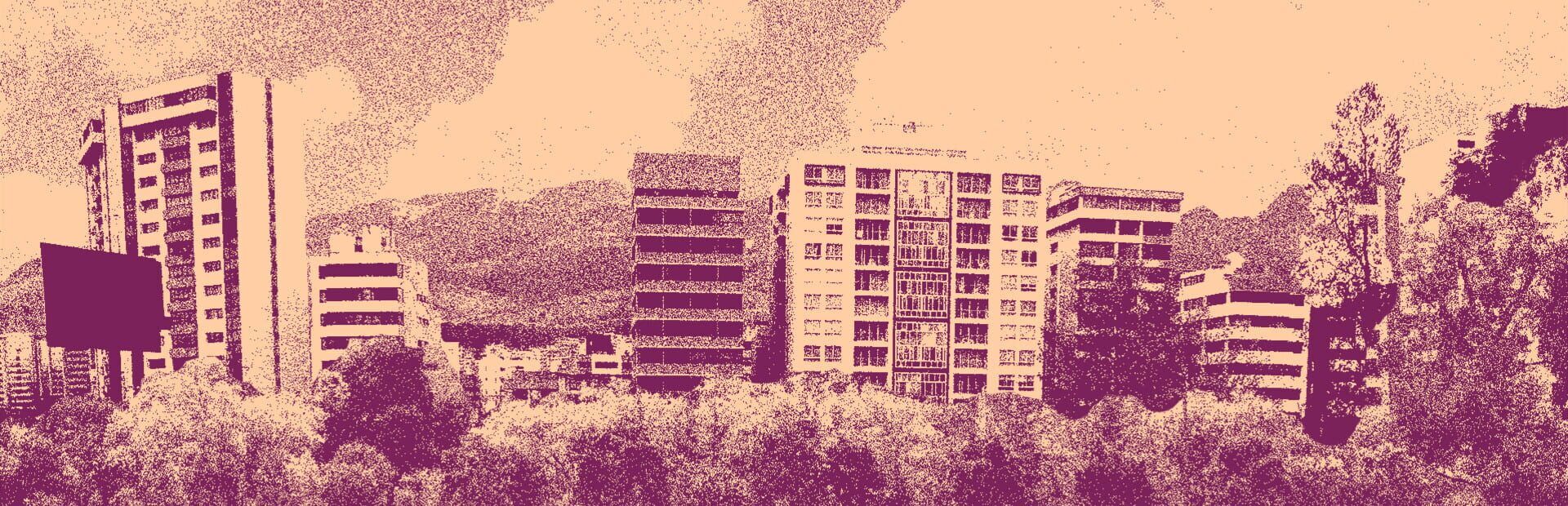

How an Ecuadorian World Cup qualifier, a child’s-eye view of Quito, and documentary-style audio turned Despelote into 2025’s most unexpectedly universal nostalgia trip.
Football games usually ask you to master systems. Despelote mostly asks you to listen.
You begin with a grainy, top-down football game on a dusty CRT, the sort of thing that might have chewed up Super Nintendo cartridges. Then the camera pulls back, and you are eight-year-old Julián in Quito in 2001, just another kid as Ecuador inches toward its first ever World Cup qualification. From that moment on, the sport fades into the background hum of everyday life. You are not here to win the World Cup. You are here to remember what it felt like to be small.
That is why Despelote is resonating so hard with critics who do not even like football. It is less about tactics and more about texture, using a very specific time and place to hit universal memories of childhood, community and the way big events seep into the cracks of ordinary days.
Quito as the main character
Quito is not just a backdrop. It is the point of the game.
Reviews and interviews keep coming back to how Despelote was re-shaped once the team leaned into “place” rather than pure sports design. The streets you wander are built from real photographs of the city, flattened and dithered into monochrome memories, then overdrawn with sketchy black outlines. Buildings lean at slightly odd angles, hills stretch a little too far, faces look like doodles from a school notebook. It feels like someone trying to recall their neighborhood from twenty years ago and getting the big shapes right while the details wobble.
From a design standpoint, this is simple and brilliant. You are never meant to forget that this is Julián Cordero’s remembered Quito. The haziness keeps you focused on feeling instead of fidelity. Critics have latched onto this because it lets Despelote do something sports games rarely attempt. It makes the city, more than the matches, the source of drama.
You kick your ball along cracked pavements past kiosks blaring commentary, bars where adults are already arguing about lineups, buses coated in yellow shirts. You hear snippets about politics and the banking crisis alongside gossip about who skipped school. Football is everywhere, but so is rent, traffic and the price of bread. The result is a portrait of a country that feels lived in rather than staged for a cutscene.
For players who do not care about whether Ecuador played a 4-4-2, that texture is the hook. The game invites you to treat Quito the way you might treat a beloved childhood neighborhood of your own. The unfamiliar becomes intimate, not through exposition, but through repetition. You walk the same streets in different weather. You come back to the same park at different times of day. You start to anticipate the rhythm of the vendors and the tone of the traffic. Critics keep describing Despelote as “transportive” because it does what the best travel writing and cinema do. It lets the city breathe on its own terms.
A documentary you can walk through
That sense of place would not land without the audio. Despelote’s critics almost all single out its sound design as the thing that actually puts you in Quito.
The team recorded on location, capturing real street noise, buses, birds and, crucially, real conversations between friends and family. Dialogue is entirely in Spanish, even in other language versions. Subtitles float beside people in comic-style bubbles, but the voices remain local and unpolished. Characters talk over each other. They mumble, pause, get distracted. Some lines are just kids hurling silly insults back and forth. Others carry weight, hinting at money problems or political tension without swinging into a lecture.
It feels uncannily like walking through a documentary and occasionally nudging it with your presence. You can choose to hang around and eavesdrop or wander off, but the chatter continues regardless. Unlike most narrative games, Despelote is not desperate for you to stand in the right spot and trigger the right line. Life goes on even if you are not watching.
That is a big part of why non-football fans are connecting with it. The story is not delivered as a pumped up “sports movie” arc. There are no locker room speeches, no slow-motion penalty kicks scored from eleven different camera angles. Important matches are often glimpsed from the corner of a living room while an uncle talks over the commentary, or heard second-hand through honking cars and fireworks outside your window.
Critics have described Despelote as “part game, part interactive documentary,” and the label fits. The raw, on-the-ground soundscape brings a journalistic honesty that stops the nostalgia from turning into syrup. Yes, this was a joyous moment for a country, but people still had to get to work, still argued in traffic, still worried about the future. The World Cup qualifier becomes another layer of noise folding into the day-to-day.
You do not need to know who scored for Ecuador. You just need to recognise that feeling of everyone around you caring intensely about something you only half understand.
Living a small life during a big moment
Despelote’s best trick is how small your role is.
You are not the prodigy striker. You never step onto the pitch of a roaring stadium. You are a kid in a school uniform trying to keep hold of a ball you are technically not supposed to have in class. When the national team plays, you might be squinting at an old TV, but you might also be outside, making up your own rules with friends while the adults shout through open windows.
Mechanically, this is a very gentle game. You walk, you talk, you kick. There are no failure states, no difficulty spikes, no skill trees to fill. The ball itself is half toy, half conversation starter. Nudge it down an alley and someone might shout at you. Lob it into a park and other kids might join you. Aim it at a flock of pigeons and they scatter in a spray of sound.
Critics who normally live and die by combat systems have praised this as a rare example of a sports-themed game that is not obsessed with winning. By stripping out the pressure and scorelines, Despelote can focus on something most football titles ignore. What it is like when the game seeps into your life long before or after the whistle.
That child’s-eye perspective is key. The camera sits low. Adults loom slightly, not menacing, just distant and complex. You catch fragments of their worries without ever fully grasping them, which is exactly how adult concerns feel when you are eight. Big events exist mostly as atmosphere. Flags, horns, a sudden wave of people in the streets. The game is terrific at capturing that half-comprehending awe, the sense that something enormous is happening somewhere above your head.
For players who might roll their eyes at sports fandom, this framing is disarming. The fanaticism is not being sold to you. It is being observed, tenderly, from the margins. You are allowed to marvel at how much it matters to everyone else without being asked to share their obsession.
Hyper-specific, quietly universal
One line that crops up in write ups and on Metacritic is that Despelote is “an interactive documentary about a country, a sport, and a life.” It is very specifically about Ecuador, about 2001, about a single qualification campaign. Yet that specificity is exactly why it ends up feeling universal.
If you grew up somewhere completely unlike Quito, you can still feel the bittersweet tug of walking streets that no longer look quite the same. You recognise the way your parents and their friends used to talk around you when something big was happening, whether that was an election, a strike or a concert you were just a little too young to attend. You know what it is like to fall in love with a small corner of the world simply because it is where you happened to be a child.
Critics from far outside Ecuador have zeroed in on this. The game is not trying to generalise its setting to make it more “relatable.” It is proud of its language, its slang, its specific politics and its footballing history. That honesty gives you something solid to latch onto. Instead of flattering you with generic sentiment, it invites you into someone else’s memories and trusts you to find your own inside them.
The length helps here too. At around two hours, Despelote feels like a film or a novella, not a season-long campaign. There is no grind, no repetition for the sake of progression. You experience this one summer, in order, and when it ends, it ends. For a lot of critics worn down by bloated open worlds, that restraint is refreshing.
A football game about everything around football
In the end, Despelote is a football story where the most important moments happen on the way to the stadium. The ball itself is mostly an excuse. It is a reason to wander, to stop and listen, to get told off by adults or egged on by friends.
For people who usually bounce off sports games, that has been the revelation. You do not need to bring knowledge of formations or player names. What you bring instead are your own memories of being young while grown ups cared about something hugely important. Despelote wraps that feeling in the sights and sounds of Quito and hands it back to you as an interactive memory.
That is why critics are still talking about it long after the final whistle. It is not a story about winning a match. It is a story about the noise outside your bedroom window when your whole country suddenly believes it might.