

Revisiting Demonschool’s oddball tactics, school‑life structure, and polarizing pacing in light of broader reviews to decide if it earns a spot on your late‑2025 holiday backlog.
As 2025 winds down, Demonschool is finally arriving on more platforms and finding a second life beyond its original Switch release. When we first covered it on Nintendo’s hybrid, we came away impressed by its willingness to get weird with both structure and tone. Invision’s glowing Switch review, calling it a “hilariously addictive” RPG with a 9/10 score, backs up that early enthusiasm. With a full year of broader critical reception now in play and a packed tactics calendar behind us, the real question for holiday backlog builders is simple: is Demonschool still worth slotting in next to the genre heavyweights of 2025?
The hook still hits: a college horror tactics RPG
Demonschool’s pitch has aged well. You play as Faye, a deadpan, violence‑addicted demon hunter stumbling into her first year of university on a cursed island. She is convinced the apocalypse is ten months out, so she does the natural thing and assembles a squad of campus weirdos to fight interdimensional horrors between lectures.
The premise blends Persona‑style school scheduling with something closer to Buffy the Vampire Slayer’s monster‑of‑the‑week energy. What separates Demonschool from the Persona comparison that has trailed it all year is how much leaner and more focused it is. Campus “exploration” is mostly single‑screen hubs packed with NPCs, side stories, and quick hangouts rather than fully walkable districts. You are not juggling dozens of stats and time‑blocks so much as cruising between dialogue scenes, side objectives, and your next mission.
Even in 2025, when tactics RPGs have leaned hard into massive hub worlds and sprawling calendars, Demonschool’s stripped‑down structure feels intentional instead of cheap. It puts the spotlight firmly on writing and combat, which remain its two strongest cards.
Writing that earns the “hilariously addictive” tag
Across reviews, one point is almost universal: Demonschool is genuinely funny. Invision highlights the way even one‑line NPCs get sharp, self‑aware jokes, but the core cast is what sells the tone. Faye’s over the top appetite for violence, Knute’s VHS‑nerd worry, and Namako’s reluctant slide into demon hunting give the story a constant comic friction, even when the plot leans on gore and occult dread.
Our original Switch impressions lined up with that. Demonschool’s script is fast and rarely wastes scenes. Character archetypes are broad at first glance, but the barrage of gags, throwaway asides, and surprisingly sincere beats around friendship and burnout help the party feel less like stock trope filling and more like a specific group of campus misfits.
That focus has also been one of the big dividing lines in the wider reception. Players who want lavish social simulation sometimes bounce off the minimal campus routine, wishing for deeper relationship systems or more granular daily planning. Fans who prefer snappy storytelling and compact scenes tend to land closer to Invision’s side, praising the game for never letting you sit too long between meaningful moments.
As a 2025 holiday pick, that matters. If you are looking for something to binge across a week off, Demonschool’s pace, jokes, and constant scene changes make it easy to keep saying “just one more mission” after midnight.
Combat that rewards planning more than grinding
Demonschool’s tactics layer remains its real differentiator. Where many grid‑based RPGs in 2025 emphasize build spreadsheets and lifespan‑long campaigns, Demonschool tightens the focus. You bring a four‑person squad into compact, isometric arenas and operate on a shared pool of Action Points during planning. The first command a character takes costs one point, the second two, and so on, which pushes you to spread actions intelligently rather than spamming your favorites.
Movement is where many players either fall in love or tap out. Characters move in fixed strides instead of free tile‑by‑tile steps, and the sidestep system is key for micro‑positioning. Every turn becomes a little puzzle about lining up knockbacks, stuns, and combos so your crew can pinball enemies across the map while staying out of reach. Once it clicks, battles feel closer to chaining trick shots in a physics puzzler than the methodical advance from cover to cover that defines something like XCOM.
Invision’s review and many others hammer on how addictive this loop gets once you stop fighting it. The ability to freely rewind your plan before committing, then watch both sides execute their turns in a single explosive resolution, encourages experimentation. Misjudge a combo route and you can instantly restart without wading through long reloads or losing significant progress. For holiday players catching up between family obligations, that low friction is a blessing.
That said, the criticisms have been consistent too. Demonschool throws a lot of fights at you. None are technically random encounters, but the frequency is high enough that even tactics fans have called out pacing drag when the campaign funnels you through mission after mission with only brief story breaks. If you are coming straight from a slower burn like a modern Fire Emblem or a character driven tactics RPG that uses battles as climaxes more than cadence, Demonschool’s density can feel like a wall.
Visual identity in a crowded 2025 tactics landscape
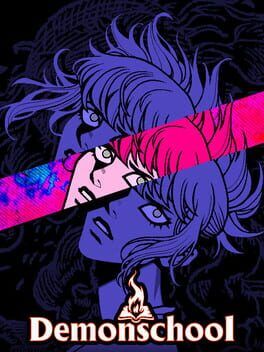
The last few years have been strong for expressive tactics art, and Demonschool still stands out among the pack. Its isometric maps, chunky sprites, and animated portraits evoke late‑90s PC RPGs and PS1 tactics games, but the color palette and enemy designs push into surreal, often disgusting territory. Invision specifically calls out how good the combat animations, environments, and portraits look on Switch, and that holds true across formats.
What helps most in holiday context is legibility. Demonschool’s maps are tight, enemy silhouettes are bold, and interface clutter is minimal. If you are playing in handheld mode on a trip or swapping the game between a living room TV and a smaller screen, your ability to read the board in a single glance matters. Demonschool’s art supports that, and it does so while also selling the offbeat horror‑comedy tone.
Strengths, weaknesses, and where critics have landed
Taken together, the broad critical response to Demonschool has ended up surprisingly consistent with Invision’s “new kid you have to meet” framing.
On the positive side, almost everyone aligns on three points. The writing is sharp and often laugh‑out‑loud funny, the core cast is memorable enough to carry the campaign, and the tactics system is both distinctive and deeply satisfying once mastered. Visuals and music usually sit just behind those, praised as stylish and thematically tight rather than technical showpieces.
The friction comes almost entirely from structure. Reviewers who clicked with the high fight frequency and compact hubs tend to rank Demonschool as one of the year’s brightest tactics surprises. Those who wanted more involved campus life, heavier character customization, or simply fewer battles per story beat walked away cooler. Importantly, though, very few critiques frame the systems as bad. They are framed as niche, demanding that you meet the game on its own terms.
If you played the Switch version at launch, nothing about the later ports changes this equation dramatically. Performance and load times are better on newer hardware, but the underlying design is exactly the same game Invision called “hilariously addictive.” For new players coming in at the end of 2025, the decision to dive in is less about technical polish and more about taste.
Holiday 2025 verdict: who should catch up with Demonschool?
With a release date of November 19, 2025 on additional platforms and an aggregated score hovering around the high 70s, Demonschool sits in that sweet spot between cult hit and mainstream breakout. For players building a tactics backlog for the holidays, it is not the longest, flashiest, or most sprawling game of the year, but it might be one of the easiest to actually finish before January.
If you enjoy puzzle‑like tactics where every turn is a compact problem to solve, and you value fast, funny writing over deep simulation, Demonschool is a strong recommendation. Its constant battles, brisk scenes, and generous restart tools make it ideal for short, intense sessions between seasonal obligations. The Switch version remains entirely serviceable if you are primarily a handheld player, while other platforms offer mild quality‑of‑life edges.
If, on the other hand, you want grand strategy, campaign‑length build crafting, or heavy social mechanics, Demonschool is better treated as a side dish than a main course. Its strengths are concentrated and deliberate, and its weaknesses mostly stem from how unbothered it is about matching genre peers on breadth.
Seen in the light of Invision’s praise and the wider critical consensus, our stance for late 2025 is clear. Demonschool is not the tactics game for everyone this holiday, but for the right player it is one of the most distinctive, tightly designed, and darkly funny RPGs you can catch up on before the year is out.