
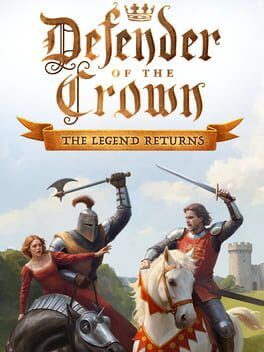
Defender of the Crown: The Legend Returns brings the 1980s Amiga strategy classic back with Retro, Classic, and Kingdom modes, including updated visuals and a new roguelite structure.
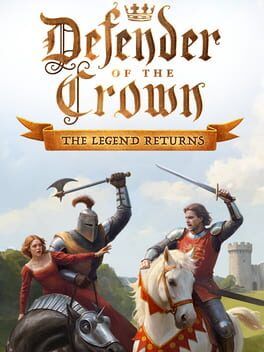
Image: IGDB
Store links: Defender of the Crown: The Legend Returns on Steam
A strategy landmark returns with three different claims on the past
Defender of the Crown: The Legend Returns is now positioned as a three-part revival of the Amiga strategy classic, combining a preserved original-style experience, a visually rebuilt version, and a new roguelite mode that changes the structure of play. Rock Paper Shotgun reports that the PC port marks 40 years since the original Defender of the Crown and packages the original game alongside a complete visual revamp and a new mode. The PlayStation Store listing describes the release as rebuilt for modern platforms and remastered with an entirely new way to play.
That combination creates the central tension around this strategy game revival. Defender of the Crown is being sold to players who remember the cinematic medieval strategy of the 1980s, but the package also acknowledges that a direct return to the original formula may not be enough for a modern audience. The Legend Returns therefore has to do three things at once: preserve the Amiga-era identity, smooth the systems for present-day players, and offer a repeatable mode with contemporary progression hooks.
The confirmed structure is clear across the public listings. The PlayStation Store names Retro Mode, Classic Mode, and Kingdom Mode as the three ways to play. Retro Mode is described there as the original Amiga classic, preserved with near-perfect authenticity and quality-of-life enhancements. Classic Mode is described as the Amiga classic reimagined with a new visual identity, refined mechanics, and smoother systems. Kingdom Mode is the new roguelite-leaning challenge, built around procedural maps, dice mechanics, unlockable abilities, and multiple difficulty levels.
The old campaign still revolves around armies, castles, and jousts
For anyone coming to Defender of the Crown without the Amiga memory attached, the basic premise remains a compact medieval power struggle. Rock Paper Shotgun summarizes the original as a strategy game set in medieval England after the death of the king, with rival factions competing for control. The core loop, as the outlet describes it, is to build a larger army than the opposition, invade castles, and occasionally joust.
That matters because The Legend Returns is not being framed as a genre reinvention in its Retro and Classic forms. The PlayStation Store says the ruleset, pacing, and atmosphere remain intact, while changes have been made around them through cleaner systems, improved balance, a modernized interface, and quality-of-life updates. In strategy terms, that suggests the remake is trying to reduce friction without rewriting the strategic economy that defined the original.
The design risk is obvious. A strategy game from the 1980s can have elegant pressure because it is lean, but that same leanness can read as shallow once players arrive with decades of Total War, Crusader Kings, deckbuilders, and roguelites in their muscle memory. The Legend Returns appears to answer that risk by separating preservation from expansion. Retro Mode carries the archival promise. Classic Mode provides the Defender of the Crown remake pitch. Kingdom Mode handles the question of replayability.
Classic Mode updates the look without cutting off the Amiga connection
The visual split is the easiest part of the package to understand. Rock Paper Shotgun reports that The Legend Returns includes the original pixelated Amiga graphics and a newer Classic Mode with modern graphics, refined mechanics, and smoother systems. The outlet also notes that much of the updated presentation still uses pixel art, with contemporary detail and flair rather than a full break from the original style.
That is an important choice for an Amiga strategy classic because Defender of the Crown’s historical reputation is tied to presentation as much as rules. The PlayStation Store’s description says the original helped define a new kind of cinematic strategy game in the 1980s. For a remake, that means higher resolution art alone would not solve the problem. The new version needs to preserve the sense of staging, readability, and theatrical medieval conflict that made the original stand out.
Rock Paper Shotgun singles out the jousting visuals as well realized in the refreshed version, while also noting that players still have the option to play the older version. That optionality is the smart strategic move. A remake that replaces the original risks alienating the audience most likely to search for Defender of the Crown The Legend Returns on day one. A package that places old and new versions side by side lets returning players decide how much modernization they want.
Kingdom Mode is the new roguelite layer, and it changes the strategic clock
The most consequential addition is Kingdom Mode, the Defender of the Crown roguelite mode. Rock Paper Shotgun reports that it mixes deckbuilding and dice-driven combat, with procedurally generated maps. The outlet quotes a press release saying players must unite the kingdom by defeating three enemy lords across a war-torn map while contending with brigands, rogues, and Norman forces. The same quoted description says runs become more complex as players unlock new dice types, relics, and mechanics, with tournaments, Saxon ladies to rescue, gold to raid, and castles to besiege beyond the battlefield.
The PlayStation Store confirms the same broad structure in listing language, describing Kingdom Mode as procedurally generated and built around special dice mechanics, unlockable abilities, and multiple difficulty levels intended to keep runs unpredictable. Metacritic’s critic excerpt from SECTOR.sk also characterizes Kingdom Mode as a distinct game sharing the same theme and foundation, while GAMES.CH describes it as a rogue-like mode that keeps the theme and visuals of the original.
For strategy players, the shift is larger than a bonus mode label implies. Classic Defender of the Crown is about territorial consolidation and military advantage inside a relatively compact campaign frame. A roguelite structure changes the planning horizon. Procedural maps push adaptation over memorization. Dice and deckbuilding mechanics introduce probability management and build planning. Unlocks can create long-term meta progression across failed or completed attempts. That is a very different strategic grammar, and the early critical response suggests not everyone agrees it fully lands.
Platforms, price, and current availability are partly clear
The PlayStation Store lists Defender of the Crown: The Legend Returns for PS5 with a release date of August 13, 2026, a price of $19.99 in the U.S. listing, offline play enabled, support for one player, DualSense vibration support, and PS5 and PS Portal cloud streaming support only with a PlayStation Plus Premium subscription. The same listing names Nordcurrent GmbH as publisher, gives the genre as Strategy, and lists English voice support plus screen languages including Simplified Chinese, English, French, German, Italian, Polish, Brazilian Portuguese, Russian, Spanish, and Ukrainian.
On PC, Rock Paper Shotgun points readers to the Steam page for the game, and the Steam listing source provided for this assignment carries the promotional text “Save 15% on Defender of the Crown - The Legend Returns.” The supplied Steam scrape does not include a base price or end date for that discount, so buyers should check the live Steam page before assuming the same offer is still active.
Platform information is wider in TheXboxHub’s coverage. The outlet’s visible article metadata says Defender of the Crown: The Legend Returns brings the classic Amiga strategy game to Xbox, PS5, Switch, and PC with Retro, Classic, and Kingdom modes. The available source text does not include separate store prices or technical details for Xbox, Switch, or PC, so the confirmed practical information is strongest for the PS5 listing and the Steam availability link.
Early reviews point to a remake with a split audience
Metacritic lists Defender of the Crown: The Legend Returns as released on August 13, 2026, with Black Tower Basement named as developer. At the time captured in the provided source, the site shows a “Mixed or Average” Metascore based on six critic reviews across all platforms, with two positive reviews and four mixed reviews. Its user score is not available in the source because Metacritic says user reviews open after four ratings and asks players to return starting at 12:00pm PST on August 14, 2026.
The excerpts collected by Metacritic underline the same structural tension visible in the mode list. SECTOR.sk calls it a compilation of three distinct games with a shared theme and foundation, praising the presentation. CGMagazine says it can be obtuse but credits quality-of-life improvements and an interesting new mode. GAMES.CH says the actual remake is well done but argues that the 1986 game is shallow by modern standards and that the dice-manipulating deckbuilder in Kingdom Mode does not stand out in a competitive genre. Multiplayer.it is more skeptical, describing the revival as clumsy and suggesting the package works better when using the past as a pretext for something new.
Those are review excerpts, not a final consensus for every player. They do, however, give returning strategy fans useful guidance. If the appeal is historical preservation, Retro Mode and the Amiga-linked presentation are the anchor. If the appeal is a modern strategy loop with repeated runs, Kingdom Mode is the feature to scrutinize. If the hope is that Classic Mode alone turns Defender of the Crown into a deep contemporary grand strategy game, the available criticism suggests expectations should be measured.
A revival for strategy fans who remember the original, but not only for memory
The most interesting read on Defender of the Crown: The Legend Returns is that it treats nostalgia as a design resource rather than a complete design plan. The confirmed package keeps the medieval contest for territory, armies, castles, and jousts, but it also adds a separate mode where dice, cards, unlocks, difficulty levels, and procedural maps carry the long-term replay burden. That is a forward-looking answer to a familiar remake problem: the systems that made a game famous can be historically important and still feel thin against modern genre expectations.
For older strategy fans, the value proposition is plain. The Legend Returns offers a route back to an Amiga strategy classic with original-style visuals available and a modernized version alongside it. For newer players, the better entry point may be Kingdom Mode, provided they are interested in a lighter medieval strategy roguelite rather than a pure historical restoration.
The unresolved question is balance. Dice systems and deckbuilding live or die on variance control, useful build paths, and interesting failure states. A remake can survive if its nostalgia mode is slight, because preservation has its own appeal. A roguelite mode has to keep producing decisions after the first few runs. The public listings confirm the ingredients, and the early review excerpts suggest the result is divisive. That leaves the practical advice simple: players who want the Amiga lineage have a clear reason to look now, while players mainly hunting for the next standout strategy roguelite should read deeper reviews or wait for broader player impressions.