
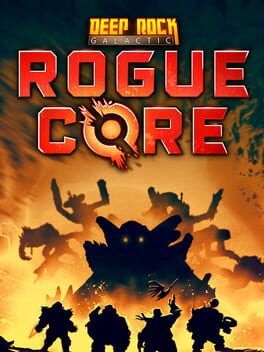

How Rogue Core’s roguelite structure, new classes, and run-based progression carve out a different identity from Deep Rock Galactic, and whether it already works as a standalone co-op shooter in early access.
Deep Rock Galactic: Rogue Core arrives in early access carrying a lot of baggage. The original Deep Rock Galactic is one of the most beloved co-op shooters on PC, a game that mixed chill mining trips, improv comedy, and sudden disaster in a way few others have matched. A spin-off that swaps the steady, long-term progression of the original for roguelite runs was always going to be a risky pitch.
After its early access launch though, Rogue Core is no longer just "Deep Rock with a roguelike mode." It borrows plenty of surface-level details from its parent, yet the moment-to-moment structure is sharper, harsher, and more prescriptive. That shift is both where it succeeds and where it currently feels just a little less special than the game that spawned it.
A new job description on Hoxxes
Rogue Core moves you from everyday miner to "Reclaimer," an elite dwarf sent back into corrupted DRG facilities to tear out the rot and salvage what you can. Functionally, that means diving into denser, more combat-heavy caves built around repeated runs instead of long-term operations.
The space rig hub will look comfortingly familiar to DRG veterans, right down to the slapstick bar, character customisation, and ritual pre-mission faffing. But the context is different. You are not leveling persistent classes over dozens of hours. You are setting up for another shot at a contained campaign of runs, trying to push deeper before your luck and health run out.
That subtle reframe matters. In Deep Rock Galactic, a failed mission could feel like a lost evening. In Rogue Core, failure is expected, folded into a meta-progression system that spits out new upgrades and options for your next attempt.
A harsher pace and a real threat curve
The most immediate difference is pace. DRG often works best as a hangout shooter, with space between fights for low-stress mining and nonsense. Rogue Core thinks idling is a mistake. A constantly rising threat meter is always ticking up, throwing more and nastier bugs at you the longer you stick around.
Practically, this transforms the flow of a mission. Exploring a new cavern, you rarely have time to Hoover up every vein or scout every angle. The game keeps asking the same question: is this detour worth the incoming heat? Even on lower difficulties, you can feel the pressure building as the meter climbs and the swarms arrive faster and hit harder.
Enemy tuning backs that up. Bugs are quicker and meaner, and they swarm more aggressively around objectives. Where DRG often gives you windows to reset and collect yourself, Rogue Core is more about staying ahead of the curve, triaging threats and accepting that you will not leave every biome fully stripped.
The cost is that the signature mining rhythm of DRG is softened. There is less time for idle excavation and environmental slapstick. The benefit is a much more defined arc to each run, where the tension rises predictably and even a clean early-game can turn sour if you get greedy.
Roguelite progression that actually cares about the squad
Rogue Core’s smartest idea is how it treats roguelite progression as a team sport rather than a grab bag of solo power-ups.
Runs revolve around Expenite, a resource you mine and loot that fuels your upgrades. Between missions and sometimes mid-run, you invest Expenite into perks and enhancements that shape your group’s build for that campaign. Instead of each player hoarding their own currency for private power spikes, many of the most important choices are communal.
You vote on Risk Vectors, optional challenge modifiers that crank up the danger in exchange for juicier rewards. You decide as a group whether to spend Expenite on shared utility, raw damage, or survivability. Unlocks often benefit the entire squad, which encourages actual conversation about what the team needs.
This shared progression fits co-op far better than the usual "everyone grabs their own random relic" approach. Rather than four separate characters incidentally helping each other, Rogue Core parties feel like a single build spread across four dwarves. When a risky mutator pays off in extra Expenite, everyone feels the reward. When it backfires and wipes the party, you only have yourselves to blame.
Outside of runs, the long-term meta is equally geared towards collective play. Cosmetics are earned through play rather than a cash shop, and the running joke of pumping iron in the station gym before unlocking round-ending drinks at the bar gives even the downtime a sense of shared ritual. It is the kind of small touch that makes repeated runs more palatable, even when a bad streak cuts them short.
Classes that play to the new structure
The four headline classes underline Rogue Core’s priorities. Instead of DRG’s more utility- and traversal-focused miners, you get combat specialists that plug directly into this faster, deadlier loop.
The Falconer fields an attack drone that can peel enemies off the squad or keep pressure on priority targets while you reposition. The Guardian is built around control and stuns, a frontline absorber that buys crucial seconds when the threat meter has tipped the room into chaos. The Spotter thrives on information, marking enemies for boosted damage and helping the team focus fire to thin swarms before they close the gap. Retcon, the most overtly roguelike idea, brings temporal tricks that let you rewind short moments, correcting a misstep that would have turned a good run into a failure.
These are not as immediately iconic as the original DRG roster, in part because they blur some of the old lines between mobility, damage, and utility. But they are tailored to Rogue Core’s pressure cooker design. Where the base game’s classes are defined by how they move through space, Rogue Core’s specialists are defined by how they manage time and threat.
That said, the early access build does not yet deliver the same sense of extreme asymmetry that makes original DRG squads feel like puzzle pieces. Roles are distinct, but your identity is currently more about your shared build decisions than about singular class gimmicks. It works for the roguelite structure, though it leaves room for Ghost Ship to push class expression further.
Traversal takes a back seat
One of the big side effects of Rogue Core’s focus on combat and forward momentum is that movement tools matter less. Cave layouts are more navigable and generally less convoluted, so you spend less time problem-solving your route and more time handling waves.
If your favorite DRG memories involve creative use of drills and platforms to cross absurd chasms or sculpt impossible staircases, Rogue Core will feel more constrained. There is still mining, still the joy of carving your own shortcuts, but the caves themselves do not demand quite the same ingenuity.
The trade is a heavier emphasis on reads and reactions in combat. Traversal is now a supplement to survival rather than the feature. The game wants your brainpower focused on where to fight, when to push the objective, and whether you can handle that next Risk Vector, not on how to get to the shiny ore on the ceiling.
Identity: spin-off or stand-in?
So does Rogue Core feel like a proper standalone game, or a mod that got promoted? In early access, it lands somewhere interesting. It is clearly cut from Deep Rock Galactic’s bedrock, yet its best systems lean away from imitation.
The escalating threat meter, shared Expenite economy, and Risk Vector voting create a structure that simply does not exist in the original. Runs feel more like distinct attempts at solving a shifting tactical puzzle, rather than variations of the same mining shift with different objectives. That is enough to justify Rogue Core as more than a paid side mode.
Where it comes up short for now is in texture. The original DRG is a weird, surprisingly gentle game despite all the screaming. Missions often feel like stories in which the bugs and the environment conspire with your bad planning to create slapstick disasters. Rogue Core is more direct. It is a tough, focused roguelite shooter that borrows the original’s jokes but not always its looseness.
If you go in expecting a replacement for Deep Rock Galactic, the early access version will probably feel narrower, especially in terms of mission variety and that distinctive slow-fast-slow pacing of the original. If you treat it as a sibling built around sharper runs and higher pressure, its personality starts to show.
Is it worth playing right now?
Taken as a standalone co-op shooter in early access, Rogue Core is already compelling. The core shooting feels great, the team-centric roguelite layer is strong, and the focus on tough, escalating encounters gives runs a punchy identity. It is easy to imagine a dedicated group sinking dozens of hours into mastering Risk Vectors, optimising team builds, and chasing that one perfect deep push.
At the same time, it does not yet eclipse the original Deep Rock Galactic. For all its clever systems, Rogue Core sometimes feels like a stripped-down remix of DRG’s best ideas, trading some of the old game’s charm and variety for focus and intensity.
If you are new to the series, Rogue Core already works as a satisfying entry point, especially if you prefer tightly structured runs over long-term character building. If you are a DRG veteran with a regular crew, it feels more like a complementary companion than a successor, something to rotate in when you want the familiar bugs and beards with higher stakes and less downtime.
That is not a bad place for an early access spin-off to be. With time to expand its class roster, deepen its meta, and add more wrinkles to its cave and mission generation, Rogue Core has every chance of stepping out from its parent’s shadow. Right now, it is a smart, mean little side project that already understands what co-op roguelites should be about: hard decisions, shared victories, and the constant, cheerful risk of losing everything to one very bad call.