
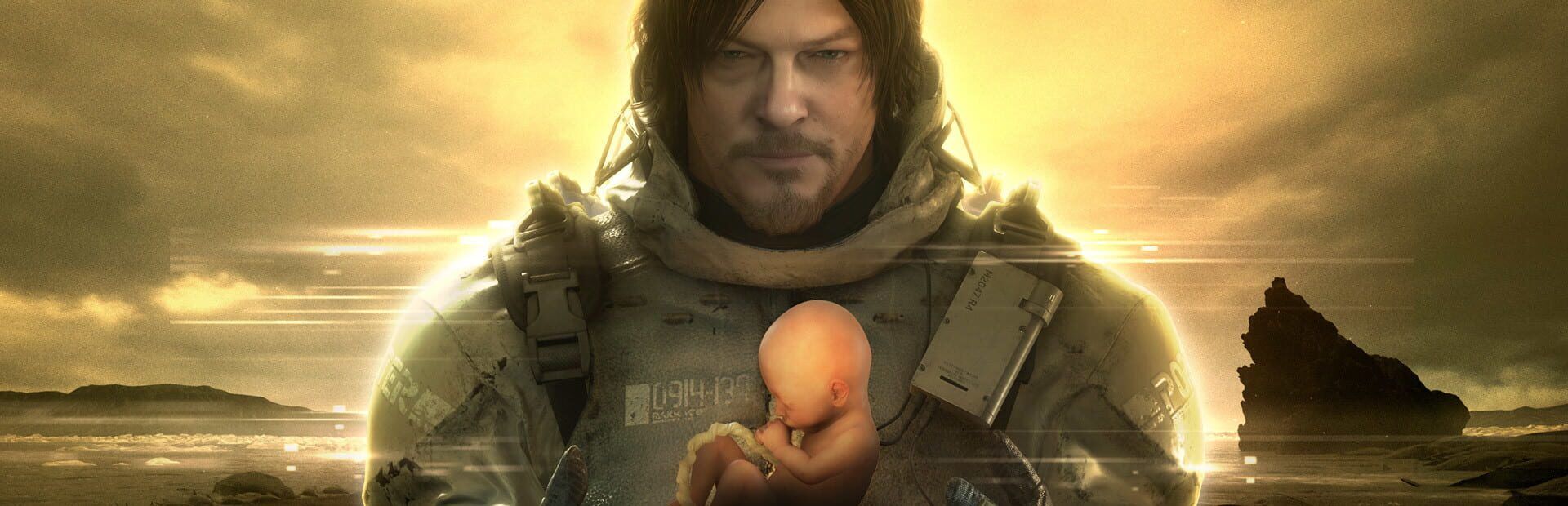
What the Game Pass version of Death Stranding Director’s Cut includes, how it compares to PS5, and how new and returning players should approach it in 2026.
Death Stranding has quietly gone from PlayStation oddity to one of the most widely available prestige games of the last decade. With Death Stranding Director’s Cut now joining Xbox and PC Game Pass on January 21, 2026, a huge new audience can finally see what Hideo Kojima’s so‑called “strand game” is all about without spending a cent beyond their subscription.
If you bounced off the PS4 original, skipped the PS5 upgrade, or have only heard the memes about “walking simulator with packages,” this Game Pass release is the cleanest, most convenient way to give it a fair shot. Here’s exactly what is included, how the Xbox/Game Pass build stacks up to PS5, and how you should approach difficulty, modes, and a revisit in 2026.
What you actually get with Death Stranding Director’s Cut on Game Pass
The Game Pass version is the full Director’s Cut package on Xbox Series X|S and PC, not the older base release that first hit PC Game Pass years ago. That means you’re getting the complete content and quality‑of‑life pass that Kojima Productions layered on top of the 2019 game.
All of this is included:
The full original campaign with all story content from the PS4 release. This is still a huge 40 to 60 hour journey depending on how many side deliveries you take on.
Director’s Cut story missions, including the new infiltration‑style facility and associated narrative threads. These add more stealth and combat‑adjacent gameplay compared with the mostly traversal‑driven original.
New delivery tools: the cargo catapult, support skeleton, buddy bot improvements and additional structures help streamline some of the more punishing stretches of traversal. Late‑game routes that were once a slog are now more about creative planning.
Expanded combat options, including the firing range, ranking challenges and extra weapons. Death Stranding is still not a pure third‑person shooter, but the Director’s Cut does a better job of teaching and surfacing its combat systems.
Racetrack and time trial content near the distribution center. It is throwaway in narrative terms, but if you enjoy messing with the physics and vehicles there is a surprising amount of side content here.
Remixed deliveries and new orders that highlight the fresh tools and structures. If you are returning after playing the 2019 version, a lot of this will feel like the “director commentary” version of earlier ideas.
Quality‑of‑life upgrades across the UI, route planning and online strand features. These trickled into different versions over time, but Director’s Cut brings them together neatly.
On Game Pass, the version you download is also fully compatible with Xbox’s cloud streaming where supported. For a game about long treks and meditative pacing, being able to continue a route on a handheld or a laptop is a surprisingly good fit.
Xbox vs PS5: features and performance in 2026
The big question for anyone who followed the game’s history is whether this Game Pass build is on par with the PS5 Director’s Cut. The short version: on modern hardware, the console versions are essentially feature‑equivalent and performance is very close.
Visual modes on Xbox Series X and Series S
Based on comparisons from Digital Foundry and other technical breakdowns of the Xbox port, here is how things shake out.
On Xbox Series X you get a quality and performance option, mirroring PS5:
Quality mode on Series X targets 4K resolution with a 60 fps cap. It is not native 4K at all times and uses reconstruction like the PS5 version, but in practice it delivers a sharp image across the sweeping landscapes.
Performance mode on Series X drops internal resolution to around 1800p but still targets 60 fps, giving you a slightly crisper frame‑time line in hectic areas or dense weather.
On Xbox Series S the modes are scaled appropriately:
Quality mode runs at 1080p with a 60 fps target.
Performance mode pushes resolution a bit lower, around 900p, in exchange for maintaining a stable 60 fps where possible.
In both cases, you are getting the “new generation” experience that Director’s Cut brought to PS5: fast loading, denser vegetation, improved draw distance over the PS4 original and cleaner image reconstruction.
How it compares directly to PS5
In terms of feature set, the Game Pass console version is the same Director’s Cut package PS5 owners have had:
Same core rendering features and post‑processing.
Same DualSense‑originated options such as more granular trigger sensitivity mapped onto standard Xbox input where it makes sense.
Same quality versus performance mode split.
The main tradeoff is controller‑specific immersion. On PS5, Death Stranding Director’s Cut made heavy use of DualSense features like detailed haptics that mirrored BB’s pod and adaptive trigger resistance when your load was off‑balance. On Xbox you lose that bespoke haptic work. Standard rumble and trigger feedback are present, but they are more conventional.
On the flip side, Xbox’s Quick Resume and the flexibility of cloud streaming via Game Pass compensate somewhat in terms of convenience. Death Stranding is perfect for dipping in for a single delivery and bouncing out, and it benefits a lot from being an “always installed” Game Pass staple rather than a dedicated purchase you feel obligated to grind.
PC Game Pass vs PS5
On a capable PC, Director’s Cut can exceed both console versions.
The PC build supports higher frame rates beyond 60 fps, ultrawide resolutions and technologies like DLSS on supported Nvidia GPUs. Visual settings can push draw distance and foliage density further than either console if your hardware allows it.
Compared with PS5, the PC Director’s Cut is effectively a superset in terms of raw image quality potential, though you miss out on DualSense features unless you connect the controller and play via Steam or another setup that exposes those functions. On PC Game Pass the core content and systems match PS5 and Xbox Series X, so your experience is really defined by your hardware and settings.
What Game Pass changes for players who skipped it on PlayStation
Death Stranding has always been polarizing. It is slow, often deliberately hostile to thoughtless play and structurally odd. Those are tough sells at full price, even with Kojima’s name on the box. Dropping into Game Pass removes that barrier.
For Xbox‑first players, this is the debut of one of the most distinctive “ex‑exclusives” of the last generation. If you lived through years of discourse about whether it was a masterpiece or a five‑star delivery job dressed up as an art film, Game Pass finally lets you take a position yourself.
For lapsed PlayStation owners who never grabbed a PS5, this is essentially the PS5 version’s content and performance waiting for you in your existing Xbox or PC ecosystem. You are not getting a lesser cut.
For people who tried the PS4 original and bounced off early, Game Pass is a low‑friction way to see what Director’s Cut fixed. The new tools and subtle tuning changes make the midgame flow better. Early‑game hikes are still demanding, but the options for smoothing out routes arrive sooner and feel more natural to integrate.
There is also the social strand layer. In 2026 the player base surges every time the game hits a new platform or subscription service. That means more player‑built structures, more signs and ropes and safehouses scattered across your world. Death Stranding is at its best when you feel like you are part of a diffuse community trying to tame an indifferent landscape together. Game Pass is likely to generate the biggest wave of that collaborative density the game has seen in years.
Who should play or revisit Death Stranding in 2026
If you have never played Death Stranding at all, the Game Pass version is the one to start with. It includes everything, runs well and sits in a subscription you may already be paying for.
If you finished the base game on PS4 and never touched Director’s Cut, it is worth revisiting if you were fascinated by the world and systems. The new missions, structures and quality‑of‑life changes do not rewrite the entire experience but they sand off several of the more frustrating edges and give you new toys that meaningfully change how you think about routes.
If you already played Director’s Cut on PS5, the calculus is different. The content is essentially identical. Replaying on Game Pass makes sense if you want to revisit the game with friends coming in on Xbox, or if you are curious how it feels to live with it as a cloud‑capable “comfort game” rather than a one‑and‑done prestige playthrough. Purely in terms of new content, there is nothing you have not already seen.
If you bounced off hard in the first few hours back in 2019 and found the pacing unbearable, Director’s Cut doesn’t magically turn Death Stranding into a conventional action game. It is more approachable but still built around long, thoughtful walks and management of weight, weather and terrain. Game Pass makes it easier to give it one more shot, but you should still expect something meditative and weird rather than a combat‑heavy blockbuster.
Recommended difficulty and mode choices
Death Stranding’s difficulty settings primarily affect combat lethality and certain fail states. They do not meaningfully change the core traversal friction, which is where most of the game’s challenge lives.
For most players in 2026, the sweet spot is Normal difficulty.
Normal still lets combat encounters feel tense without turning enemy camps into bullet sponges. It gives you enough room to make mistakes in early deliveries while you are getting used to weight shifting, stamina and balance.
If you are here mostly for the story, the landscapes and the strand system, Easy is absolutely fine. The game remains demanding in terms of planning and traversal regardless, but enemy threats are less punishing and you will see less mission failure due to combat blunders.
Hard is best reserved for returning players or people who loved the systems on PS4 or PS5 and want more pressure. It is less about adding new mechanics and more about narrowing your margin for error in combat and stealth.
On Xbox Series X and Series S, Performance mode is the recommended choice for almost everyone. A stable 60 fps is more valuable to Death Stranding’s feel than the marginal sharpness bump of Quality mode. Traversal is all about subtle analog inputs and reacting to micro‑wobbles of your load, and those feel significantly better at higher frame rates.
The main exception is if you are playing on a large 4K display, sit relatively close and particularly value image sharpness over responsiveness. In that case, you can safely choose Quality mode on Series X; the game’s slower pace means the minor hit to frame‑time won’t ruin the experience.
On PC Game Pass, target 60 fps first, then raise settings. Lock in a consistent frame rate, then dial up draw distance, shadow quality and texture resolution as your hardware allows. Ultrawide support is genuinely excellent here and accentuates the sense of scale in the environments.
How well does Death Stranding hold up in 2026?
Seven years on from its original release, Death Stranding holds up remarkably well.
Visually, the Decima engine remains one of the strongest showcase technologies on console. The weather systems, terrain materials and character rendering still look current, especially in Director’s Cut form. On Series X, Series S and modern PCs, it feels more like a contemporary title than a last‑gen relic.
Mechanically, the core loop is as singular as ever. No big budget game since has really tried to copy its terrain‑centric delivery structure and social strand ideas. In an era crowded with familiar open‑world checklists, Death Stranding still feels like its own genre.
Narratively, tastes will vary, but the themes of connection, isolation, remote work and fragile infrastructure arguably read even more sharply now than they did in 2019. Some of the exposition is clumsy and the last act still drowns in lore dumps, yet the emotional through‑line of Sam, Fragile, and the broader effort to stitch a broken world back together lands better with a bit of distance.
From a service perspective, sliding into Game Pass in 2026 gives the game a new lease of life. A multiplayer layer built on shared structures depends on an active population, and every subscription surge effectively refreshes the landscape with new bridges, ziplines and shelters. That makes Director’s Cut on Game Pass one of the best ways to experience Death Stranding today, especially if you missed its earlier waves.
If you have any curiosity at all about what Hideo Kojima did after Metal Gear, the Game Pass arrival removes every meaningful excuse not to at least walk out of the first city and see what this strange, lonely world feels like in your own hands.