
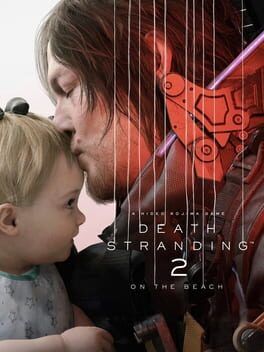
Breaking down Death Stranding 2: On the Beach’s free update that lands alongside the PC version, from the brutal new difficulty and boss rematches to live‑action cutscenes and feature parity on PS5.
Hideo Kojima has turned Death Stranding 2: On the Beach’s PC launch into more than a simple port date. When the game arrives on PC, a free update lands on both PC and PS5 that meaningfully reshapes how you can replay and experience the sequel. It is not a Director’s Cut scale overhaul, but it quietly plugs some of the biggest post‑launch holes and gives veterans a reason to come back.
The new “To The Wilder” difficulty actually matters
The headline addition is a new hardest difficulty option called To The Wilder. Death Stranding 2 was already less punishing than the first game by design, with Kojima Productions explicitly toning down difficulty spikes to make the sequel more approachable. That decision helped more players see the credits, but it also left some veterans feeling like the world was a little too forgiving.
To The Wilder is pitched as a response to those players. It is not just a health and damage tweak: enemies behave more aggressively and demand cleaner execution, and the already delicate balance of traversal, resource management and route‑planning becomes tighter. Deliveries that felt comfortably manageable on Normal or Hard start to resemble the precarious hikes that defined the original Death Stranding at its best.
The new setting also gives room for a second playthrough with different priorities. Where the first run is typically about absorbing the story and experimenting with structures, a To The Wilder replay can turn the same map into a survival‑flavored challenge. The Social Strand System still means other players’ structures can soften the blow, but the higher stakes put more emphasis on improvising when networks fail or resources run low.
Boss rematches close one of DS2’s strangest gaps
One of the oddities of Death Stranding 2 at launch was how it treated its boss fights. The first game let you revisit its most memorable encounters, like the Cliff battles, any time you wanted. The sequel did not, which felt especially strange given how heavily marketed and cinematic some of its set‑piece encounters are.
The update fixes that. You can now replay boss fights, including the marquee confrontations with Neil. This is more than fan service. Death Stranding 2’s bosses sit at an intersection of mechanical systems, spectral imagery and full‑on Kojima theatrics. Being able to reengage with those fights lets players experiment with different loadouts, test the new difficulty setting and simply rewatch sequences that were previously locked to a single playthrough.
For the wider community, this also opens the door to challenge runs, time‑attack style self‑imposed goals and shareable clips that were harder to justify when a boss could only be seen once per save. In the long tail of a single‑player game, unlockable replay tools like this do a lot of heavy lifting.
Live‑action cutscenes and restored scenes deepen the story
The other major addition is a suite of new live‑action cutscenes and restored material that was originally cut from the PS5 release due to space limitations. Kojima has a long history of blending live‑action footage with in‑engine cinematics, and Death Stranding 2 already leans heavily into stylized, filmic presentation. Folding more live‑action into that mix is very much in character for the series.
These scenes are not random extras. Alongside the restored live‑action, the update adds brand‑new nightmares for Sam that slot into his existing dream sequences. Those vignettes were already a window into the character’s trauma and the game’s stranger metaphysical ideas. More nightmares mean more chances to explore those themes, and for players who obsess over lore, it is essentially new story content.
The framing here is important. This is not a “bonus DVD” menu of disconnected clips, but additional narrative beats distributed through the campaign and Sam’s private space. It is the kind of thing that can subtly recontextualize earlier scenes for players coming back for a second run.
New items and small touches that reinforce the loop
Alongside the headliners, the update adds new items and quality of life tweaks shaped by player feedback. Kojima has not placed these on the same pedestal as the new difficulty or cutscenes, but Death Stranding as a series thrives on small systemic additions. A single tool can change how you approach an entire region, and a minor tweak to traversal or cargo management can ripple through the whole experience.
One of the lighter but very on‑brand inclusions is Tarman’s Chiral Cat now appearing in Sam’s room. The private room has always acted as a tonal palette cleanser between long treks; giving players another point of interaction there, especially one that has already become a minor community mascot, helps keep that space feeling alive.
PC launch features, PS5 parity and ultrawide support
On PC, Death Stranding 2 arrives with the technical suite you would expect. Uncapped frame rates, support for modern upscalers from NVIDIA, AMD and Intel, and both 21:9 ultrawide and 32:9 super ultrawide options are all in the mix. As with the first game’s PC version, this port is tailored for players who want to treat Kojima’s apocalyptic hiking sim as a high‑end tech showcase.
Crucially, some of those display upgrades do not stay on PC. PS5 players gain 21:9 ultrawide support for both gameplay and in‑game cutscenes, letting the console version push closer to the cinematic presentation Kojima openly chases. While PS5 cannot match the PC’s 32:9 support or fully uncapped frame rate, the gap between platforms is far narrower than it was with many last‑generation console‑to‑PC transitions.
This parity matters because Death Stranding 2 is unusually invested in its framing. Expansive vistas, looming BTs on the horizon and long, uninterrupted walking shots all land differently when you can see more of the world at once. For players with compatible displays, the update meaningfully upgrades the feel of the game without touching the core design.
What this update signals for Death Stranding 2’s future
Stacked together, the harder difficulty, boss rematches, live‑action scenes, new items and display options form a package that feels less like a token PC parity patch and more like a “second pass” on the sequel. It fills in missing features, responds directly to fan criticism and leans further into Kojima Productions’ strengths in both systemic design and audiovisual excess.
At the same time, it is clearly not a Director’s Cut sized reinvention. There are no new story chapters, no major new regions or delivery types that rewire the structure of a playthrough. Players hoping for a wholesale remix in the style of the first game’s reissue will not find that here.
Where it is meaningful is in how it extends the life of the existing content. To The Wilder gives veterans a fresh way to inhabit the same world. Boss rematches restore a feature that arguably should have been there at launch and that will likely fuel community challenges for months. Live‑action and nightmare scenes give lore‑hungry fans another layer to pick apart. And PS5 display upgrades ensure the console audience is not left on a clearly inferior version just as PC players arrive.
Framed that way, this update feels like a deliberate second wave rather than a marketing afterthought. It does not rewrite Death Stranding 2, but if you bounced off the original difficulty curve, wanted more ways to revisit its wildest sequences or simply needed an excuse to return to Kojima’s broken America, the PC launch patch provides exactly that without asking you to buy the game twice.