
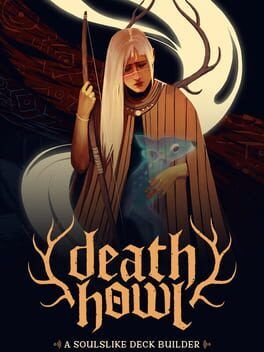

Death Howl brings a striking mix of real-time Soulslike combat and deckbuilding to Game Pass now, with a PS5 release set for early 2026. Here’s how its card systems actually work in motion, how its structure differs from classic Souls, and whether its bleak, experimental tone belongs on your radar.
Death Howl is one of those pitches that sounds like it came out of a late-night Discord call: a grim Soulslike where every swing and dodge is driven by cards in your deck. It is out now on PC and Game Pass, with console versions on the way and a PS5 launch currently targeting early 2026, giving PlayStation players plenty of time to decide if this strange hybrid deserves a spot on their wishlist.
At its core, Death Howl plays like a methodical third-person action game. You move and position in real time, reading enemy windups and looking for punish windows, but your actions are gated by the cards in your hand. Instead of a static move set, Ro’s attacks, dodges, blocks, weapon skills and shamanic rituals are all represented as cards you draw into play. When you commit to a heavy strike or a desperate dash, you are literally spending a card from your limited hand, not just tapping a face button.
That deckbuilding layer changes how you evaluate every encounter. Between battles and at key rest points, you curate a deck that defines what Ro can actually do in combat. You might lean into high-risk, high-reward cards that trade Ro’s health for massive stagger damage, or build around defensive cards that parry and counter, turning enemies’ aggression back on them. Totems and relics function like modifiers that bend the rules of your cards, letting you chain effects, manipulate your draw and tweak costs so a build that felt fragile at the start can snowball into a terrifying engine by mid-run.
Crucially, this all plays out without pausing the action. You are still circle-strafing, watching tells and dodging at the last second, but you are also glancing at your hand and mentally planning a three-move combo around what you might draw next. It occupies a similar mental space to games like Slay the Spire or Monster Train, yet the moment-to-moment execution is closer to a stripped-back Souls boss duel. Success means understanding both the numbers on your cards and the animations in front of you.
Structurally, Death Howl borrows the broad arc of a Soulslike but filters it through a rougelite-leaning lens. The world is carved into distinct regions within the spirit realm, each with its own pool of enemies, environmental hazards and narrative beats tied to Ro’s grief. As you push forward, you unlock shortcuts and new paths that change subsequent runs, but you should not expect a sprawling, interconnected map on the scale of a FromSoftware epic. Instead, it feels more like a sequence of dense, combat-focused arenas and paths, stitched together by campfire-style rest points where you level, tweak decks and swap out totems.
Death in Death Howl still matters. Wiping to a boss or getting overwhelmed by a pack of spirits sends you back, forces you to reconsider your deck and maybe cut the card that kept clogging your hand at the worst moments. Persistent progression systems soften the blow, handing out new cards, totems and passive unlocks that gradually broaden your options. The loop can be punishing, but it also encourages experimentation. A run that ends in failure is rarely wasted time, since it often teaches you something about enemy patterns or reveals a new card synergies you can chase next time.
Tonally, Death Howl feels closer to experimental Souls-likes like Ashen, Mortal Shell or Thymesia than to straight-up FromSoftware homages. You play as Ro, a shaman who has lost her child and refuses to accept it. The entire game takes place in a metaphysical spirit world that externalizes grief as hostile entities, decaying landscapes and oppressive weather. Enemies are designed less as generic fantasy monsters and more as manifestations of sorrow and denial, and the story uses minimalist dialog and environmental cues rather than big exposition dumps.
If Dark Souls is about cycles of fire and decay, Death Howl is about the suffocating loop of loss and the destructive lengths someone might go to in order to escape it. Expect quiet stretches of wandering through lonely, ruinous spaces punctuated by sharp, demanding fights. It is heavy, melancholic and often uncomfortable, so players who prefer the swashbuckling energy of something like Lies of P or the power fantasy of Lords of the Fallen may find its mood a bit too bleak.
That bleeds into the difficulty curve as well. By most early impressions, Death Howl is not interested in being approachable in the way some recent Souls-likes have tried to be. You are juggling stamina-like resource management through cards, learning unfamiliar move sets and building a deck that actually functions under pressure. There are no easy respecs or gigantic loot treadmills to brute force your way through bad decisions. When a build is flawed, the game will punish you until you either refine it or start over with a different angle.
For players who enjoy the challenge of titles like Sekiro, Nioh or Remnant 2, that strictness is part of the appeal. Death Howl invites the kind of theorycrafting you usually see in card games and fuses it with the boss-learning mindset of hardcore action RPGs. It is the sort of game where you stare at your defeated build screen, immediately see three ways you could have tuned your deck, and dive back in determined to make it work.
So should Death Howl be on your radar? If you come to Souls-likes purely for weapon feel or sprawling exploration, it might not fully click. The focus here is tight, systems-driven combat in contained spaces, layered over a somber, introspective narrative. On the other hand, if the idea of managing a hand of cards while rolling through spectral sword swings sounds thrilling rather than overwhelming, Death Howl is absolutely worth watching.
Game Pass makes that a lot easier. With the game already live on PC Game Pass and slated for console Game Pass when it hits Xbox, subscribers can sample its strange blend at no extra cost beyond the subscription. For PlayStation 5 owners, the wait until early 2026 is longer, but that also means giving the developers time to tune balance, refine UI for controller play and roll out any post-launch content before it lands on Sony’s hardware.
In a genre that risks collapsing into copycats, Death Howl stands out as a rare experiment that genuinely tries to push Soulslike combat into a new space. It asks more of its players, both mechanically and emotionally, but that might be exactly what some fans are looking for. Keep it on your wishlist if you want your next Soulslike to feel unfamiliar in the best way, and be ready to learn a new language of cards, spirits and perfectly-timed dodges when it howls onto your platform of choice.