
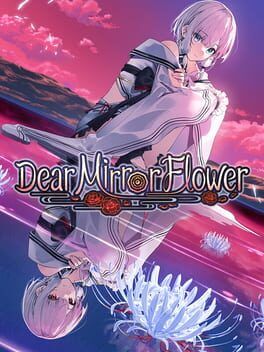

Kogado Studio’s supernatural mystery VN Dear Mirror Flower is coming to Nintendo Switch in 2026 with full voice acting and new heroine epilogues, making the console version the definitive way to visit its demon‑plagued town.
Kogado Studio’s dark fantasy visual novel Dear Mirror Flower is officially headed to Nintendo Switch, with a Japanese release set for April 30, 2026. Originally launched on PC via Steam in June 2025, the port promises to be more than a straight conversion, adding features that make this the version VN fans will want to keep on their radar.
A town where Demon Spirits bloom from the heart
Dear Mirror Flower is set in a modern Japanese town where strange incidents never seem to stop. At the center of the unrest are Demon Spirits, beings born from the darkness of human hearts. Accidents, disappearances, inexplicable outbursts of violence all trace back to these entities that quietly take root in people’s emotions before erupting into disaster.
You awaken in this town with your memories torn away, the victim of a Demon Spirit attack. Through the haze of fading consciousness you remember a girl’s voice, and when you come to, she is standing over you, uncertain yet determined. That brief scene sets the tone for Dear Mirror Flower as a story where personal trauma, buried regrets, and supernatural horror are always intertwined.
The narrative leans into urban fantasy and occult investigation, but frames it through intimate character drama rather than action. Everyday locations are haunted not by traditional ghosts, but by manifestations of jealousy, grief, obsession, and guilt. The game’s title becomes a metaphor for that reflection of the heart, warped like a flower blooming in a mirror.
Satoree, mind reading, and a cast built on secrets
At the core of Dear Mirror Flower is its lead heroine, Satoree Mizuki. She can read minds, hearing fragments of the thoughts that people would rather keep hidden. That power makes her invaluable in confronting Demon Spirits, since each case is rooted in an individual’s emotional spiral, but it also isolates her from others. The story often lingers on how much it hurts to know what everyone truly thinks.
You play as the amnesiac protagonist drawn into Satoree’s orbit, slowly learning that you are a Kotodama User whose words can shape reality. Working with Satoree, you attempt to unravel each incident by diving into the tangle of human emotion behind it and confronting the Demon Spirit it has spawned.
Around these two, Kogado builds a core cast of heroines whose lives have all been touched in different ways by Demon Spirits. Each route explores a specific emotional wound and the supernatural echo it creates. As is typical for multi-route mystery VNs, individual paths reveal pieces of the broader truth, while a final route ties the town’s curse, your lost memories, and Satoree’s burden together.
The hook is not just “solve paranormal cases,” but “understand why these horrors were born in the first place.” Reading thoughts, choosing your words carefully, and watching relationships bend under the pressure of hidden feelings is where Dear Mirror Flower leans hardest into its identity as a drama-focused VN.
How it plays on Switch
Structurally, Dear Mirror Flower is a traditional text-heavy visual novel. You read dialogue, watch character sprites emote against lush backgrounds, and make key choices at branching points. Those decisions push you toward different heroine routes, endings, and ultimately various epilogues.
Rather than complex puzzle mechanics, the tension comes from deciding how your protagonist responds in moments where a wrong word can worsen a Demon Spirit’s hold on its host. The Kotodama concept is expressed through these narrative choices and occasional special scenes where your phrasing carries unusual weight.
On Switch, that style of play slots comfortably into both handheld and docked modes. The game is fully navigable with buttons, but its text-forward interface and static scenes should also benefit from the Switch’s screen for long reading sessions, whether you are curled up in handheld or letting the dramatic CGs fill a TV.
Language-wise, Dear Mirror Flower includes English, Japanese, Traditional Chinese, and Simplified Chinese support on PC, and the Switch release is following suit. That means import-friendly access for VN fans even if localized Western publishing details are not fully pinned down yet.
What is new versus the current PC version
The Steam release of Dear Mirror Flower launched without voice acting, a common cost-cutting measure for mid-sized VNs. The Switch announcement changes that in a big way. Kogado is treating the console port as an upgraded edition that folds in significant new content and presentation improvements.
The headline addition is full voice acting. The Switch version features voiced dialogue for the main cast, bringing Satoree, the protagonist, and the rest of the heroines to life. Hearing internal monologues, emotional breakdowns, and climactic confrontations performed by a dedicated voice cast should amplify the game’s most dramatic setpieces, especially during scenes where Demon Spirits manifest and characters are forced to speak their ugliest truths.
Crucially, that voice work is not locked to Switch forever. Kogado has already confirmed that full voice acting will arrive on PC as a free update timed with the console launch. Even so, Switch players get to jump straight into the complete package the day it lands in 2026, without needing to revisit a previously played, silent version.
The other big upgrade is a set of new heroine epilogues. Dear Mirror Flower already offers multiple routes and endings, but the Switch edition adds extra scenario content that acts as follow up chapters for the five heroines. These epilogues provide more time with each character after their main arc resolves, fleshing out how they live with the aftermath of their encounters with Demon Spirits and what “happily ever after” looks like when your scars are supernatural as well as emotional.
Details on the exact structure of these epilogues are still under wraps, but they are positioned as brand new story scenes rather than minor bonus skits. For readers who enjoy seeing relationship consequences play out instead of simply cutting to credits, this sort of extended denouement is a major draw.
Alongside those headliners, the Switch version is positioned as the definitive edition, with stability adjustments and UI tuning for console play. Combined with the full voice track and extra story content, it offers a more polished experience out of the box than the initial 2025 PC release.
Why VN fans should keep it on their 2026 radar
The Switch library has become a de facto home for visual novels, but there is still room for projects that sit squarely between pure romance and pure horror. Dear Mirror Flower fills that middle ground with a blend of occult mystery, character-focused drama, and a distinctly Japanese sense of urban melancholy.
For fans of titles like Root Letter, Iwaihime, or Kogado’s own past adventure games, this is the kind of work where spooky incidents are inseparable from the people living through them. Demon Spirits are not just monsters to be banished, but mirrors reflecting everything their hosts could not say out loud. That concept meshes neatly with Satoree’s mind-reading and the Kotodama motif, making dialogue choices feel thematically weighty even without complicated gameplay systems.
The 2026 timing also works in Dear Mirror Flower’s favor on Switch. By the time it arrives, PC word of mouth will have settled around its branching structure, emotional payoffs, and how well it walks the line between supernatural mystery and human drama. The console version folds in full voice acting and fresh epilogues from day one, letting new players jump into the best version while existing fans have a strong incentive to double-dip.
If you use your Switch as a dedicated VN handheld, Dear Mirror Flower looks poised to be one of the more intriguing supernatural offerings on the system’s 2026 slate. Between its psychic heroine, its Demon Spirit mythology grounded in human weakness, and the promise of extra story content tailored for the port, it is worth bookmarking for anyone who likes their mysteries tinged with both romance and regret.