
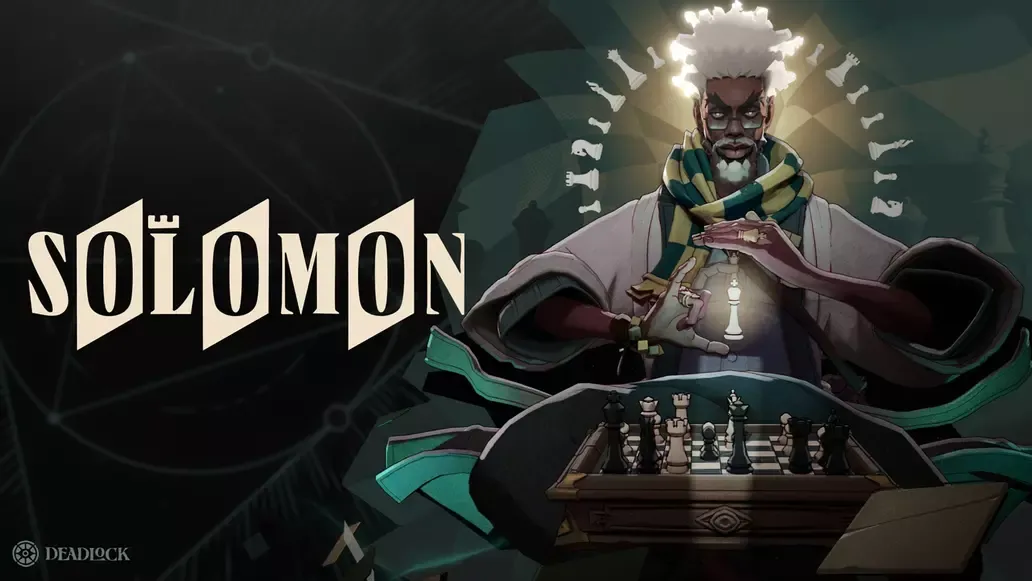
Valve's latest Deadlock update adds Solomon, a chess-themed hero whose board weapon, ally-moving kit, and community-spotted famous-match reload animations are already shaping discussion around the invite-only shooter MOBA.
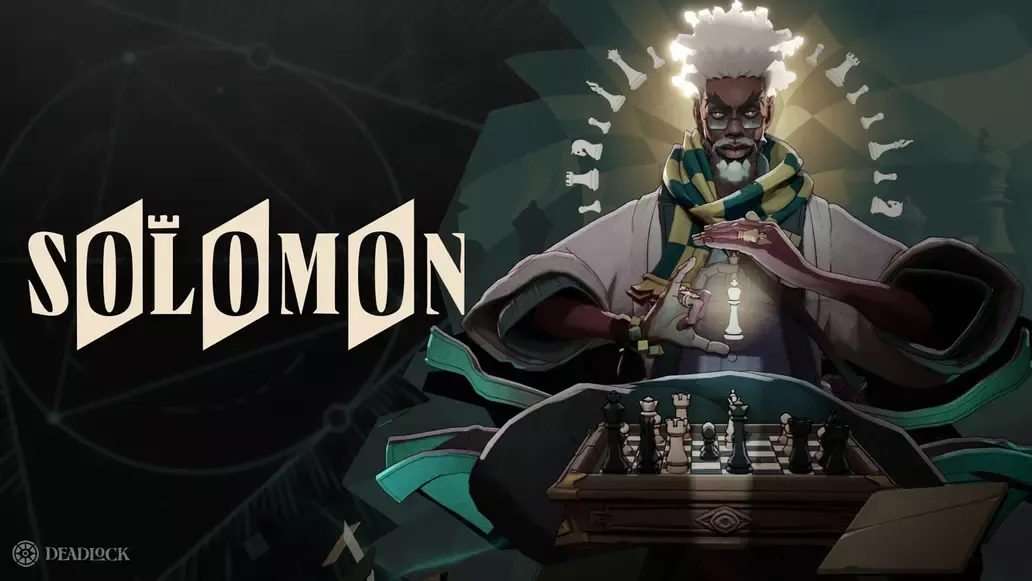
Image: shacknews.com
Solomon is live, and Deadlock just got its strangest gunfight problem yet
Valve’s latest Deadlock update has added Solomon, a chess-playing hero who is available in-game now, according to patch coverage published by Deadlock.one and Tracklock on October 10, 2026. The immediate tension is clear: Solomon is built around turning lanes, walls, and even teammates into chess pieces, which gives Deadlock one of its most ambitious kits at the same time the invite-only shooter MOBA is drawing a bigger crowd.
PCGamesN reports that the Deadlock Solomon update helped push the game to a new all-time peak on Steam, higher than Team Fortress 2’s all-time peak, while also noting the obvious caveat that Steam itself has grown over time. That is still a useful marker for the moment Solomon is entering. Deadlock is not being tested in a quiet corner. Every new hero now arrives into a competitive audience that is already studying damage windows, mobility, reload timing, and whether Valve can keep a complex hero readable in a firefight.
Solomon’s official-style flavor text, reproduced by Deadlock.one, frames him as a calm chess master who treats the city as one giant board after the Patrons come calling. That idea is not cosmetic dressing. His weapon is a chessboard, his abilities place and move oversized pieces, and his reload has become the update’s breakout detail because players believe Valve tied its board states to famous chess games.
A board as a weapon changes the pace of every reload
Solomon does not carry a conventional gun in the way most shooter players would read one. PCGamesN says he throws pieces at opponents for precise long-range damage that scales with Spirit. Offstage, translating and summarizing the character’s numbers, identifies the weapon as the Alekhin Cannon and lists it as a chessboard that fires at long range, dealing 30 damage per shot with a two-shot-per-second fire rate, an eight-round magazine, and a three-second reload. Offstage also reports that the shots explode in roughly a one-meter radius, deal full damage including to the head, and that an enemy can only take explosion damage once per shot.
Those numbers matter because Solomon’s theme is tied directly into his combat rhythm. PCGamesN reports that when Solomon reloads, he rapidly sets up a new game and plays out a few moves, leaving a number of pieces on the board that matches his current ammo count. The same report says that count can rise as the player buys items that increase ammo.
From an FPS readability standpoint, this is a bold choice. A three-second reload on an eight-shot weapon creates a clear punish window, but Solomon’s board animation also communicates ammo state in a diegetic way. If it holds up under match pressure, that is elegant. If it becomes visual noise around teamfights, the novelty could fight the information players actually need. The sources provided do not include Valve commentary on whether the animation has gameplay readability settings, alternate view options, or accessibility toggles.
The famous chess reloads are a community discovery, not an official claim in the provided sources
The phrase players are searching for, Deadlock reload animations chess, comes from the community’s reaction to Solomon’s board rather than from a Valve statement in the provided material. Kotaku reports that eagle-eyed fans noticed Solomon’s reload positions appear to reference famous historical chess matches. The outlet cites a Deadlock News social post claiming that every board layout after reload is taken from an actual historical game and that the layout changes with Solomon’s remaining ammo count.
Kotaku specifically mentions the 1851 Immortal Game between Adolf Anderssen and Lionel Kieseritzky and Deep Blue’s 1996 win over Garry Kasparov as examples of the referenced positions. That is the cleanest way to frame the current state of the evidence: the animations have been identified and circulated by players, Kotaku has reported on that community finding, and the provided sources do not show Valve formally confirming the full list of games or the design process behind those references.
The attention is still understandable. Shooter reload animations usually sell weapon identity through hand movement, sound, and speed. Solomon’s reload is being treated like a hidden archive of chess history. For a hero whose whole kit asks players to think in diagonals, ranks, files, and forced movement, that is the kind of flourish Deadlock fans will dissect frame by frame.
Solomon’s kit is built around control, ally movement, and wall pressure
Deadlock.one lays out Solomon’s core abilities as Setup Bishop, Kingside Knight, Rook Battery, and Develop Queen. The same source says Setup Bishop creates a bishop that remains in place indefinitely, then can be moved to apply a fading slow and Spirit damage to enemies it passes through. After a delay, diagonal squares activate and deal more Spirit damage to enemies who step on them. Deadlock.one lists the base cast range at 20 meters, cooldown at 12 seconds, fading slow at 30 percent, impact damage at 70 with Spirit scaling, and square damage at 25 with Spirit scaling.
Rook Battery is the more obvious lane-fight tool. Deadlock.one says it releases two rooks that travel forward, deal Spirit damage, and immobilize enemies. If they hit a wall, they bounce back, and Solomon can reactivate the ability to split the rooks perpendicular to their original path. PCGamesN adds that upgrades can add bonus damage based on targets’ current health, an additional wall reflect, longer immobilize duration, and a shorter cooldown.
Kingside Knight is the ability that will probably decide whether Solomon feels brilliant or obnoxious in coordinated play. Deadlock.one says Solomon can promote an ally to a knight, granting bonus stamina and a barrier for a duration. If self-cast, Solomon becomes a king instead, receiving double the barrier but no stamina bonus. The movement follow-up relocates the piece while making it invulnerable during the move before landing. Deadlock.one lists the cast range at 28 meters, cooldown at 25 seconds, base barrier at 80 with Spirit scaling, one bonus stamina, a seven-second effect duration, and different movement distances for king and knight movement.
That is a lot of agency to hand one player in a team shooter. The sources do not describe safeguards around teammate consent or misplays, so the practical concern is obvious: ally repositioning can save a carry, start a dive, or ruin a duel if used badly. In high-level stacks, Solomon looks like a shot-caller’s hero. In solo queue, he may demand trust faster than most kits earn it.
The update’s naming and roster context show how fast Deadlock coverage is moving
There is a small but useful source wrinkle around the update name. PCGamesN describes Solomon as arriving in the City Never Sleeps update. Offstage refers to the patch as “Sleepless City.” Based on the provided material, that looks like a translation or naming variation in coverage rather than a conflict over the actual gameplay content. Both sources point to the same October 10 update window and Solomon’s arrival.
Kotaku reports that Solomon was introduced alongside five other heroes in the recent City Never Sleeps update and says he has drawn the most attention among the new additions. The outlet names Baba and Rat King in that context, describing Solomon as a chess grandmaster in Deadlock’s alternate mid-century New York setting. The broader lore setup, as Kotaku summarizes it, involves rival deities competing for control of the city after a catastrophic Maelstrom brought fantasy elements into its streets.
For shooter players, the lore matters less than whether the silhouette, sounds, and threat pattern are readable. PCGamesN reports that Solomon floats around with his board, has no footstep sounds, and has slightly lower gravity for floatier jumps. That is a major identity swing. No footsteps can make him harder to track by audio, while floatier movement changes how opponents lead shots and punish jumps. The provided sources do not include balance notes explaining how Valve intends to offset those advantages beyond the listed weapon pacing and ability cooldowns.
How to approach Solomon if you have access to Deadlock
The practical answer is simple: Solomon is available now for players who already have access to Deadlock, according to Deadlock.one and Tracklock. PCGamesN describes Deadlock as still invite-only, so this is not a normal open launch where every curious player can download and test the new hero immediately. The provided sources do not list a price, wider release date, console plans, system requirements, or a public beta schedule.
If you are in, expect the first days of the Deadlock new hero Solomon meta to be messy. His gun has an identifiable reload window, but his ability kit can create delayed diagonal damage, bouncing immobilizes, invulnerable relocations, and ally movement. That combination is going to produce highlight saves and avoidable throw moments. Watch for walls before firing Rook Battery, communicate before moving teammates with Kingside Knight, and treat Setup Bishop as area denial rather than raw burst unless enemies are being forced through its path.
The bigger story around the Valve Deadlock update is that Solomon lands as a test of how much complexity this game can carry. The famous-match reloads are the easy viral hook, and they deserve the attention. The competitive question is harder: can a hero this themed, this team-dependent, and this visually busy stay fair when six players are trying to win a fight through smoke, movement, cooldowns, and lane pressure? That is the part Deadlock players will answer faster than any patch note can.