
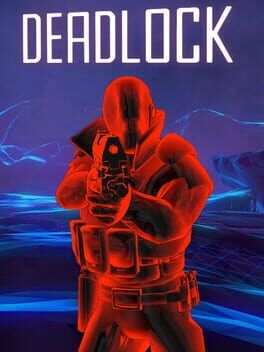
Valve developer Yoshi says the next major Deadlock update has taken longer than expected in playtesting and is now estimated for late September, leaving players to wait through another month of minor balance patches and unanswered questions.
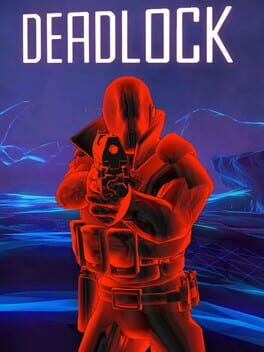
Image: IGDB
Store links: Deadlock on Steam, DeadLock on Steam, Deadlock on Steam
Valve puts a late-September window on Deadlock’s next major patch
Valve has told Deadlock players not to expect the game’s next major update until late September, after developer Yoshi stepped into the official Discord to address a wave of speculation around the patch’s timing. According to PCGamesN’s report on Yoshi’s message, the developer said the team is “still working heavily on it,” that the update “has taken longer than expected,” and that Valve had originally hoped it would already be out.
That is the concrete news at the center of the current Deadlock next update wait: there is no imminent patch next week, and Valve’s best estimate is now late September. Yoshi left a small opening for an earlier release, saying Valve would ship sooner if possible, but added that this is unlikely, PCGamesN reports. Deadlock.one, which tracks Deadlock news and patches, also lists the update as now expected in late September based on Yoshi’s comment.
The timing lands awkwardly because player expectation had already built around the idea that a major drop could be close. PCGamesN describes speculation in the official Discord as reaching the point where repeated questions about a date were drowning out normal discussion. Valve’s message is less a reveal than a pressure release: the next big Valve Deadlock update is coming later than many players hoped, and the studio is asking the community to stop reading every quiet day as a launch signal.
The delay is being framed as testing, not a bigger feature list
The most important line in Yoshi’s update is also the least glamorous one. Per PCGamesN, Yoshi said the delay is not due to a change in scope for the update. Instead, he attributed the slip to the regular process of playtesting and iteration taking longer than expected.
That distinction matters for how players should set expectations. Valve has not announced the contents of the September patch in the provided source material, and Yoshi’s message does not confirm new heroes, a map overhaul, a new mode, or a ranked reset. It confirms timing pressure, extended testing, and a rough release window. Anything beyond that is expectation, not fact.
For a shooter-MOBA hybrid like Deadlock, longer testing can cover a lot of ground. Even a small numerical change can affect lane pressure, objective timing, chase routes, hero matchups, and late-game burst windows. When gunfights are tied to economy, ability scaling, stamina, souls, and objective control, a patch that looks clean in notes can play very differently once high-volume matchmaking gets hold of it. Valve’s stated reason, playtesting and iteration, fits the kind of systems-heavy game Deadlock is, but it also leaves players with few details to judge the wait on.
Players are restless because the last major update is old by Deadlock standards
The restlessness is not coming from nowhere. The Deadlock Wiki’s updates page currently lists 218 days since the last major update, identified there as the January 22, 2026 update. PCGamesN notes that the Old Gods, New Blood overhaul arrived seven months ago and added six more heroes. For a live competitive game in closed beta, that is a long runway between headline drops, even if smaller patches continue to arrive.
The historical pacing makes the wait feel sharper. The Deadlock Wiki says that from August 1, 2024, to December 6, 2024, Deadlock followed a schedule where a major update released once every two weeks. The same page says Valve announced on January 8, 2025 that it was dropping that cadence in favor of more time between major updates for better testing and additional internal development time.
That older schedule still shapes player memory. A community trained on rapid iteration will naturally start reading silence as a clue, especially in a closed beta where official patch notes, Discord comments, Steam news posts, and in-game news all feed the conversation. The Wiki also notes that Deadlock’s official patch notes can be accessed through the official forums, Steam page, and the in-game News menu in the Hideout, while some undocumented changes are tracked from developer Discord comments or SteamDB-maintained GitHub diffs. In that environment, players are used to hunting for movement. Yoshi’s late-September message is Valve telling them that this time, the signal is simple: wait.
Minor patches have kept the meta moving, but not enough to satisfy everyone
Deadlock has not gone untouched while the major update has been in development. PatchBot’s Deadlock feed lists a Minor Update on August 22, 2026, with balance adjustments including Radiant Regeneration’s heal on cast reduced from 70 to 65, Restorative Locket’s Spirit Resistance reduced from 10% to 8%, and several Celeste changes affecting Dazzling Trick and Radiant Daggers. Deadlock.one summarizes the same August 22 patch as nerfing Celeste, Radiant Regeneration, and Restorative Locket while adjusting ability damage, cooldowns, barriers, and Spirit scaling.
Earlier summer updates also touched core match flow. PatchBot lists a matchmaking update four weeks before its current page capture, introducing a revamped matchmaking system and a new Ranked Mode alongside Standard Mode. The Standard Mode description says it is intended as a lower-stakes way to play with friends, with no restrictions on party size or skill spread, and as a place to practice less familiar heroes. PatchBot’s July 28 update notes include stamina timing changes for the slowest dash bucket, soul orb sharing from base spawners, and a fix for the teammate audio volume slider. The July 9 notes include Urn Runner speed and stamina recovery changes, Unstable Rift warning time changes, and resistances for Rift Troopers.
Those are not empty maintenance patches. They touch pacing, comms, sustain, matchmaking, and objective pressure. Still, minor patches rarely answer the big competitive questions players save for a major update: whether the map rhythm changes, whether a stale hero pool opens up, whether ranked feels fairer at the edges, and whether dominant builds get reshaped rather than trimmed.
September watch list: ranked, objectives, hero balance, and lane pacing
Valve has not said what the Deadlock September 2026 update contains, so the safest read is to look at the systems Valve has recently been adjusting. Based on the patch history listed by PatchBot, Deadlock.one, and the Deadlock Wiki, the community will likely be watching four areas when the late-September patch finally lands.
Ranked and matchmaking sit at the top. The recent matchmaking update introduced a dedicated Ranked Mode and separated it from Standard Mode, according to PatchBot. If the next major update follows through on that foundation, players will be looking for clearer match quality, better party handling, rank point tuning, and fewer lobbies that feel decided before the first real objective fight. The Deadlock Wiki also lists undocumented rank point changes in 2026, including an increase in rank points per game from 250 to 300 and a higher max winstreak bonus, which shows how closely the community tracks competitive progression.
Objective pacing is another obvious pressure point. PatchBot’s summer notes show changes to Urn Runner, Unstable Rift, Rift Troopers, objective bounty distribution, soul sharing, and warning timers. In practical terms, these systems decide whether teams are rewarded for map control, punished for slow rotations, or allowed to turtle through bad lanes. Shooter players feel that directly: if the map asks you to rotate but the reward is weak, fights stall. If the reward is too strong, one bad midgame wipe can erase ten minutes of decent laning.
Hero and item balance will be watched just as closely. Recent minor patches targeted Celeste, Shiv, Haze, Viscous, Yamato, Holliday, Wraith, and others across different updates listed by PatchBot and Deadlock.one. The community will be looking for whether late September brings another round of spreadsheet tuning or a larger reshaping of the current meta. That is especially important in Deadlock because hero power is not only ability damage. Weapon reliability, stamina, crowd control timing, Spirit scaling, and survivability items all feed into whether a hero wins duels or only farms safely until a teamfight.
Valve’s communication problem is now part of the patch story
Yoshi’s message also shows the tradeoff in Valve’s communication style. According to PCGamesN, he said Valve held off on giving a specific schedule because it wanted to know whether the update needed only another week or two or something longer. That is a reasonable production call. Giving a date too early can create a second delay story if the build fails testing.
The problem is that Deadlock’s community has already built its own information economy around official Discord comments, patch note pages, Steam updates, in-game news, and third-party trackers. When the game goes quiet on a major update for months, speculation fills the gap. PCGamesN reports that the volume of date guessing and demands for a response had become loud enough in the official Discord that it was overwhelming other discussion.
PC Gamer’s coverage highlights Yoshi’s lighter promise that Valve will give players a heads up, “or order a ton of pizza,” when the update is a few days away. The joke lands because the audience is hungry for something specific. But it also underlines the practical guidance for players: unless Valve posts that heads-up through its official channels, the Deadlock patch timing is late September, with an earlier launch described by Yoshi as unlikely.
For players, the smart move is to treat September as a reset point
If you are actively grinding Deadlock right now, the actionable read is simple. Do not plan around a major meta shakeup next week. Keep treating current minor patch balance as the live environment, especially around Celeste, sustain items such as Radiant Regeneration and Restorative Locket, the updated matchmaking split, and the objective changes that have already landed through the summer.
If you are waiting for the next major update before returning, late September is the first realistic window supported by the provided sources. Valve has not announced a full date, patch contents, price change, platform expansion, or release-status change. The Deadlock Wiki continues to describe the game as being in a closed beta state, and the current story is about patch timing, not a public launch.
The tension going into September is that Valve has bought itself time but also raised the stakes. By saying the scope has not changed and the delay comes from playtesting, the studio has framed the update as something that needs polish rather than something that ballooned into a surprise expansion. Competitive players will judge it on the parts they can feel in the first night: queue quality, lane tempo, objective fights, hero outliers, and whether the gunfights still have room for aim and movement once the new numbers hit live servers.