
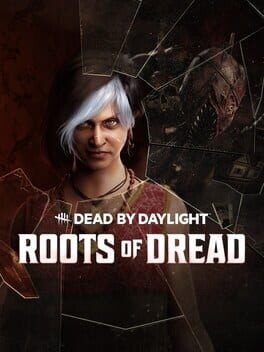

With The Conjuring’s David Leslie Johnson-McGoldrick and Crawl’s Alexandre Aja scripting, the Dead by Daylight film is betting on character-driven dread and vicious set pieces. Here’s how that creative pedigree could translate the game’s killers and trials to the big screen, and what recent adaptations like Five Nights at Freddy’s say about its chances.
Behaviour Interactive’s asymmetrical slasher is already structured like a movie night marathon. Four survivors, one killer, a fog-drenched arena full of hooks and generators, and a cruel Entity watching from the shadows. Now that Dead by Daylight is headed to theaters, the big question is not whether it can work as a film, but how.
The answer starts with who is writing it.
A horror tag team with serious pedigree
Blumhouse and Atomic Monster have hired David Leslie Johnson-McGoldrick and Alexandre Aja to craft the Dead by Daylight screenplay. On paper, that pairing reads like a best‑case scenario for fans.
Johnson-McGoldrick is James Wan’s go-to writer for The Conjuring universe, with credits on The Conjuring 2 and The Conjuring: The Devil Made Me Do It, as well as Orphan and both Aquaman films. His reputation is built on slow-burn supernatural dread that never forgets about human stakes. Even when the set pieces go big, his scripts hinge on families, guilt, faith, and grief.
Aja brings the opposite end of the spectrum. As the director and writer behind High Tension, The Hills Have Eyes (2006), Piranha 3D, and Crawl, he specializes in relentless, physical terror. His films trap characters in ugly situations and then refuse to let up, whether it is a family shredded in the desert or a woman crawling through rising floodwaters while hunted by alligators.
Jason Blum has already framed their collaboration as a deliberate blend of “character-driven storytelling” with “relentless genre intensity.” In practical terms, that suggests a script that respects Dead by Daylight’s lore and community, but is also willing to be vicious when the Trial starts.
Translating killers and Trials into cinema
Dead by Daylight on PC and consoles is a loop: a killer hunts four survivors around a semi‑procedural map, survivors repair generators to power the exit, and the Entity feeds on the fear that follows. It is pure systems design, but it is also built on tiny cinematic moments: the heartbeat spike when a killer draws near, a last‑second pallet stun, the silhouette of a hooked survivor against a stormy sky.
Johnson-McGoldrick’s work on The Conjuring series shows how well he understands haunted spaces. The game’s maps, from the MacMillan Estate to the Garden of Joy, are essentially haunted houses expanded into arenas. Expect the film to treat the Fog and the Entity’s realm the way The Conjuring treats the Enfield house or the Perron farmhouse: as living characters with histories and rules.
The Conjuring scripts also thrive on investigative structure. That is an easy fit for Dead by Daylight’s lore, where survivors like Haddie Kaur dig into occult phenomena and urban legends before being pulled into the Entity’s web. A feature film could follow a similar rhythm. Start in our world with a cast that gradually uncovers the myth surrounding the Trials, then cross the threshold into the Fog where Aja’s taste for cruel games takes over.
Once the characters are trapped, Aja’s Crawl instincts become vital. Dead by Daylight’s best moments are not about exposition. They are about proximity, line of sight, and improvisation. A camera hugging a survivor as they fast‑vault a window with a killer inches behind them is not far removed from Kaya Scodelario squeezing through submerged hallways as an alligator snaps at her feet.
Expect set pieces built around simple objectives. Reach a generator across an exposed yard. Unhook a friend while the killer patrols. Navigate a cornfield without revealing your position. The game’s sound design, from terror radius to the clank of chains, lends itself to sustained sequences where the audience always knows where danger is, even when the characters do not.
The bigger creative decision will be which killers and survivors to focus on. Behaviour’s roster spans original characters like The Trapper, The Nurse, and The Dredge, alongside licensed icons such as Michael Myers and Ghost Face. The film rights for those guest killers are a legal maze, so the safer bet is a story centered on Behaviour’s own creations, possibly remixing fan favorites into a single Trial.
Johnson-McGoldrick’s knack for backstories suggests the script will lean on one or two killers with tragic origins, more in the spirit of The Hag or The Spirit than a quippy slasher. Aja’s filmography, full of stalkers and monsters who are terrifying more for their sheer presence than their lore, can give those designs the physical threat they need.
What “relentless genre intensity” looks like for Dead by Daylight
In interviews, Jason Blum has promised that Dead by Daylight will have “relentless genre intensity,” which sounds like marketing speak until you remember how Blumhouse operates. The studio’s horror hits are usually built on tight locations, controlled budgets, and a focus on one strong hook.
Dead by Daylight already comes with a clear hook: asymmetric cat‑and‑mouse horror in a ritualized arena. To keep that feeling, the film needs to resist the temptation to become a generic monster movie. The Trials should look and feel like Trials. That means:
Tight geography, where the audience quickly understands the map layout the way players learn tiles and loops. Minimal cutaways to the outside world once the game begins. A clear set of rules, such as hooks, sacrifices, and generator progress, that the characters slowly piece together. Violence that is harsh, but purposeful, in the way Crawl uses every bite and broken bone to escalate its situation.
Casting and direction will matter, but a script from this duo is already wired for that approach. Johnson-McGoldrick’s knack for rules‑based supernatural horror, combined with Aja’s instinct for spatial tension, aligns almost perfectly with Dead by Daylight’s design.
Learning from recent game-to-film success
Dead by Daylight is entering a landscape where video game adaptations are no longer an automatic punchline. Sonic the Hedgehog, The Super Mario Bros. Movie, The Last of Us, Fallout, and especially Blumhouse’s own Five Nights at Freddy’s have shifted the conversation. There are three lessons from those projects that seem particularly relevant here.
First, you have to respect the tone that made the game work. Five Nights at Freddy’s is, at its core, a PG-13 haunted attraction story about kids’ souls and killer animatronics. The film embraces that and leans into its weird mix of teen horror and tragedy. Dead by Daylight is a nastier, more adult experience, and Blumhouse has already hinted that they are not chasing a teen‑friendly rating at all costs. The “relentless” label and Aja’s involvement point toward a film that wants to feel as unsafe as the game does.
Second, you adapt the experience, not the exact structure. The Last of Us could carry over its episodic journey almost beat-for-beat because it was already a cinematic narrative. Dead by Daylight has no fixed story mode. Its appeal lies in emergent moments: a lucky skill check, a basement escape, a last‑frame door exit. Translating that means building a narrative spine that justifies multiple Trials while preserving that escalating back‑and‑forth between killer and survivors.
Johnson-McGoldrick can mine the archives of in‑game lore, tomes, and character stories to build a primary plot about the Entity and a group of obsessed investigators or doomed thrill‑seekers. The Trials then become set pieces that echo how actual matches feel, rather than a literal tournament bracket.
Third, you court the fan base without making the movie impenetrable. Five Nights at Freddy’s stacked its frame with Easter eggs, but its core story is readable even if you have never watched a single MatPat video. Dead by Daylight has eight years of lore, crossovers, and cosmetics. The film cannot explain all of that, but it can pick a thematic throughline that both fans and newcomers can follow, such as the idea of the Entity preying on personal guilt and trauma.
Handled well, that unifying idea could position Dead by Daylight closer to The Conjuring in emotional shape, while still allowing Aja to stage Trials with the brutality of Crawl or The Hills Have Eyes.
So what are its chances?
On the business side, Dead by Daylight has a lot going for it. The game has surpassed 50 million players across platforms, and its steady cadence of crossovers has kept it culturally visible. For Blumhouse and Atomic Monster, it is a recognizable IP with modular storytelling potential and a built‑in audience hungry for darker fare than Five Nights at Freddy’s.
The risk lies in its structure. Multiplayer sandboxes are trickier to adapt than narrative-driven adventures. Warner’s attempt to turn the Doom franchise into straightforward action horror fumbled what made those games sing. Universal’s Warcraft adaptation drowned in lore and obligation. Dead by Daylight sits somewhere between. Its world is rich, but its moment-to-moment appeal is mechanical.
That is why the choice of writers matters so much. If any pairing can bridge that gap, it is a Conjuring veteran who understands how to ground the supernatural in character, and a director‑writer who excels at trapping people in cruel, tightly designed scenarios. Their task is to make the Entity’s realm feel like something you could step into, then never escape.
The recent wave of successful adaptations suggests that audiences are ready for that kind of experiment. Horror fans have shown up for both the slow, prestige apocalypse of The Last of Us and the crowd‑pleasing chaos of Five Nights at Freddy’s. A Dead by Daylight film that splits the difference, offering lore for the faithful and nasty, inventive Trials for everyone else, stands a better chance now than it would have at any point in the last decade.
Blum has already cautioned that the team will not roll cameras until the script is right. For a property that lives and dies on tension and timing, that patience may be the most encouraging sign of all.