
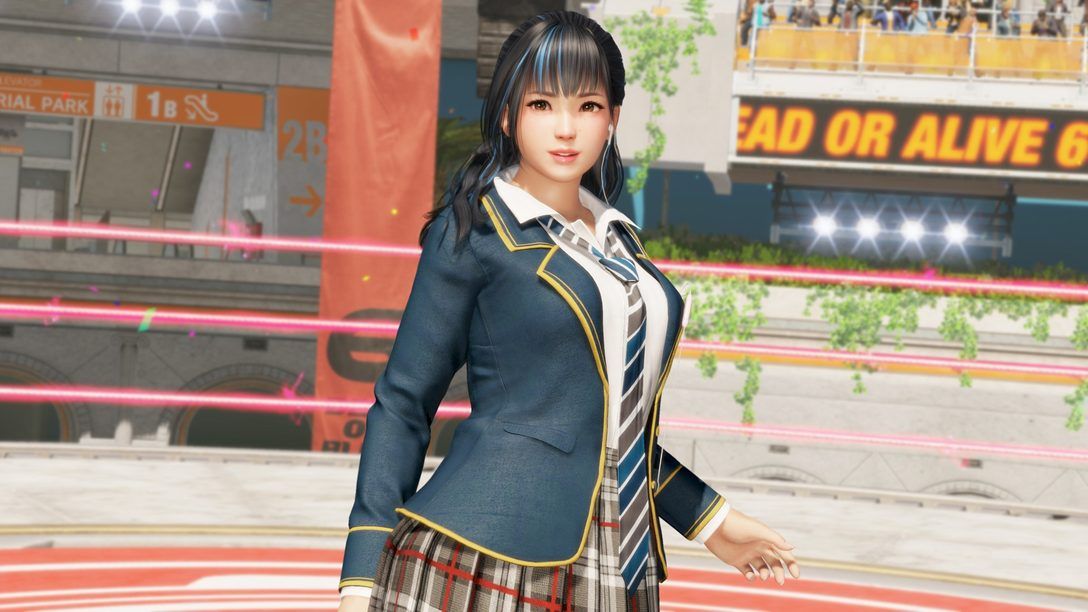

Team Ninja’s new DOA6 Last Round fighter Minato arrives September 10 with a dance-based style, NiCO-built copy tech, and big questions for a roster built mostly on returning names.
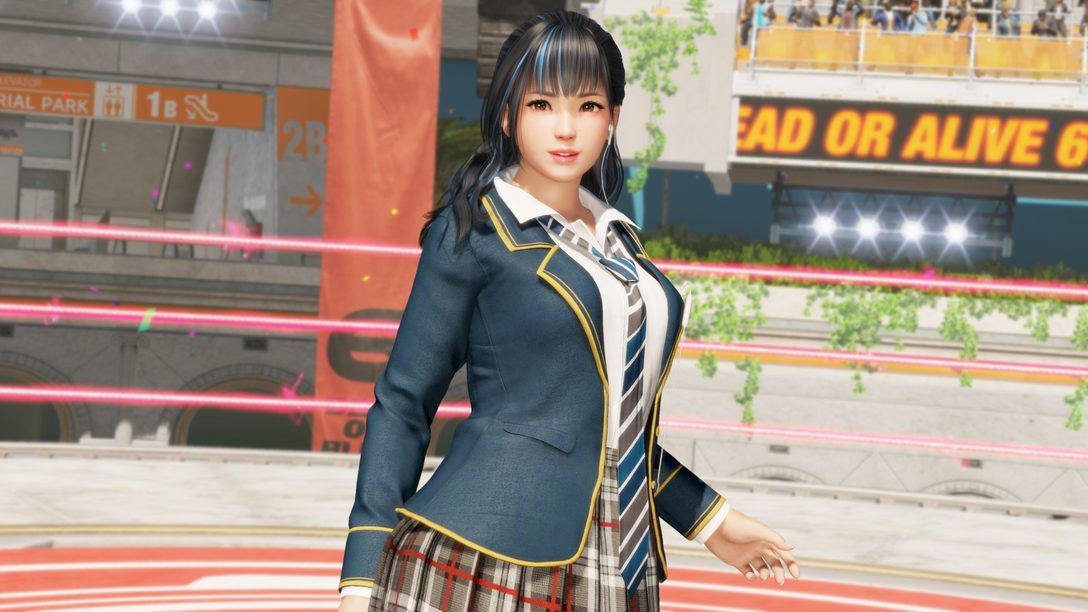
Image: blog.playstation.com
Minato arrives fast, and that is the first real test for Last Round
Dead or Alive 6 Last Round gets its first entirely new fighter on September 10, 2026, when Minato joins the roster one day after her full reveal. Koei Tecmo series producer Yosuke Hayashi introduced the character on PlayStation Blog, saying Dead or Alive 6 Last Round launched in June with the promise that its launch was “just the beginning.” Siliconera reports that Team Ninja and Koei Tecmo released Minato’s debut trailer for the DLC heroine and identifies her as the first entirely new addition to this version of the game, with prior characters having appeared in the original release.
That timing gives the reveal a sharper edge than a normal character announcement. Players are not being asked to wait through months of teaser images or vague season-pass language. They are being asked to decide almost immediately whether DOA6 Minato is worth lab time, roster attention, and possibly money, depending on how Koei Tecmo handles the final DLC terms.
The confirmed release window is clear. The pricing picture is less clean. Games.gg reported in August that Minato was confirmed as paid DLC, while Netto’s Game Room wrote after the September reveal that pricing information had yet to be announced. The PlayStation Blog reveal material provided here focuses on her backstory and combat style rather than price. Until Koei Tecmo’s storefront listings or official purchase pages settle the matter, the safe read is that Minato launches September 10, but players should verify platform-store pricing before assuming what is included.
A Tokyo student, a dance prodigy, and a M.I.S.T. experiment
Minato’s character hook is built around contradiction. According to Hayashi on PlayStation Blog, she appears to be an ordinary female student attending school in Tokyo: cheerful, outgoing, liked by friends, and living away from her parents. The same post says there is an “otherworldliness” around her, and that much of her private life remains unknown.
Her public talent is dance. PlayStation Blog says Minato began dancing casually because she wanted dancers and spectators to feel cheerful and positive, then entered a world-class dance competition and won first place on her first attempt. That gave her the nickname “Tokyo JK.” The reveal connects that sudden rise with her disappearing after school and on weekends for what she calls part-time work.
The hidden connection is NiCO. PlayStation Blog identifies NiCO as M.I.S.T.’s cyberneticist and says she has hired a part-time worker for an experiment. Siliconera’s summary of the reveal says Minato is working alongside NiCO at M.I.S.T. and using contact lens technology that lets her analyze opponents and copy their attacks. The story tease is intentionally incomplete: Minato treats NiCO like a best friend, while NiCO does not understand why this part-timer acts so close to her. Team Ninja is presenting Minato as a mystery first and a tournament entrant second.
How the Minato dance fighter concept works in actual DOA terms
The important gameplay fact is that Minato is not described as a conventional martial artist. PlayStation Blog says she applies rhythm, athleticism, and empathy to combat, using a NiCO-developed contact lens-type device that converts other fighters’ movements into signals her body can physically replicate. In plain fighting-game terms, Team Ninja is giving her a diegetic reason to borrow techniques while still grounding her own movement in dance.
Her original layer is the dance kit. PlayStation Blog says she favors flashy, visually striking moves and uses vertical and horizontal spins. That matters in a 3D fighter because spin-based offense can change timing, facing, and mental stack even before frame data is published. We do not yet have official startup, recovery, tracking, guard safety, launch height, or hold interaction numbers for Minato, so any hard matchup claims would be premature. What is confirmed is the design goal: Team Ninja says she has a wide range of attacks and is easy for beginners to use.
The advanced layer is the Minato Shuffle. PlayStation Blog calls it one of her signature moves and describes it as a unique dance step that can be performed directly from specific attacks. From that dance, she can use multiple powerful follow-up attacks. The same post says those follow-ups are technical and reward player creativity, which suggests a character built around stance-transition routing rather than a single canned string. For players trying to improve, the first lab question is simple: which starters enter Minato Shuffle, which follow-ups jail or frame-trap, and which options are interruptible, sidesteppable, or hold-bait.
Beginner-friendly does not mean low ceiling
Team Ninja’s framing of Minato is unusually specific: accessible for beginners, but satisfying for advanced players. Those two goals often collide in fighting games. A character with easy entry tools can become oppressive if the stance options are too safe, too ambiguous, or too rewarding on counter hit. A technical stance character can also feel hollow if every creative route loses to one defensive answer.
Based on the PlayStation Blog description, Minato’s strength should come from rhythm changes and branching offense. If Minato Shuffle is available from selected attacks, players will likely need to learn which strings are best used as real pressure, which are better as conditioning, and which exist to bait holds. Dead or Alive’s defensive identity has always made predictability expensive, so a dance character who repeats the same follow-up will be solved quickly. The stronger Minato players will probably be the ones who treat Shuffle as a decision point rather than a combo autopilot.
Her copy-tech premise also raises a competitive question that Koei Tecmo has not answered in the provided reveal materials. Does she literally reuse recognizable attacks from DOA tournament participants as fixed parts of her movelist, or does the contact lens explanation justify a broader set of animations inspired by the cast? Siliconera says her moveset will apparently consist of her own dance-inspired abilities, such as Minato Shuffle, plus some copying. Without the full move list, players should avoid assuming she is a true mimic character in the sense of changing kits by opponent or stance. The confirmed text supports copied techniques as part of her concept, not a complete mechanical breakdown.
A new heroine carries weight for a roster built on familiar faces
The strongest roster point comes from Siliconera: Minato is the first entirely new addition to Dead or Alive 6 Last Round, while earlier characters in this version appeared in the original release. For a 3D fighting series returning with a June relaunch, that changes the conversation from preservation to expansion. Returning characters reassure existing players. A new heroine asks whether Team Ninja still has new competitive ideas for DOA6’s system.
Minato’s design also plugs into existing story machinery instead of arriving as a detached guest. Her connection to NiCO and M.I.S.T. gives Team Ninja a way to tie her copy technology, physical ability, and hidden purpose into the broader Dead or Alive setup. That matters because the fighting-game audience tends to split its attention between two different questions: does the character have a reason to exist in the world, and does the character create fresh problems in matches? Minato is clearly designed to answer both, though the gameplay side still needs hands-on testing.
The risk is expectation management. A “Dead or Alive new fighter” label carries more pressure than another costume pack or returning-character unlock. If Minato’s borrowed-move concept reads as shallow once players reach training mode, she could feel like a style showcase. If the Shuffle follow-ups have real route variety and matchup-specific answers, she could become the kind of character who pulls players back into lobbies because everyone needs the matchup reps.
Platforms, availability, and the questions still open at launch
The platform reporting is mostly aligned, but one source leaves a gap. PlayStation Blog links Dead or Alive 6 Last Round through PlayStation’s game page and discusses the character ahead of her roster debut. Siliconera says Dead or Alive 6 Last Round is available for PS5, Xbox Series X, and PC. Games.gg lists PC via Steam, PS5, and Xbox Series X|S. Netto’s Game Room lists PlayStation 5 and PC, omitting Xbox in its availability line. That looks like an omission rather than a confirmed platform difference, since other provided sources include Xbox, but players on Xbox should still check their store page on September 10 before making plans around release timing.
The trailer details are modest but useful. Siliconera says Minato’s debut trailer shows her attacks and two costumes: a standard schoolgirl uniform and an outfit resembling something she might wear for a dance competition. That matches the character pitch cleanly, but it does not answer whether additional costumes, bundle options, or character-specific cosmetics launch alongside her.
For practical play, the advice is to wait for three things before declaring her strong or weak: the final move list, store pricing, and early training-mode findings on Minato Shuffle safety. Confirmed information says Minato is built to be approachable and technical, launches September 10, and brings dance-based offense plus NiCO-assisted copy technology to DOA6 Last Round. Everything beyond that, including tier placement, tournament legality, and whether she becomes a long-term main instead of week-one curiosity, has to be earned in matches.