
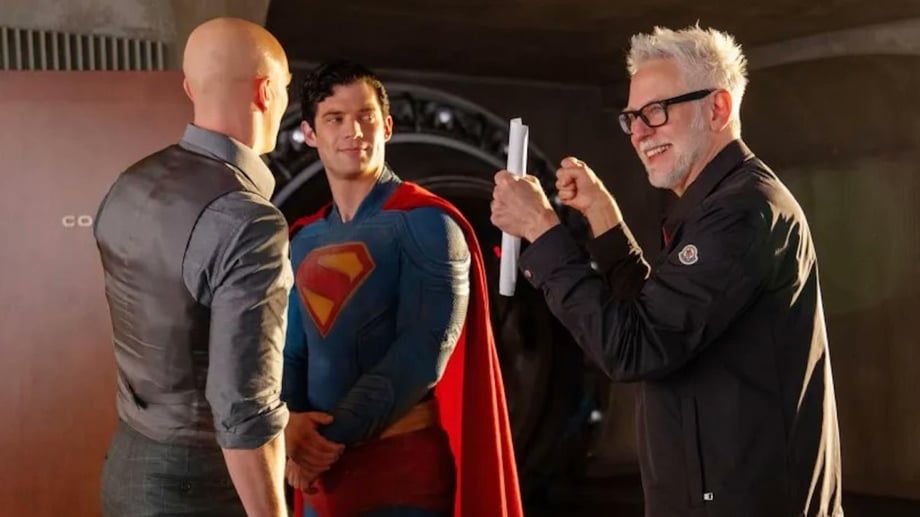

James Gunn and Peter Safran are stepping down as DC Studios leaders, with Marvel veteran Jeremy Latcham taking over. Here is what is confirmed, and why DC games licensing is the part game fans should track carefully.
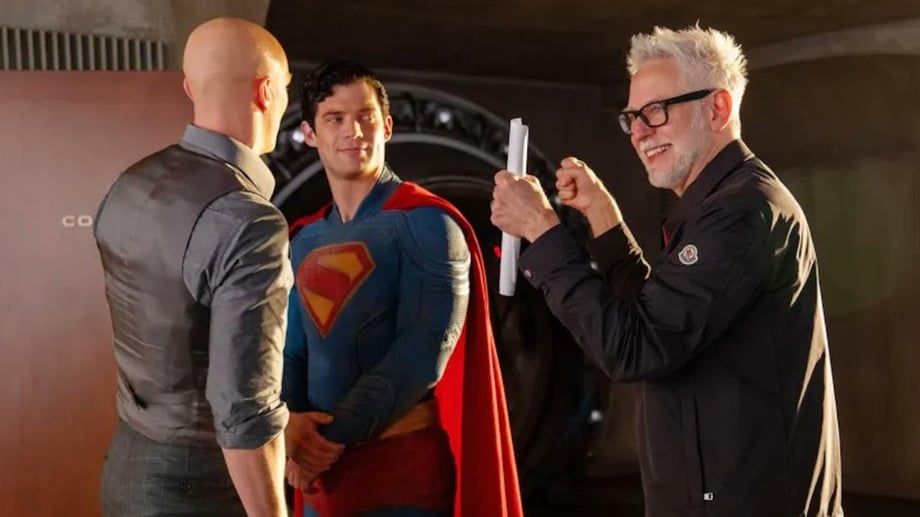
Image: comicbookmovie.com
DC Studios changes leaders before its game ambitions are defined
James Gunn and Peter Safran are stepping down from the top jobs at DC Studios, and Jeremy Latcham, a former Marvel Studios executive, is taking over the comic book label. That is the concrete development behind this DC Studios leadership change, and it lands in an uncomfortable place for game fans: Gunn and Safran had publicly tied the new DC Universe to broader cross-media plans, while the incoming structure described by trade reports is centered on film, television and animation.
Polygon reported that parent company Skydance announced the move on Monday, saying Gunn and Safran would help ensure a “smooth, collaborative transition” to new leadership. Entertainment Weekly and TVLine reported that the change is effective Dec. 1. Deadline reported that Latcham will become president and chief creative officer of DC Studios, reporting to Skydance Motion Picture Group co-chairs Dana Goldberg and Josh Greenstein.
The confirmed change is therefore narrower than some fan reaction will make it sound. Gunn and Safran are leaving their co-CEO or co-chairman posts, depending on the outlet’s title usage, but Deadline reports they will continue to produce on various DC projects and return to full-time creative work. Polygon quoted Gunn and Safran saying they are “excited to return” to storytelling, including the next chapter of Clark and Lex’s journey in Man of Tomorrow. There is no sourced claim in the provided reporting that a DC game has been canceled, delayed, greenlit or reassigned because of the leadership move.
The role is changing as much as the person in it
The personnel swap is the obvious headline, but the organizational detail may be the more useful signal for anyone watching DC games licensing. Variety reported that Gunn and Safran are stepping down as CEOs and chairmen, while Latcham will serve as president and chief creative officer. Deadline adds that DC’s reporting line is changing: the DC bosses had initially reported directly to the CEO, previously David Zaslav and then, post-merger, David Ellison and Ynon Kreiz, while DC will now report into Goldberg and Greenstein like other Warner film labels.
That does not automatically tell us who signs off on game deals, character approvals, platform strategy or interactive canon. It does, however, indicate that the official description of Latcham’s remit is a screen-first pipeline. Deadline says he will lead DC’s film, television and animation slate, overseeing the creative pipeline, production, talent and strategy. Polygon likewise frames his job around the next generation of DC storytelling and the screen stewardship of DC characters.
For games, that distinction matters because licensed projects tend to live or die in the gaps between creative control, release calendars and brand management. A publisher or developer needs access to characters, tone guidance, continuity rules, approvals, marketing windows and sometimes actor likeness or performance rights. None of the source material confirms how those processes will work under Latcham, so the responsible read is that DC’s interactive future is an open operational question, not a settled consequence of the shakeup.
What Gunn and Safran actually said about the era they are leaving
The outgoing leaders framed their tenure as an attempt to unify DC under one creative vision. Polygon quoted Gunn and Safran saying, “Four years ago, we set out to unite DC under one creative vision.” In that same statement, they pointed to Superman, Peacemaker, Creature Commandos, Lanterns and Clayface as examples of the work done under their leadership.
Entertainment Weekly reported a longer statement from Gunn on Threads, where he described the four-year run as a dream opportunity but also “trying.” According to EW, Gunn wrote that he disliked the “at-times corporate nature of the job,” thanked Safran for taking the brunt of that side of the role, and said the workload had taken time from himself and loved ones. That context supports a reading of the move as at least partly a shift back toward creative work, though the sources also describe the exit as surprising or unexpected.
Skydance leadership presented the change in continuity language rather than rupture language. Polygon quoted David Ellison and Ynon Kreiz saying Gunn and Safran “launched a new era for DC Studios” and helped build a slate the company is proud of. The same report quotes them saying Latcham has been a longtime creative partner and that they have confidence Gunn and Safran will help with the transition. That is relevant for games because it reduces, but does not eliminate, the possibility of an abrupt creative reset in public-facing DC plans. A smooth transition is the company’s stated goal. The unanswered question is how far that continuity extends beyond screen projects.
Jeremy Latcham arrives with Marvel production experience, not a public games mandate
Latcham’s resume explains why the appointment is being read as a major superhero-media move. Polygon reports that he previously served as Marvel Studios’ senior vice president of production and development, with producer credits including Iron Man, Iron Man 2, The Avengers, Guardians of the Galaxy and Spider-Man: Homecoming. Deadline similarly says he worked on major MCU franchises including Iron Man, Guardians of the Galaxy, Spider-Man and The Avengers, and notes that he previously worked with Gunn on Guardians of the Galaxy.
Latcham’s own statement, quoted by Polygon, focuses on DC’s characters as a screen stewardship responsibility. He said DC’s pantheon is “among the most iconic in American popular culture” and described the opportunity as leading DC Studios into its next era while bringing characters “to the screen” for lifelong fans and a new generation.
That language should keep expectations grounded. The sources establish Latcham as a proven superhero film executive and incoming DC Studios creative leader. They do not establish him as the new architect of a DC games strategy. GameSpot’s report is the key games-adjacent source here: it says Gunn and Safran had ambitious plans to expand the DCU into video games. The leadership change therefore intersects with games because an existing ambition now sits under a changed executive regime, not because Latcham has announced a new interactive slate.
The inherited DC slate shows why licensing could become more disciplined
The new leadership arrives after a reset that trade outlets describe as uneven. Variety reports that Gunn and Safran were appointed in 2022 by former Warner Bros. Discovery CEO David Zaslav with an edict to build a true rival to Marvel’s cinematic universe. Variety also describes mixed commercial results, citing Superman as a relative success with $618 million globally, Supergirl as a major underperformer with $126 million on a $170 million budget, and Clayface as a modest performer with $109 million on a $44 million budget.
Those figures are film-industry metrics, not game-industry metrics, but they shape the licensing environment around DC. When a studio is trying to stabilize a shared universe, it often becomes more selective about which characters, timelines and tones can be used across media. That is analysis, not a confirmed DC policy. The confirmed facts are that the company has been trying to build a unified DC creative direction, that leadership is changing, and that Latcham’s stated mandate is to steward DC characters into a new screen era.
The upcoming slate also creates possible pressure points. Deadline reports that Gunn and Safran are in post-production on Superman sequel Man of Tomorrow, set to open July 9, 2027. Variety reports DC’s upcoming big-screen projects include Man of Tomorrow and 2028’s The Batman: Part II, while also naming the 2027 series The People v. Gorilla Grodd. Polygon lists Peacemaker, Creature Commandos, Lanterns and Clayface as part of the era Gunn and Safran helped build. If DC wants games to align with that slate, interactive timelines will need long lead times. If it wants games to operate separately, the studio will need clear messaging so players understand what belongs to the DCU and what stands apart.
What game fans should watch without inventing a game announcement
For now, the practical guidance is simple: treat this as a licensing and brand-control story, not as a hidden game reveal. The phrase “James Gunn Peter Safran replaced” will drive a lot of search traffic and speculation, but none of the provided sources says a DC game has been announced as part of Latcham’s appointment. There are no confirmed platforms, prices, release windows, developers, publishers, upgrade paths or system requirements attached to this executive change.
The signals worth watching are official ones. If DC games licensing changes direction, it should eventually appear through publisher announcements, developer statements, investor comments, store listings, ratings-board filings or platform holder showcases. A vague executive quote about “storytelling” is not the same thing as a game production plan. A Skydance or DC Studios statement naming interactive entertainment would be more meaningful. A licensing deal that identifies a developer, scope and platform target would be stronger still.
The most likely short-term effect is uncertainty inside the approval chain rather than an immediate consumer-facing change. Games based on major entertainment brands require years of production, and leadership turnover can alter priorities before players ever see a trailer. Latcham’s arrival may bring tighter coordination around DC’s screen slate, or it may leave interactive projects to existing Warner and licensing channels. The sources do not answer that yet.
So the smart read is cautious. Jeremy Latcham DC Studios leadership is confirmed. Gunn and Safran stepping back into creative work is confirmed. A Dec. 1 handoff is reported by EW and TVLine, with Deadline detailing the new reporting line. DC games licensing implications are real enough to watch because GameSpot says Gunn and Safran wanted the DCU to expand into games, but no source here confirms a new game strategy. Until that changes, players should separate the executive meta shift from actual playable news.