
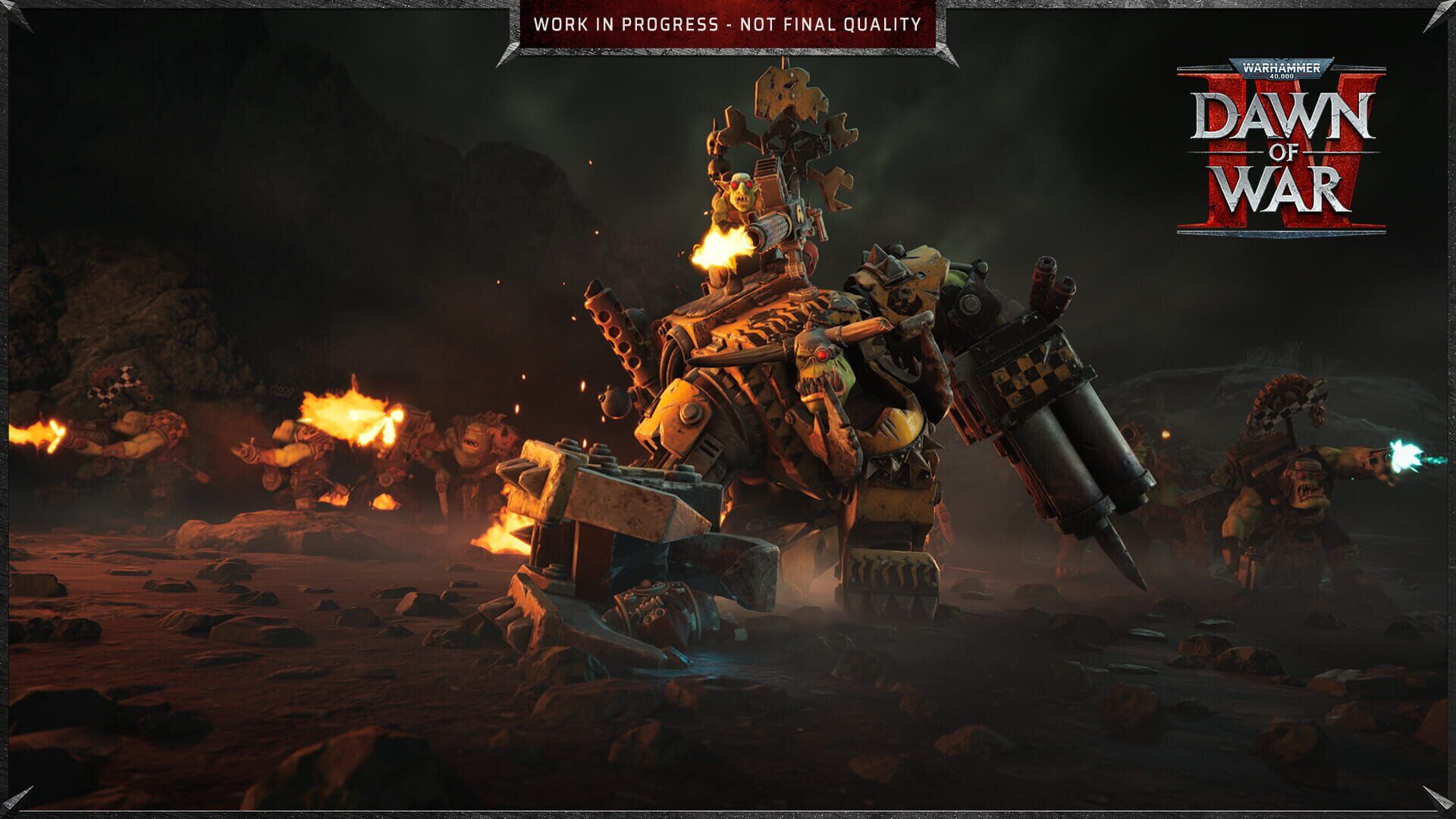

Warhammer 40,000: Dawn of War IV is reviving Last Stand with three-player wave defense, Commander progression, companion units, and a practical reason for RTS players to keep returning after launch.
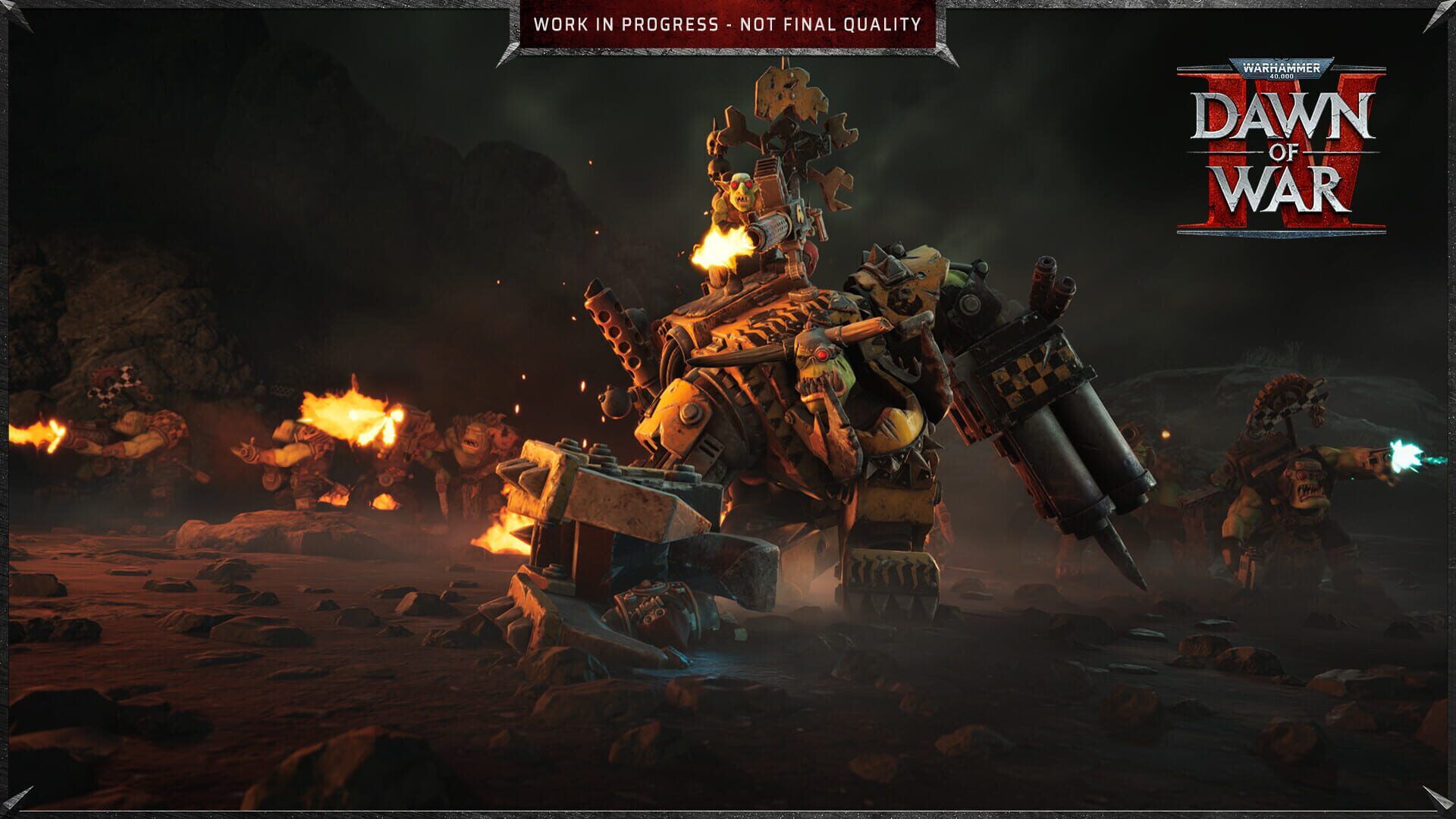
Image: co-op.gg
Last Stand is back, and it is carrying a lot of old expectations
Deep Silver and KING Art Games have shown Warhammer 40,000: Dawn of War IV’s returning Last Stand mode in a new Battlefield Report, confirming a three-player horde survival setup built around 20 waves of escalating enemies, Commander progression, battlefield control, and co-op endurance. The immediate tension is familiar to anyone who played Dawn of War II: Last Stand is fan service, but it also has to function as a durable progression mode in a modern Warhammer 40000 RTS that is already promising a large campaign, skirmish play, and post-launch support.
Multiple reports based on the Battlefield Report describe the mode as a return of the fan-favourite Dawn of War II format. GameWatcher identifies it as three-player co-op with 20 increasingly dangerous waves. Output Lag, citing publisher details from Deep Silver and KING Art Games, says three players team up as Commanders, level up during a run, unlock skills and equipment, collect health supplies between waves, and fight for key positions across the battlefield. Bell of Lost Souls frames it in the older Dawn of War language: survive, upgrade, repeat.
That structure matters because Last Stand occupies a different space from campaign missions or competitive skirmishes. A campaign can be solved. A ladder can become punishing if the balance or matchmaking is hostile. A wave mode gives strategy players a repeatable test bench: build refinement, timing discipline, ability sequencing, and co-op coordination against pressure that becomes more severe with every wave. For Dawn of War veterans, the appeal is obvious. For Dawn of War IV, the design challenge is whether nostalgia can survive contact with modern expectations for progression, team roles, and long-tail replay value.
How Dawn of War IV Last Stand is structured
The confirmed core is straightforward. Last Stand in Dawn of War IV is a co-op wave defense mode for up to three players. Players choose Commanders, fight through 20 waves, earn XP, and unlock new tools as their Commander develops. GameWatcher says players can progress through 30 levels, earning equipment and abilities along the way. GosuGamers similarly reports that each Commander can gain up to 30 levels in a playthrough, with levels unlocking skills and equipment that improve survival odds as enemy waves become harder.
The biggest mechanical shift from the older single-hero interpretation is the Strikeforce system. Output Lag reports that each Commander leads up to four Companion units, each with its own specialization to unlock. Bell of Lost Souls also quotes the Dawn of War IV version as giving each Commander a Strikeforce of up to four Companion units with specializations, intended to create more tactical combinations. GosuGamers says the same system separates this version from earlier Last Stand implementations by adding Companion units and forcing players to manage key positions and health supplies while the waves continue.
There is one detail worth flagging rather than burying. GameWatcher describes the Strikeforce as up to three companions alongside the Commander, while Output Lag, Bell of Lost Souls, and GosuGamers report up to four Companion units. Because the latter reports align around publisher-style wording, four appears to be the better-supported figure in the supplied material, but the discrepancy should be treated as a source conflict until KING Art’s final launch documentation or in-game tooltips settle it.
At launch, reports say Last Stand will include five Commanders. Output Lag says those Commanders cover all four launch factions and include the Blood Ravens and Dark Angels Space Marine Chapters. GosuGamers identifies the launch factions as Space Marines, Adeptus Mechanicus, Orks, and Necrons, with more Commanders planned as free DLC. MonsterVine also reports five heroes for Last Stand and companion units as part of the mode’s return.
Horde pressure is about map control, not standing still
The most useful detail in the Battlefield Report coverage is that Dawn of War IV’s horde mode is not being described as a static arena where players simply turtle until the counter reaches 20. Output Lag says players must control key positions across the battlefield and collect health supplies between waves. Bell of Lost Souls describes the mode as an RTS-meets-arcade setup built around capturing points, clearing waves, and constant combat. GosuGamers also reports that players must take control of key positions while collecting health supplies as enemies keep arriving.
That is the lever that could make Dawn of War IV Last Stand work as an RTS mode rather than a nostalgia exhibit. If key positions matter, then team movement, capture timing, and recovery windows become part of the economy. If health supplies are limited or contested between waves, then attrition becomes a strategic cost, not a cosmetic punishment. If Companion units have specializations, then the strongest co-op groups will likely emerge from complementary control packages rather than three players independently chasing damage numbers.
The publisher has not, in the supplied sources, detailed enemy compositions by wave, specific Commander kits, cooldown values, reward rates, failure conditions, or whether maps rotate. Those are the variables that decide whether a horde mode develops a meta or simply becomes a progression grind. From a strategy perspective, the important confirmed point is the direction of travel: KING Art is layering squad control and objective pressure onto a format that Dawn of War II players remember primarily as a hero-survival showcase.
The enemy picture is clearer on pressure than on Chaos
The assignment around this reveal naturally raises the question of Chaos enemies, because some coverage uses the word chaos in connection with the Battlefield Report. The reliable distinction is that the supplied source material confirms horde pressure and enemy escalation, but it does not clearly confirm Chaos as a factional enemy roster for Last Stand at launch.
GamingBolt’s headline says the Battlefield Report shows off Last Stand’s chaos, but the article text says the Marines are hard-pressed against a brutal assault by combined Ork and Necron forces. The same supplied article lists Deep Silver and KING Art Games, gives a December 3 PC launch, and refers to 20 waves, but it does not identify Chaos Space Marines or Chaos Daemons as a confirmed enemy faction. Other supplied reports focus on increasingly difficult enemies without naming Chaos. GosuGamers lists the four launch factions as Space Marines, Adeptus Mechanicus, Orks, and Necrons. MonsterVine also lists those four playable factions for launch.
So the safest reading is this: Dawn of War IV horde mode has confirmed escalating enemy waves, and at least one report describes Ork and Necron pressure in the showcased material. Chaos as a playable or launch enemy faction is not confirmed by the provided sources. If KING Art is holding back enemy rosters for future reveals, that remains unannounced here. For readers tracking faction representation, especially in a Warhammer 40K Dawn of War 4 co-op context, that distinction matters. A mode can feel chaotic without Chaos being in the roster.
Fan service with a practical job: keeping an RTS alive between campaigns and patches
Last Stand’s return is clearly pitched at Dawn of War veterans. GameWatcher calls it a celebrated return from Dawn of War II. Bell of Lost Souls calls the older version one of the best things about Dawn of War II. GosuGamers notes that Last Stand was first introduced in Dawn of War II as a three-player arcade survival mode. That history gives the mode instant recognition, but it also gives it a specific responsibility in Dawn of War IV’s broader package.
Deep Silver and KING Art are positioning Dawn of War IV as a large RTS release. MonsterVine reports that the game launches with four faction campaigns totaling more than 70 missions, along with Skirmish options, online multiplayer with 30 maps and three game types, and army customization through an expanded Painter tool. GosuGamers says Deep Silver and KING Art have taken over from Relic Entertainment and that Dawn of War IV returns to RTS roots with base building and larger-scale battles. In that context, Last Stand is the mode most likely to produce repeat sessions without requiring players to commit to full competitive multiplayer.
That is important for long-term RTS health. Campaign content drives launch interest, but co-op modes can stabilize a player base because they reduce the friction of losing. A failed Last Stand attempt can still produce XP, knowledge, and a clearer build path. Bell of Lost Souls describes the loop as reaching the point where a wave that previously stopped you finally breaks against a leveled Commander. That is progression as coaching: the mode teaches positioning, timing, and composition through repeated failure rather than through a ladder rating.
There is a balance risk in that same loop. If Commander power scales too hard, early waves become chores. Bell of Lost Souls notes that once players eventually hit level 30, they may be able to clear early content single-handedly. That observation is informal, but the design issue is real. A good horde mode needs players to feel stronger without turning the opening minutes into dead air. The post-launch addition of free Commanders, reported by Output Lag and GosuGamers, could help keep team compositions fresh, but only if new kits interact meaningfully with objectives, health economy, and enemy pressure.
Release timing, platform details, and whether to wait
The supplied sources consistently place Warhammer 40,000: Dawn of War IV on PC for a December 3, 2026 launch. GamingBolt says the game launches December 3 for PC. Output Lag specifies PC, developer KING Art Games, publisher Deep Silver, and a December 3, 2026 release. GosuGamers says the game is coming to PC via Steam, with a December 3, 2026 release date and Early Access on November 30. Output Lag and MonsterVine both report that Commander Edition owners get early access on November 30 through an early unlock period.
Pricing is less clear in the provided material. Output Lag and MonsterVine report that both editions are available to pre-order with a 10 percent discount, but the supplied sources do not include base prices, regional pricing, system requirements, Steam Deck status, or performance targets. That limits practical buying advice. If you are interested primarily in Dawn of War IV Last Stand, the known appeal is three-player co-op, 20-wave structure, Commander leveling, companion-unit strategy, and free post-launch Commanders. The unknowns are equally relevant: map variety, matchmaking quality, netcode stability, exact progression pacing, and how well the mode stays challenging once players approach level 30.
The broader Year One plan gives Last Stand a better runway than a one-off launch mode. Output Lag reports that Year One includes free updates bringing back Crusade Mode, plus new maps, modes, Commanders, and a Mission Editor, alongside two major story expansions, one expanding the Kronus conflict and one adding a new playable faction. MonsterVine reports the same general Year One plan. Those additions could feed Last Stand indirectly if new Commanders or maps are added to the mode, but the supplied sources only confirm more Commanders as free DLC. New Last Stand maps or enemy sets should not be assumed until Deep Silver or KING Art says so directly.
For Dawn of War veterans, the reveal answers the biggest emotional question: Last Stand is returning in a recognizable three-player form. For strategy players deciding whether to buy at launch, the sharper question is whether KING Art can tune the mode as a replayable system rather than a nostalgia lane. The confirmed ingredients are promising: co-op pressure, objective control, progression, companion squads, and 20 waves. The final value will come down to the numbers that no Battlefield Report can fully prove before players start losing runs together.