
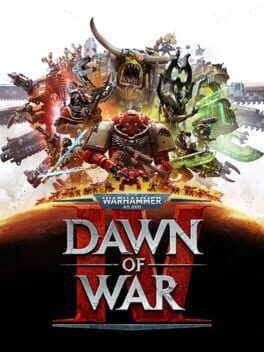

Latest Warhammer 40,000: Dawn of War IV previews point to a deliberate return to base-building RTS fundamentals, but impressions split on whether that course correction is bold enough.
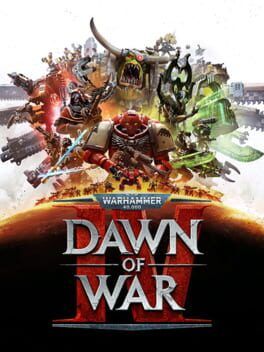
Image: IGDB
Store links: Warhammer 40,000: Dawn of War IV on Steam
Dawn of War IV now has a date, and a clear design bet
Warhammer Community lists Warhammer 40,000: Dawn of War IV for release on 3 December 2026, with the Commander Edition offering three days of early access and pre-orders directed to Steam. That date turns the latest preview wave into something more useful than a vibe check: King Art Games’ sequel is close enough that its core identity is coming into focus.
The shared headline from recent hands-on reports is that Dawn of War IV is leaning hard into classic RTS structure. Press Start describes proper base-building, resource points, energy nodes, generators, upgrades, defensive structures, and armies that scale from a few squads into larger engagements. GameSpot similarly came away from multiple campaign missions calling it a return to form after Dawn of War III’s divisive changes, while Rock Paper Shotgun says base-building and cover are both back, with battles larger than Dawn of War II but smaller than Dawn of War III.
That creates the central tension around this Dawn of War 4 preview cycle. After Dawn of War III tried to blend earlier entries with MOBA-inflected hero play and competitive ambitions, the new game appears to be correcting toward the 2004 original. For some previewers, that is exactly the reset the Warhammer 40K RTS audience has been asking for. For Rock Paper Shotgun, it also raises a sharper concern: a series once defined by reinvention may now be too reverent toward its own past.
The course correction after Dawn of War III is real, but not everyone reads it the same way
GameSpot frames Dawn of War IV as a more functional fusion of the first two Dawn of War games than Dawn of War III managed. In its preview build, the outlet says it was juggling large squads, upgrades, unit abilities, hero characters, vehicles, mechs, and a deeper base-building layer. The telling detail is not simply that base-building has returned, but that GameSpot felt every system demanded attention, to the point where the real-time pressure made the pause function tempting.
That is a promising sign for a strategy game, because an RTS lives or dies by whether its economy, production, tech path, and battlefield control compete for the player’s attention in productive ways. If the player is constantly deciding between expanding, upgrading, reinforcing, microing heroes, and protecting resource income, the game has the raw material for strong campaign missions and potentially healthy skirmish play. If those layers resolve into rote build orders or excessive ability spam, the same density can become noise.
Rock Paper Shotgun’s more cautious impression matters because it points at a different measure of success. The outlet argues the earlier Dawn of War games each changed the rules: the first pushed traditional RTS play with cover, customization, and animated melee brutality; Dawn of War II cut base-building and focused on small-squad tactics; Dawn of War III reacted to the era of Dota 2 and League of Legends with stronger hero characters, special abilities, and larger, more fragile armies. By that standard, Dawn of War IV being a competent, enjoyable, familiar RTS is a partial victory rather than a full creative answer.
That split is useful for readers. If your main frustration with Dawn of War III was that it drifted away from RTS fundamentals, these previews suggest Dawn of War IV is listening. If your attachment to Dawn of War is tied to each entry disrupting the last one, Rock Paper Shotgun’s concern is the warning flag: this sequel may be safer than the series’ own history led some fans to expect.
Kronus and the Blood Ravens are doing more than nostalgia work
The Blood Ravens are central again, and the setting choice is doing heavy lifting. Warhammer Community says Dawn of War IV returns to Kronus, the planet first seen in Dawn of War: Dark Crusade, and describes it as a vital recruitment world for the Blood Ravens. The official post adds that the Great Rift has cut them off from reinforcement, making Kronus more important as xenos forces threaten what remains of Captain Cyrus’ company.
That is a deliberate pull on series memory. Dark Crusade is still one of the most beloved names attached to Dawn of War, and Kronus gives King Art a way to reconnect with the faction identity that made the Blood Ravens feel like a video game chapter with its own fan culture rather than a borrowed Space Marine paint scheme. The risk is obvious: nostalgia works best when it supports new pressures, not when it becomes a checklist.
The latest Space Marines trailer also complicates the Blood Ravens’ position. Warhammer Community says the Dark Angels arrive to aid Captain Cyrus and the Blood Ravens against Chronomancer Thothmek’s Necrons, with units including a bike-mounted Chaplain and Deathwing Terminators. The same official post says these allies are led by a Primarch. That gives the Space Marine side a bigger 40K event flavor than a straightforward Blood Ravens reunion tour.
Eurogamer’s Blood Ravens-focused interview angle shows how specific the community’s attention has become. The outlet notes that Dawn of War IV uses a black imperialis on Blood Ravens armor, following Dawn of War II and III rather than the gold seen in the original Dawn of War. Eurogamer also points out that Games Workshop has provided little wider lore on the Blood Ravens compared with chapters such as the Ultramarines, including no confirmed gene-seed origin. That means even a chestplate color lands in the zone between art direction, lore expectation, and miniature-painting canon.
For a Warhammer 40K RTS, that kind of detail is not cosmetic trivia. It signals how closely the game is being read by fans who care about faction language, heraldry, and continuity. Dawn of War 4 Blood Ravens coverage is likely to stay intense because the chapter’s appeal has always lived in that unresolved space: familiar enough to feel iconic, undefined enough for players to argue over.
The Orks and Adeptus Mechanicus previews point to faction identity built through economy
The most encouraging impressions are coming from how differently the playable factions appear to express the same RTS foundations. Polygon says the Orks are built around a style where they get stronger the more the player builds, spawns, and kills, with Waaagh! stratagems charged through a meter before unleashing hordes. Press Start, after spending weeks with the preview build, also highlights the Ork campaign as part of a broader return to expansion, preparation, and sudden violence.
That matters because faction asymmetry in RTS design cannot stop at unit rosters. A good Ork economy should pressure the player toward aggression, constant production, and momentum. If Waaagh! rewards building, fighting, and killing, it potentially turns the macro loop into the faction fantasy: expand to feed the horde, fight to keep the meter climbing, and use the resulting spike to break positions before the opponent stabilizes.
The Adeptus Mechanicus side sounds different in tone and rhythm. Press Start describes the Mechanicus as taking a more calculated approach to battlefield control, while Polygon says its preview included the Orks and Adeptus Mechanicus after a prologue that let it try Space Marines and Astra Militarum elements. IGN’s listing for its recent coverage also points to detailed impressions of the Necron and AdMech factions, though the provided listing text does not include those specifics.
The confirmed faction list from Warhammer Community is Space Marines, Necrons, Orks, and Adeptus Mechanicus. Press Start says the prologue introduces the Astra Militarum and Blood Ravens, but the official four-faction list does not name Astra Militarum as one of the core launch factions. That distinction is worth keeping straight: previews may show Guard units or missions, while the announced faction structure remains Space Marines, Necrons, Orks, and AdMech.
For long-term balance, the question is whether each faction’s economy creates different timings rather than different skins on the same tech race. The previews suggest King Art is at least aiming for different pressure profiles. Orks seem to want snowballing violence. Mechanicus appear more methodical. Necrons, still less exposed in the quoted previews here, are the missing piece in judging whether Dawn of War IV can sustain interesting matchups beyond the campaign.
The campaign looks unusually large for an RTS revival
Press Start says the full game promises more than 70 missions across four faction campaigns, alongside skirmishes, multiplayer, and the returning Last Stand mode. The outlet also reports that every mission is planned to support full co-op at launch. If delivered as described, that is an aggressive amount of single-player and cooperative content for a modern RTS release.
That scope fits with the preview access several outlets describe. Polygon says its build included the prologue and two of the four campaigns, with hands-on time across Orks and Adeptus Mechanicus. Press Start says it played the two prologue missions, the full Ork campaign, and the full Adeptus Mechanicus campaign, with the recommended order being Prologue, Orks, then Mechanicus. Rock Paper Shotgun says it played across the Ork and Adeptus Mechanicus campaigns. GameSpot says its preview covered the opening missions of two campaigns.
The practical question is how that volume is paced. RTS campaigns can suffer when mission count outstrips mechanical escalation, especially if objectives repeat without changing the economy or tactical constraints. The positive read is that four faction campaigns give King Art room to teach different rhythms: Blood Ravens precision, Ork momentum, Mechanicus control, and Necron threat. The caution is that quantity alone will not solve the genre’s oldest campaign problem, which is keeping macro decisions meaningful after the player has solved a faction’s basic build pattern.
Co-op could be the feature that changes the equation. Full mission co-op, as reported by Press Start, makes the campaign more flexible for players who enjoy RTS multitasking less than army coordination. It also introduces balance questions around mission scripting, enemy pressure, and whether two players can trivialize encounters built for one commander. Until launch or review access, that remains an open implementation question rather than a confirmed strength.
The old Dawn of War identity is back, but the meta test comes later
Across the previews, the safest conclusion is that Dawn of War IV is a deliberate Warhammer 40K RTS course correction. It brings back base-building. It restores resource-point conflict. It uses cover, larger armies than Dawn of War II, and a unit cap that Rock Paper Shotgun says is significantly larger than Dawn of War II while battles are not as large as Dawn of War III. It keeps hero characters and unit abilities in play, according to GameSpot, but early impressions suggest they sit inside a wider RTS framework rather than replacing it.
That is probably the right strategic opening for King Art after Dawn of War III’s reception. The franchise did not need another identity crisis before proving it could still deliver a satisfying modern real-time strategy campaign. Polygon’s enthusiasm, Press Start’s weeks-long positive impression, Eurogamer’s praise for the screen-filling action and melee combat director, and GameSpot’s return-to-form framing all point to a game that understands the demand for classic Dawn of War texture.
The unanswered question is whether that texture becomes a durable metagame. Preview builds can show faction flavor, spectacle, and mission variety, but they rarely reveal whether multiplayer economies are brittle, whether hero abilities dominate engagements, whether defensive structures stall maps, or whether resource nodes create real territorial tradeoffs after optimal routes emerge. Those are the things that decide whether a Warhammer 40000 Dawn of War IV revival lives for a campaign season or earns a long multiplayer tail.
For now, the buying guidance is straightforward. Players who primarily want a single-player Warhammer 40K RTS with Blood Ravens history, Ork momentum, AdMech machinery, Necron opposition, co-op campaign support, skirmish, multiplayer, and Last Stand have multiple previews pointing in their direction. Players hoping Dawn of War IV would reinvent the genre the way earlier entries reinvented themselves should keep Rock Paper Shotgun’s reservation in mind and wait for reviews that can judge the full campaign and competitive systems.
Dawn of War IV’s challenge is no longer proving that it remembers what fans missed. The previews suggest it does. The harder test is whether remembering Dawn of War’s roots can produce a strategy game with enough new pressure, faction identity, and balance depth to still feel alive after the first victory on Kronus.