
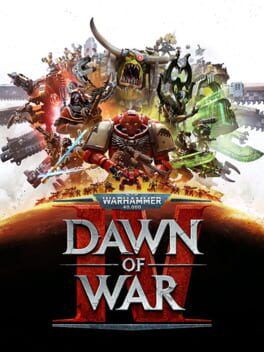

King Art's latest Warhammer 40,000: Dawn of War 4 gameplay video shows two developers losing to Hard AI Orks, raising sharper questions about co-op PvE pressure, squad control, and campaign challenge.
Image: IGDB
Store links: Warhammer 40,000: Dawn of War IV on Steam
Hard mode’s clearest signal is a developer loss
King Art Games has shown Warhammer 40,000: Dawn of War 4 on hard mode, and the headline detail is unusually concrete for a pre-release RTS demo: two senior developers lost twice to AI-controlled Orks. According to IGN’s report on the new gameplay, creative director Jan Theysen and senior game designer Elliott Verbiest teamed up as Space Marines in a 2v2 Team Skirmish PvE battle against Hard AI Orks. The first match ended in defeat in just over four minutes. The second lasted 13 minutes before Theysen surrendered.
That is the tension in this footage. Most studio-led strategy demos are built to show clean build orders, cinematic unit clashes, and a reassuring developer win. This one shows the developers falling behind on Victory Points, losing control of the map economy, and failing to assemble a comeback army before the Orks pushed toward their base. IGN notes that earlier Dawn of War 4 battlefield report videos had focused on PvP, while this one is a look at two-player co-op against enemy AI.
For strategy players, that difference matters because PvE AI is often the weak joint in otherwise promising RTS design. A ladder opponent can create the pressure. A campaign or skirmish AI has to simulate it. The new Dawn of War 4 hard mode footage does not prove final balance, and it does not tell us how Normal, campaign, or higher difficulty settings will behave. It does show that King Art is willing to put its AI under public scrutiny, even when the result is messy for the people presenting it.
The Orks win through map pressure, not a single scripted moment
The most useful detail in the footage is not simply that the Orks hit hard. It is how the losses are described across IGN and GameWatcher’s reporting. GameWatcher identifies the mode as Maelstrom, where teams fight to collect and destroy objectives as they appear across the battlefield. IGN says Theysen and Verbiest tried to keep pace with capturing points and objectives, but could not fend off repeated attacks. Even with auto reinforce enabled, they fell behind in Victory Points and were starved of resources.
That sequence is important because it sounds like a systemic RTS failure state rather than a one-off scripted ambush. The AI pressured the map, forced engagements, denied breathing room, and converted economic advantage into a base-threatening push. In a capture-point RTS, losing units is painful, but losing time is often worse. Every retreat, delayed capture, or bad trade can become a resource gap. If the Dawn of War 4 AI can consistently exploit that gap, hard mode becomes a test of tempo rather than a health-bar check.
There is still a lot we do not know. The sources do not say whether Hard AI receives hidden resource bonuses, faster production, improved tactical routines, or some mix of all three. Without that information, it would be premature to call the AI sophisticated in the full competitive sense. What the footage does suggest is that hard mode has enough pressure to punish passive play. For a Warhammer RTS built around squads, objectives, and forward momentum, that is a better sign than an AI that politely waits to be dismantled.
Squad control looks like the difference between holding and collapsing
The new Warhammer 40,000 Dawn of War 4 gameplay also puts squad control under the microscope. IGN specifically notes that auto reinforce was on during the second match, yet it did not prevent the Space Marines from being overwhelmed. That is a useful warning for players expecting automation to smooth over bad engagements. Reinforcement can keep squads alive, but it cannot replace positioning, target selection, or timing retreats before the economy tilts out of reach.
GameWatcher highlights the fast feel of unit movement and says the mode keeps teams moving and clashing. The outlet also notes that base-building remains part of Dawn of War 4, while King Art has previously underlined a focus on offense and keeping teams on the move. Taken together, those details point toward a game where production and tech choices matter, but the match is decided by whether players can spend attention in the right places at the right time.
For co-op PvE, that has interesting consequences. Two players can cover more ground, split capture duties, and rescue each other from bad fights, but they can also desynchronize and feed the AI separate wins. Theysen and Verbiest increased the Victory Point total for the second match to extend its length, according to IGN, but the extra time did not solve the underlying pressure problem. The issue was not only the score limit. It was the inability to turn captures, reinforcements, and army rebuilding into a stable front.
A Relic-style expectation is hanging over King Art’s sequel
Dawn of War 4 is being developed by King Art Games and published by Deep Silver, based on the source reporting, but the audience expectation around the name still carries a very specific RTS memory. When players talk about wanting a Relic-style campaign challenge from a new Dawn of War, they usually mean squad-level decisions under constant pressure: capture points that create economic urgency, elite units that can be lost through sloppy control, and mission pacing that punishes waiting too long to move.
The hard mode footage gives that audience something concrete to examine. It shows Space Marines losing because they cannot stabilize the map, not because the match lacks things to do. The AI Orks are described by IGN as delivering waves of attacks, and GameWatcher’s description of Maelstrom suggests objectives are designed to pull teams into repeated contact. That structure is closer to a pressure cooker than a static comp stomp.
This is where expectation and confirmation need to be separated. Confirmed: the shown match is 2v2 Team Skirmish PvE, it features Space Marines against Hard AI Orks, and it takes place in an objective-driven mode. Also confirmed through GameWatcher’s report: this was the fifth Battlefield Report released by Deep Silver and King Art, and the footage is a 17-minute gameplay video. Interpretation: if campaign missions use comparable AI aggression and map logic, Dawn of War 4 could give solo and co-op players a sterner tactical curve than many modern RTS campaigns. That remains an open question until King Art shows more campaign-specific material or difficulty breakdowns.
Hard AI is promising, but tuning will decide whether it feels fair
The developers’ own comments frame the footage as both a challenge and a tuning question. IGN quotes Theysen joking that he would need to have “a stern word” with the coders about hard mode difficulty, adding that the boss is supposed to win. Verbiest, meanwhile, said he had no doubt players would come back within weeks of launch saying they had managed to beat it within two days. Theysen closed by acknowledging both that the developers were “not that good” at their own game and that “the AI is pretty strong.”
That humor is useful because it shows the studio understands the public read of the video. A brutal AI can excite veteran players, but it can also become brittle if it wins by cheating too visibly, swarming without readable counters, or forcing one narrow build order. The good version of Dawn of War 4 AI pressure would make losses understandable: you lost the flank, floated resources, reinforced into a bad fight, or ignored an objective window. The bad version would be an opponent that overwhelms through opaque bonuses and leaves players guessing what lesson they were supposed to learn.
The current footage leans encouraging because the reported failure points are familiar RTS fundamentals: map control, Victory Points, resources, and response-army timing. Still, King Art has not detailed the exact mechanics behind Hard AI in the provided source material. Until that happens, this should be read as a strong signal, not a final verdict on difficulty design.
Release timing, platform guidance, and who should be watching
GameWatcher reports that Warhammer 40,000: Dawn of War 4 is coming exclusively to PC via Steam on December 3, 2026. The same report links the Steam page for Warhammer 40,000: Dawn of War IV. The provided sources do not list a price, PC system requirements, demo plan, or post-launch roadmap, so players should treat those details as unannounced here rather than assumed.
For PvP-first players, the hard mode video is still relevant because AI behavior often reveals the underlying pace of an RTS. Fast movement, objective churn, and resource starvation all influence build orders and faction identity even outside co-op. For campaign and skirmish players, it is more directly useful. This is the clearest sourced look so far at Dawn of War 4 AI pressure in a PvE setting, and it suggests hard mode will demand active squad management rather than passive base buildup.
My read as a strategy player is cautious optimism. A developer loss is not automatically good design, but it is a better pre-release sign than a toothless showcase where the AI politely donates units. If King Art can make that Ork pressure readable, scalable, and fair across campaign and skirmish, Dawn of War 4 hard mode could become the kind of test that keeps co-op players experimenting after launch. If it cannot, the same footage may be remembered as a warning that the difficulty curve needed more explanation and tuning.