
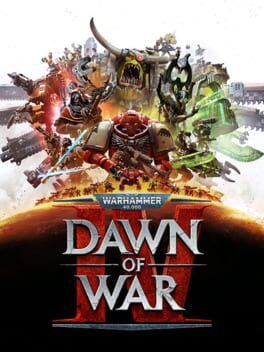
Breaking down the new Ork gameplay trailer for Warhammer 40,000: Dawn of War IV, with a close look at unit design, WAAAGH mechanics, and how Relic is evolving classic Dawn of War RTS play through the green tide.
The Green Tide Returns
Warhammer 40,000: Dawn of War IV is bringing the Orks back to the battlefield, and the new Ork gameplay trailer makes it clear they are not just a nostalgia play. This is an army built around momentum, brutal clarity of purpose, and a surprising amount of tactical nuance hiding underneath all the scrap metal and shouting.
Where Dawn of War II pushed tighter, squad‑based tactics and Dawn of War III experimented with MOBA‑style elites and lane‑like objective design, Dawn of War IV’s Orks look closer in spirit to the first game. The camera sits back, armies swell, and the green tide is once again something you feel as a wave rather than a handful of hero units. At the same time, almost every Ork inclusion in the trailer is doing double duty as both fan service and a deliberate tweak to the classic formula.
Core Infantry: Back To The Boyz, With A Twist
The trailer anchors the faction around familiar faces. Shoota Boyz and Storm Boyz return as the backbone of the army, and their presentation signals a clear design goal: the Orks need to feel instantly readable on the field.
Shoota Boyz are once again the workhorse ranged infantry. Their silhouettes are chunky, weapons exaggerated and muzzle flashes oversized so that even in large battles you understand where your dakka is coming from. Compared to earlier Dawn of War games, their firing arcs and formation behavior appear cleaner, which suggests the developers are trying to reduce that old Ork problem where your front line accidentally body blocked its own DPS.
Storm Boyz are the first big sign of how Dawn of War IV is pushing Ork mobility. Their jump packs look more than just gap closers. The trailer shows them leaping over cover, slamming into backlines, and chaining charges off terrain, which hints at a system where jump units can exploit elevation and line of sight rather than just vaulting a straight line. That alone promises a more expressive micro game than the “click, stun, retreat” rhythms of prior entries.
Flash Gitz fill the elite shooter role, and the trailer puts particular emphasis on their squad leader. You see him calling shots, repositioning, and pouring fire into key targets. That suggests a heavier focus on squad‑level active abilities, where your investment units reward attention with decisive power spikes, instead of Dawn of War III’s hero‑centric elite rosters.
Goodbye Sluggas, Hello Squighog Riders
The most striking omission is Slugga Boyz. In the older games they were the quintessential Ork melee blob. Their apparent removal says a lot about how Dawn of War IV wants the faction to play.
Instead of a basic melee tide, the trailer elevates Squighog Riders to the front line. These mounted Orks are fast, vicious, and visually noisy in the best way. They race around the battlefield, curl in wide flanks, and crash into isolated targets. Mechanically, that points to a melee game that values angles and timing over simple mass.
With Squighog Riders acting as cavalry rather than cheap bodies, Ork melee players will likely lean more on positioning and hit selection. Losing Sluggas also cleans up early‑game readability. When you see green models sprinting at you, they are not just another 40k blob. They are a high‑impact, high‑threat cavalry package that demands an immediate answer.
From an RTS design perspective, this nudges Orks toward a more tempo‑driven style. Your melee power is not just parked in the center of your formation waiting to charge. It is probing, threatening multiple fronts, and forcing opponents to respect the possibility of a sudden WAAAGH‑fueled collapse on a weak flank.
Walkers And Machines: Focused Brutality
Earlier Dawn of War titles often gave Orks a sprawling vehicle roster that blurred together once everything was on the field. Dawn of War IV reins that in, cutting units like Killa Kans and Squiggoths in favor of a tighter stable built around Deff Dreads and the Gorkanaut.
Deff Dreads here read as the spiritual successors to Killa Kans, but with a bit more swagger. They stomp forward as mid‑tier walkers, bristling with saws and guns. Their animations emphasize forward momentum and big, clear attack tells. This is less about intricate micro and more about controlling space. If a Deff Dread is walking down a lane, your opponent feels that pressure and has to rotate or commit anti‑armor.
The Gorkanaut serves as the faction’s late‑game centerpiece. It is huge, belching flame, and even by Warhammer standards it is theatrical. Mechanically, the trailer implies the Gorkanaut is both a siege engine and a crowd control tool. It torches infantry out of cover, shrugs off small arms fire and uses stomps to lock down zones of the map.
What matters is not just raw stats but the way this condenses the Ork vehicle identity. Rather than a dozen overlapping walkers, you get clear tech milestones. Hit Deff Dreads and your mid‑game army snaps into a proper brawl engine. Reach Gorkanaut and you are now dictating where the enemy is allowed to stand.
Heroes And Subfactions: Gorgutz Vs Guzcutta
Hero choices are where Dawn of War IV quietly imports lessons from both Dawn of War II’s character‑driven campaigns and Dawn of War III’s elite system, but in a way that steers back toward classic RTS commanders.
Gorgutz, the Bad Moons warboss returning from earlier games, represents the “traditional” Ork fantasy. He is big, loud and built for frontal assaults. The trailer frames him walking at the head of large pushes, triggering WAAAGH surges and smashing anchors in the enemy line. Picking Gorgutz looks like a commitment to the slow build toward one overwhelming, often decisive WAAAGH.
Guzcutta, the new Snake Bites warboss, is very different. He rides a Squig, accelerates the army’s tempo, and leans into raiding. You see him leading Squighog Riders, slipping around the map edge, and collapsing on soft economy or isolated units. In practical terms, that hints at a commander who buffs mobility, ambush damage, or battlefield vision rather than pure durability.
This split between Bad Moons and Snake Bites is a smart way to layer faction identity. You are still playing Orks, with their shared units and signature WAAAGH, but your chosen warboss pushes you toward either big frontal pressure or constant harassment. It is a cleaner, more readable version of the army subthemes that earlier games sometimes buried in upgrade menus or wargear choices.
The WAAAGH Reworked
No Ork deep dive is complete without the WAAAGH, and the trailer makes a point of showing that this is still the beating heart of the faction. The key difference is how directly it ties into Dawn of War IV’s emphasis on timing windows.
Visually, WAAAGH activations wash the screen in green, crank up the noise, and spike unit aggression. Mechanically, the trailer suggests a temporary boost to damage, speed, or maybe even ability cooldowns. More important than the exact numbers is how clearly the game communicates it. You always know when an Ork player has committed to a WAAAGH push.
Compared to earlier games, this looks less like a passive background bonus and more like a full‑blown power play. If you trigger WAAAGH on a weak engagement, you have thrown away your biggest lever. If you nail it, the result is a brutal snowball where Storm Boyz crack the backline, Squighog Riders clean up retreats, and Deff Dreads plus the Gorkanaut grind down whatever is left.
This lines up with a broader RTS trend toward defined combat phases. Games like Company of Heroes or StarCraft emphasize fights that are either skirmishes or set‑piece engagements. Dawn of War IV seems to give Ork players the tool to literally decide which fights become set‑pieces, leaning into their identity as momentum junkies.
Evolving The Dawn Of War Formula
When you step back from individual units and look at the faction as a whole, the Ork trailer reads like a mission statement for what Dawn of War IV wants to be.
First, it is a return to large‑scale, base‑building RTS. The shots of sprawling Ork camps, lines of Boyz, and heavy walkers advancing under artillery fire look far closer to the original Dawn of War than to the tightly focused squads of the sequel or the more segmented, lane‑ish battles of the third game.
Second, it is more curated. Previous entries sometimes buried players under near‑duplicate unit choices or marginal tech branches. By cutting Sluggas, trimming vehicles like Killa Kans and Squiggoths, and emphasizing a smaller number of more expressive units, Dawn of War IV avoids the trap of giving players theoretical options they rarely use in practice.
Third, it is trying to modernize pacing. Fast cavalry that can create constant map pressure, heroes that meaningfully shape playstyle, and a WAAAGH that functions as a clearly telegraphed power spike all bring the game closer to contemporary RTS design. Orks are no longer just “build more, then right‑click.” They are about forcing your opponent to answer a string of tempo questions, from early Squighog harassment to late‑game Gorkanaut death pushes.
Finally, it is still gloriously, unmistakably Orky. The unit barks, the ramshackle armor, the way even the UI flares seem to vibrate with noise all contribute to an army that owns the screen whenever it is active. That theatricality matters. In an RTS, clarity and personality have to coexist, and this trailer suggests Dawn of War IV understands that balance.
What It Means For Competitive And Casual Play
If the trailer is representative of the full roster, Ork players in Dawn of War IV will juggle three main pressures. They need to grow a critical mass of Shoota Boyz and walkers, they must constantly threaten the map with Storm Boyz and Squighog Riders, and they have to time their WAAAGH and hero abilities to crack key engagements.
For competitive‑minded players, that creates a faction with a high skill ceiling but a clear learning curve. New commanders can enjoy the raw spectacle of a Gorkanaut‑backed WAAAGH and some basic cavalry charges. Veterans will find depth in juggling raiding routes, abusing terrain with jump troops, and baiting opponents into bad fights just before a power spike.
Casual players get a different benefit. By trimming the fat from the roster, the game cuts down on choice paralysis. You feel like you are making meaningful decisions when you tech to Deff Dreads, commit to Gorgutz or Guzcutta, or time a massive WAAAGH. That sense of weight behind each click is what makes classic Dawn of War battles so memorable.
The Road To WAAAGH
The Ork gameplay trailer for Warhammer 40,000: Dawn of War IV is not just a faction sizzle reel. It is a clear statement of how Relic and the new developers are trying to modernize the series while respecting what made it beloved in the first place. The greenskins are still loud, brutal and hilarious, but their toolkit in Dawn of War IV is sharper, faster and more focused than ever.
If the other factions receive this level of care, Dawn of War IV could mark a genuine revival of big, characterful RTS on PC. For now, the Orks have set the bar high, and the only sensible response is to get ready, pick a warboss, and start planning your first WAAAGH.