
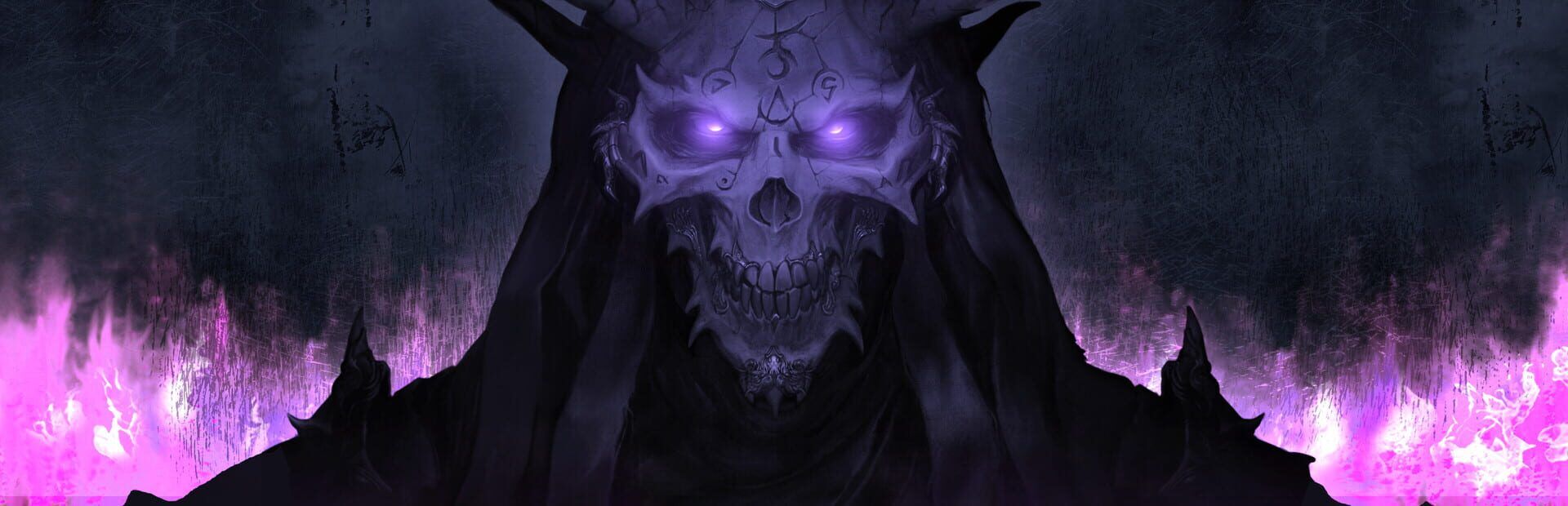

A systems-first look at how Darkhaven’s fully destructible, persistent world is supposed to function, how its Kickstarter and Steam pitch position it against Diablo and other ARPGs, and the key questions to ask before you back or wishlist.
Moon Beast Productions is not subtle about what it wants Darkhaven to be. The Steam page and Kickstarter headline it as an action RPG “unlike any other,” built by Diablo, Diablo 2, Torchlight, and Nox veterans, set in a world that never resets. Environments collapse, lakes drain, walls shatter, and it all stays that way. For a genre built on endlessly resetting dungeons, that is a radical promise.
This is a systems-first preview of Darkhaven: how its fully destructible, persistent world is meant to work, what the team is promising in terms of movement and combat, and how the crowdfunding pitch frames it against Diablo and modern ARPGs. More importantly, it is about what potential backers and wishlisters should be asking before they buy into the dream.
A world that never snaps back
Darkhaven’s core pitch is a “player-shaped” world that evolves instead of cleanly resetting between sessions. The setting is a post-collapse dark fantasy, where ruined empires and overgrown strongholds are slowly being reclaimed from monsters and corrupting magic. The twist is that you are not just clearing these spaces for loots and levels, you are physically reshaping them.
Everything promotional so far foregrounds this idea of permanence. Moon Beast talks about procedurally generated realms that can be altered forever, both above and below ground. If a group of players tunnels through a mountain to create a shorter route between two hubs, that tunnel becomes part of that world’s geography. Collapse a bridge during a siege and the broken span is not magically rebuilt the next time you log in. The studio goes as far as describing Darkhaven as a shared history, written collectively by its players, rather than a rigid campaign.
It is not just static map edits. The game layers in seasons and weather as long running systems that reconfigure the world over time. Rains can swell rivers and bog down routes you previously relied on. A brutal winter might freeze a lake solid, turning an old maritime approach into a walkable battlefield. These are framed as long term changes that affect traversal and strategy, not short scripted setpieces.
This is where Darkhaven immediately diverges from the loop you know from Diablo and its descendants. Those games depend on predictability. You run the same dungeons or tilesets over and over because farming is the point. Darkhaven is trying to make the act of changing the world itself part of that grind. The risk is that systemic chaos can undermine clarity, so the details of how it stores and surfaces these changes are going to matter.
Digging through the world instead of just running on it
At the mechanical level, Darkhaven’s destructible world is described as being closer to a deformable sandbox than a static ARPG tileset. Terrain can be excavated, redirected or outright erased in ways that are supposed to have tactical and strategic consequences.
The examples Moon Beast keeps returning to are specific. Players can dig through terrain to uncover buried structures or create direct paths. They can blow holes in dungeon walls instead of following a prebuilt corridor layout. Lakes can be drained to expose ancient ruins at the bottom, creating a new space that simply did not exist before. Lava flows can be diverted to seal off passages or to weaponize the environment as an area denial tool.
Structures are part of this system too. The team pitches fortified strongholds that can be knocked down, rebuilt, and repurposed, with that reconstruction persisting across sessions. Think of a fortress that starts as an enemy encampment, gets destroyed during a siege, and is later rebuilt as a player aligned hub or staging ground. In theory, the same geographical spot goes through visible, mechanical phases that map directly to how that realm’s community plays.
The crucial detail is that all of this is supposed to be real geometry, not one off scripted setpieces. That means problems surface quickly for anyone thinking about backing Darkhaven. How do pathfinding and AI cope when every room can be breached? How does the game keep performance acceptable on large, long lived realms where thousands of small edits accumulate? How granular is destruction in practice: are we talking voxel like shaving of walls, or large predefined chunks?
Those answers will only really be believable in the playable demo Moon Beast has promised alongside the Kickstarter, but the questions are baked into the pitch. The more the game leans on world deformation as a selling point, the more it needs to prove that ARPG responsiveness survives the chaos.
Persistence, realms, and the problem of history
Darkhaven is being built around distinct realms that can be solo, co op, or PvP enabled. Within a realm, the world is described as persistent. Trees you chop stay chopped. Tunnels you dig remain. Towns you rebuild persist as hubs that other players can use. That persistence is framed as the connective tissue that lets a realm accrue its own identity over time.
This creates a different kind of endgame question than you get in Diablo 4 or Path of Exile. Those games solve longevity with ladders, leagues, and seasons that periodically reset the playing field. Darkhaven claims the world should not snap back to a default state, which is exciting but raises its own issues.
What happens when a realm becomes over edited and messy, with collapsed terrain and player structures everywhere? Does the game provide tools for stewardship, like realm wide events that partially reshape regions, or does the history simply accumulate forever? If you join a realm months into its life, how approachable is that history? The Kickstarter and Steam page both gesture at worlds that tell stories through scars and ruins, but do not explain how players can read that history without being overwhelmed.
There is also the social layer: heavily edited, player shaped realms are fertile ground for emergent cooperation and griefing. The team promises PvP enabled realms, which naturally raises questions about how destructive tools are limited in shared spaces, and whether co op focused players will have ways to protect their constructions.
Until there is concrete information on realm moderation tools, access controls, or rollback systems, it is worth treating the word persistent as a double edged promise. It is the foundation of Darkhaven’s identity, but it is also where many systemic games have stumbled.
Movement, combat, and the Diablo comparison
Darkhaven’s combat pitch is tightly tied to its environments. Where most isometric ARPGs keep player movement simple and lean on stats and cooldowns, this game pushes a more kinetic model. Characters can jump, climb, swim, and dash, and levels are built with verticality in mind.
The idea is that terrain matters in minute by minute fights. You can vault over barricades rather than pathing around them. You can climb to high ground to gain line of sight advantages or avoid dangerous ground effects. Swimming lets you approach encounters from unexpected angles or use bodies of water dynamically, and redirection of lava or water can literally reshape a battlefield.
All of this is placed in deliberate contrast to the click and stand rhythm of early Diablo. The Steam page and press materials lean on the team’s lineage, but draw a line between that heritage and how they want Darkhaven to feel. Where Diablo hinges on raw numbers and skill rotations, Darkhaven talks about execution and spatial awareness, a blend closer to an action RPG that borrows from immersive sim thinking.
Even the loot pitch is framed as a response to modern ARPG fatigue. Moon Beast emphasizes big, build defining items over tiny incremental upgrades. The language is very Diablo 2 coded: rare drops that recontextualize how you play, sets and uniques that push you toward wild synergies. The team is promising customization depth that lives in gear choices and skill interactions rather than in sprawling passive trees alone.
That contrast is doing work in their marketing. Darkhaven wants to be the game you turn to if you love Diablo’s crunchy loot but are tired of linear corridors and worlds that feel like ride tracks. It calls out its destructible, systemic levels as the missing ingredient that can make a familiar loop feel surprising again.
How the Kickstarter and Steam page sell the dream
The Kickstarter campaign frames Darkhaven primarily around three pillars: a veteran team that knows ARPGs, a fully dynamic world, and a community driven Early Access period. The call to action is simple. Wishlist on Steam today, back on Kickstarter when the demo hits, and help shape the game’s systems as they harden.
The pedigree section is particularly prominent. Moon Beast is open about the projects its leads have shipped, from Diablo and Diablo 2 to Torchlight, Hellgate, and Marvel Heroes. That history is being used as proof that the team understands loot pacing, buildcraft, and what makes an ARPG satisfying over hundreds of hours. Backers are not just funding a wild experimental game, they are, in the pitch’s own words, supporting a culmination of decades of experience.
The systemic world is the second marketing pillar and the most heavily illustrated in videos and descriptions. Every blurb reinforces this notion that you are not running dungeons that quietly respawn behind the scenes. You are invading keeps whose walls stay shattered, draining lakes that never refill, plundering ruins that you physically uncovered. The messaging emphasizes visible consequences and a shared sense of authorship on each realm.
Finally, the campaign leans on Early Access as a process rather than a phase. The language suggests that balance, content cadence, and even large scale systemic tweaks will be informed by community data and feedback from the demo onward. This is meant to reassure players burned by static or abandoned Early Access projects, but it also highlights that the shipped version of Darkhaven is likely several iterative steps away.
For potential backers and wishlisters, the takeaway is that you are being asked to buy into an evolving project where the foundations are bold but not yet proven. The presence of a demo at Kickstarter launch is a positive sign, but it is still a vertical slice of a sprawling promise.
Questions to ask before you back or wishlist
A concept as ambitious as Darkhaven needs scrutiny. Before you commit money or even a wishlist slot, it is worth treating the Steam and Kickstarter pages as starting points for questions rather than final answers.
The first set of questions should be about the destructible world itself. How granular is destruction in the current build? Are you punching clean tunnels through anything, or are there specific destroyable surfaces? Can enemies and bosses use these systems too, altering the battlefield in ways that matter? Ask to see these mechanics in the demo or in uncut footage, and look for edge cases such as AI pathfinding when walls are missing, or performance when large areas are edited.
Next, focus on persistence. How large is a realm’s history budget before performance or storage becomes an issue? Are there tools for realm owners to clean up or partially rewind griefing or ugly edits without wiping everything? How are solo realms handled versus public co op or PvP realms in terms of world saves and long term support?
You should also interrogate progression and replayability. If a world is permanently altered, what keeps you coming back to the same realm instead of rerolling a fresh one once the map feels too mined out or built up? Are there systems that periodically inject major changes, like cataclysms or invasions, to refresh played out regions without breaking the promise of continuity?
Co op and PvP raise their own concerns. How are destructive tools limited to prevent a single player from trashing shared infrastructure? Are there role or permission systems for building and demolition, or will every participant have equal power to reshape the world? What protections are in place for players who just want a collaborative base building and monster hunting experience without constant sabotage?
Finally, think about scope and timeline. How much of the advertised feature set will be present on day one of Early Access, and what is planned for post launch updates? Which elements in the marketing copy are hard commitments versus stretch goals or long term aspirations? A clear, transparent roadmap on the Kickstarter page will say a lot about how grounded Moon Beast’s ambitions really are.
Darkhaven’s promise of a fully destructible, persistent ARPG world is one of the most exciting ideas to hit the genre in years. Its Steam page and crowdfunding pitch are very good at selling that fantasy. The job now, for both the developers and the players considering backing them, is to test how much of that fantasy survives contact with reality, and whether the systems that make this world feel alive can support the endless grind that defines the best action RPGs.