
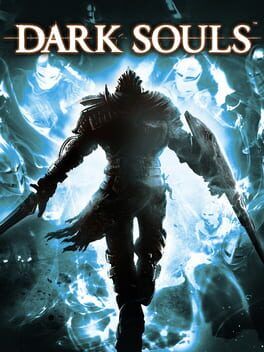

Dark Souls has reached 41.8 million copies in newly reported Bandai Namco sales data, showing the long commercial tail of FromSoftware’s trilogy years after its last mainline release.
Image: IGDB
Store links: Dark Souls III on Steam, Dark Souls II on Steam
Dark Souls reaches a new sales tier, with one important counting wrinkle
Dark Souls has reached 41.8 million copies in newly reported franchise sales data, a milestone that puts FromSoftware’s defining action RPG series within range of several larger Japanese game brands despite going a decade without a new numbered entry. VGTimes reports that Bandai Namco published fresh sales data for its major series and that Dark Souls had shipped 41.8 million copies by the end of March 2026. EGW also reports the same 41.8 million figure, noting that Bandai Namco had reported 39.71 million a year earlier.
The immediate tension is that the public reporting around the number is not perfectly uniform. Happy Gamer, citing a post from Genki_JPN on X, describes the total as 41.8 million copies worldwide. VGTimes frames the figure more narrowly, saying it only includes sales outside Japan because Bandai Namco published the series in those markets, while FromSoftware published it in Japan. If VGTimes’ description of the source data is correct, the 41.8 million figure is a Bandai Namco-published shipment total rather than a complete global lifetime tally.
That distinction matters for anyone tracking Dark Souls sales with precision. The safe reading is that 41.8 million is the newly reported benchmark attached to Bandai Namco’s data. The broader commercial story is still clear: even under the narrower interpretation, Dark Souls remains one of FromSoftware’s most durable commercial assets.
The long tail is now the story
The most striking part of the Dark Souls 41.8 million copies milestone is the pace at which the old catalog is still moving. VGTimes and EGW both report that the series stood at 39.71 million by the end of March 2025. That means the trilogy and its later re-release added roughly 2.09 million copies in the following year, despite no new mainline Dark Souls game arriving since Dark Souls 3 in 2016.
VGTimes identifies the included releases as Dark Souls from 2011, Dark Souls 2 from 2014, Dark Souls 3 from 2016, and Dark Souls Remastered from 2018. That lineup explains the shape of the sales curve. This is not a franchise being carried by an annualized cadence or a recent numbered sequel. It is a catalog that keeps finding new players through availability, reputation, and the continuing pull of FromSoftware’s name after later projects broadened the audience for the studio’s style.
Happy Gamer notes that the original Dark Souls launched on September 22, 2011, with FromSoftware as developer and Bandai Namco as publisher, first arriving on PlayStation 3 and Xbox 360. The same report says the series can now be played across PS4, Xbox One, PC, and Nintendo Switch. That spread across generations is central to the sales story. Dark Souls did not need a new entry in 2026 to keep selling. It needed to remain reachable.
A decade without Dark Souls 4 has not frozen the franchise
VGTimes points back to Hidetaka Miyazaki saying in 2015 that the third game would most likely be the last. The article also notes that FromSoftware moved on to new projects after Dark Souls 3. That history makes the current number unusual in a market where franchise health is often measured by the next sequel, the next season, or the next monetized update.
Dark Souls has taken a different path. Its commercial relevance now comes from accumulated cultural weight and a catalog that still functions as an entry point into FromSoftware’s RPG design lineage. For players, the trilogy remains a progression ladder of its own: the 2011 original, the 2014 sequel, the 2016 conclusion, then the 2018 remaster that gives the first game a later storefront life. The sales increase reported for the year ending March 2026 suggests a steady stream of late adopters rather than a single launch-window spike.
VGTimes adds that Dark Souls 3 had already accounted for more than 10 million copies by 2020, when the series total passed 27 million. That older data point helps explain why the franchise can keep climbing. The third game did not merely close the trilogy as a narrative endpoint. Commercially, it became the strongest individual release identified in the provided reporting, anchoring the series’ post-2016 footprint.
Bandai Namco’s franchise table shows how large Dark Souls has become
Within Bandai Namco’s portfolio, VGTimes reports that Dark Souls now ranks third among the publisher’s franchises covered in the newly published sales data. Tekken leads with 62.7 million copies and is described by VGTimes as Bandai Namco’s best-selling console series. Naruto games are second at 46.58 million. Dark Souls follows at 41.8 million, ahead of Tales of at 32.13 million and Little Nightmares at 24.54 million.
That placement is significant because Dark Souls is not built like Tekken or Naruto. Tekken is a long-running fighting game series with decades of arcade and console continuity. Naruto draws from one of the most recognizable anime and manga properties in the world. Dark Souls, by contrast, grew from a difficult original RPG brand into a commercial pillar for Bandai Namco outside Japan.
Happy Gamer also compares the new figure against a wider list of major Japanese series. In that ranking, Devil May Cry is listed at 42 million, which would put Dark Souls only about 200,000 copies behind it at 41.8 million. The same Happy Gamer report says Dark Souls now clears Kingdom Hearts at 39 million, Tales of at 31.21 million, and Persona at 30 million on that list. Those comparisons should be read with care because different lists can use different counting rules, but they show the same broad pattern: Dark Souls has moved from cult reputation to top-tier franchise scale.
Elden Ring comparisons depend on the source and the date
The new Dark Souls franchise sales figure naturally invites comparison with Elden Ring, FromSoftware’s later breakout. Happy Gamer’s report says Elden Ring is listed at 35 million in the same Genki_JPN ranking it cites, which would leave Dark Souls ahead by 6.8 million copies. VGTimes gives a different set of Elden Ring reference points: it says Elden Ring passed 30 million sales in April 2025, and separately cites an October estimate from analysts at Alinea that puts the game at 36.4 million across Steam, PlayStation, and Xbox alone.
Those numbers do not need to be forced into a single clean hierarchy. They appear to come from different sources, dates, and methodologies. Dark Souls is being discussed here as a franchise total across multiple releases. Elden Ring is a single game, with its own official milestone and at least one later analyst estimate. Happy Gamer’s 35 million figure, VGTimes’ 30 million official milestone, and the Alinea 36.4 million estimate are related signals, not identical measurements.
The useful conclusion is narrower and stronger: FromSoftware now has two enormous commercial pillars in public sales discussion. Dark Souls demonstrates long-tail catalog strength across a trilogy and remaster. Elden Ring demonstrates the scale FromSoftware can reach with a newer standalone release. The former did not become irrelevant when the latter arrived.
For players, the milestone does not announce a new release
Nothing in the provided reporting announces Dark Souls 4, a new remaster, a collection, a platform upgrade, or a price change. The sales milestone is a business update, not a product reveal. That is important for readers searching Dark Souls franchise sales news and hoping it signals an immediate return to the series. The only historical development cited by VGTimes is Miyazaki’s earlier statement that Dark Souls 3 would most likely be the last, followed by FromSoftware moving on to other projects.
For anyone deciding whether to start the series now, the practical information in the reports is about availability and chronology rather than a new buying window. Happy Gamer says the original began on PS3 and Xbox 360, and that the series is now playable on PS4, Xbox One, PC, and Nintendo Switch. VGTimes identifies the core catalog as Dark Souls, Dark Souls 2, Dark Souls 3, and Dark Souls Remastered.
The 41.8 million figure also says something about player behavior. A difficult, older RPG series can keep selling when its catalog remains visible and when later studio success sends new players backward through the library. Dark Souls has become a long-running commercial route into FromSoftware’s design history. Years after release, the series still has enough pull to add roughly two million reported copies in a year, and that is the clearest signal behind the milestone.