
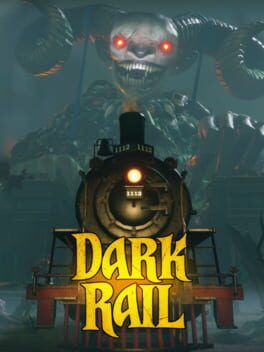

Dark Rail blends city management, prisoner quotas, inquisitor expeditions and roguelike meta progression into a grim strategy pitch with one unresolved platform wrinkle.
Image: IGDB
Store links: Dark Rail on Steam
Dark Rail has launched into a platform picture that still has one gap
Dark Rail is now being presented as a released grim strategy game, but the most useful reader detail is also the first complication: the sources do not describe its platform rollout in exactly the same way. TheXboxHub reports that Dark Rail is available now on Xbox Series X|S and PC for £10.49, with Xbox Play Anywhere support. Martin Cid Magazine reports a November 18, 2026 release on PC via Steam, PlayStation 5 and Xbox, and identifies the game as the debut from solo developer Steam Veil Games, published by JanduSoft. IGDB also lists Dark Rail as a full release across PC, PlayStation 5 and Xbox Series X|S.
That makes the confirmed shape clear enough for strategy players to start paying attention: this is a turn-based management roguelike built around running an Inquisition from an industrial frontier city and sending a train of agents into hostile territory. The unclear part is the storefront-by-storefront availability picture. TheXboxHub’s launch coverage specifically gives a price and Xbox Play Anywhere note for Xbox and PC, while Martin Cid and IGDB include PS5 in the platform set. If you are planning to buy on PlayStation, the safest reading is that PS5 is listed by multiple public-facing sources, but the provided launch pricing detail only comes from the Xbox/PC-focused report.
The pitch is city management under a prisoner quota economy
The central idea of Dark Rail is harsher than the usual resource-smoothing loop of city builders. According to GamingDebugged and Martin Cid Magazine, players command an Inquisition on the edge of an empire, where the city’s survival is tied to prisoner shipments and the political machinery behind them. The train is the tool that keeps that machinery moving: inquisitors depart into the frontier to hunt heretics, fight magical beasts and bring captives back to headquarters.
The strategic pressure comes from three linked variables described across the reports: resources or supplies, revolt and madness. GamingDebugged frames these as the core conditions that determine whether a run survives or collapses. Martin Cid describes the city-side layer as raising taxes, upgrading barracks, pausing buildings when supplies run low and choosing which districts receive stock. The important design implication is that Dark Rail appears to be less about finding one optimal production chain and more about deciding which instability you can afford right now.
That is where the inquisition management roguelike label earns its bite. Handing out supplies may reduce unrest, but it also leaves less for expeditions. Raising taxes may shore up income, but the reports indicate that revolt becomes a counterweight. When madness rises, GamingDebugged says the game can demand sacrifices. Martin Cid goes further on the moral economy, reporting that if prisoner quotas fall short, the game may push players toward framing innocent people, and that sacrifices can become a tool for keeping the city standing. Those details position Dark Rail as a management game where the economy is deliberately contaminated by the institution you run.
The train structure gives the roguelike loop a readable strategic spine
Plenty of roguelikes use expeditions as a run structure, but Dark Rail’s train gives the formula a clean operational rhythm. The city is the planning layer, the train is the commitment point and the frontier is where risk converts into consequences. GamingDebugged describes a game where players pick abilities during each run and shape strategy from scratch, while Martin Cid reports that expeditions are resolved through narrative choices and dice rolls influenced by inquisitor attributes.
That split matters because it creates two different kinds of forecasting. Before departure, you are managing stocks, revolt risk and the health of your agents. During an expedition, you are managing uncertain outcomes, mission costs and the possibility that an inquisitor returns wounded or psychologically broken. For players who think in terms of tempo and economy, the train appears to act like a pressure valve that never stays neutral. Sending agents out may bring back prisoners and progress, but it can also raise madness, increase revolt or damage the very roster needed for the next quota.
The best roguelike management designs are usually built around forced timing rather than perfect planning. Based on the reported systems, Dark Rail seems interested in that exact tension. You are not only building toward an abstract win condition; you are trying to keep enough bodies, supplies and political control in motion before the next shipment demand arrives. The train-based roguelike structure stands out because it makes each expedition a logistical bet, not a self-contained adventure.
Inquisitors look like the roster layer that will decide long-term depth
The strongest strategy hook beyond the city economy is the inquisitor roster. GamingDebugged reports that players can level inquisitors, assign specialised skills and manage their health between expeditions. Martin Cid likewise says survivors level up in the barracks and unlock skills, with attributes affecting dice-based expedition outcomes. This turns Dark Rail from a pure crisis-management game into a roster optimization problem.
That distinction is important. If inquisitors are interchangeable, the game lives or dies on event variety and resource math. If they develop into distinct specialists, the long-term meta becomes much richer: who is worth risking on a high-value mission, who needs to recover, who covers the city’s current weakness and who becomes too valuable to send when madness is already close to breaking point. The reports do not provide a full class list or skill tree breakdown, so it is too early to judge the balance. Still, the stated ingredients point toward a system where attrition matters because it changes future decision space.
For a strategy audience, the open question is whether Dark Rail gives players enough information to make hard calls feel earned. Dice rolls and narrative events can be compelling when the odds are legible and the aftermath reshapes the board. They can frustrate when they feel like punishment from outside the economy. The available coverage suggests attributes shape the odds, which is encouraging, but the exact transparency of those odds is not established in the provided material.
Blood Points make failure part of the progression economy
Dark Rail also includes a meta progression system, and that is likely to define its replay rhythm. GamingDebugged reports that Blood Points are earned by sacrificing prisoners and completing shipment quotas, then spent between runs to unlock abilities, bonuses and lasting advantages. Martin Cid describes Blood Points as feeding permanent upgrades in a research tree. Both accounts place meta progression inside the same moral economy as the city: power comes from meeting quotas and using prisoners as a resource.
From a balance perspective, that creates a delicate problem. Meta progression can make a management roguelike more approachable by ensuring failed runs still move the player forward. It can also flatten the early game if permanent upgrades become mandatory rather than expressive. Dark Rail’s reported structure has the potential to land well if Blood Points open different doctrines rather than simply patching over failure with bigger numbers.
The wording from GamingDebugged, which says players can shape their doctrine and push into harsher scenarios, suggests the intended appeal is experimentation over a single solved build path. That is the part I would watch after launch impressions settle. A compelling Dark Rail roguelike meta will ask whether you want to lean into expedition efficiency, city stability, sacrifice management or roster durability. A weaker version would turn Blood Points into a grind tax before the real game begins. The sources confirm the existence of the system, not its final tuning.
Its moral dilemmas are strongest when they change the mechanics
Dark Rail’s setting draws obvious comparisons to management games about compromised authority, and Martin Cid explicitly places it near Papers, Please and Frostpunk as games that make the player complicit rather than heroic. The important detail is not the grim tone by itself. It is whether the moral choice has a mechanical cost that persists after the dialogue box closes.
One example reported by Martin Cid is an event involving a holy fountain poisoned by a heretic. Destroying it removes the infection risk but makes future droughts worse, while purifying it is presented as the harder and riskier path. That is the kind of dilemma that fits Dark Rail’s systems because it ties narrative judgment to future resource exposure. If many events operate this way, the game’s cruelty may feel systemic rather than decorative.
That is also where Dark Rail’s subject matter carries risk. A game about running an Inquisition, filling prisoner quotas, framing innocents and using sacrifices needs precision if it wants discomfort to serve the strategy rather than become shock dressing. The sources describe a design built around pressure, scarcity and ugly tradeoffs, but they do not establish how the writing handles culpability, resistance or the people crushed by the system. For players drawn to grim strategy, that distinction will matter.
Who should keep Dark Rail on the radar
Dark Rail looks most relevant for players who enjoy management games where every stabilizing move creates a new liability. If your favorite parts of strategy games are economy timing, attrition, risk budgeting and meta progression, the reported structure has several promising hooks: a city under revolt and madness pressure, a train that turns resources into expeditions, a roster of inquisitors that can level up or break and a Blood Points tree that carries lessons between runs.
It is probably a poorer fit for players who want a clean power fantasy or a management sim focused on creative construction. The available descriptions emphasize quotas, sacrifices, unrest, wounds, psychological damage and morally compromised decisions. This is a Dark Rail game pitch built around pressure, not comfort.
For practical buying decisions, Xbox and PC players have the clearest sourced details from TheXboxHub, which reports the game as available for £10.49 on Xbox Series X|S and PC with Xbox Play Anywhere support. Players looking at PS5 should check the PlayStation storefront directly, since Martin Cid and IGDB list PS5 but the provided price and Play Anywhere details do not cover that version. Anyone sensitive to roguelike grind should wait for deeper post-launch impressions on Blood Point pacing and run variety. Everyone else with an appetite for a train based roguelike about ugly systems should at least put Dark Rail on the watchlist.