

Ubisoft has handed Arkane’s physics‑kick cult classic to its own modding community. Here’s what the Community Edition really is, why the publisher’s blessing matters, and what PC players should expect from a fan‑driven revival on modern Source tech.
Dark Messiah of Might and Magic has survived for almost twenty years on the strength of a boot to the chest.
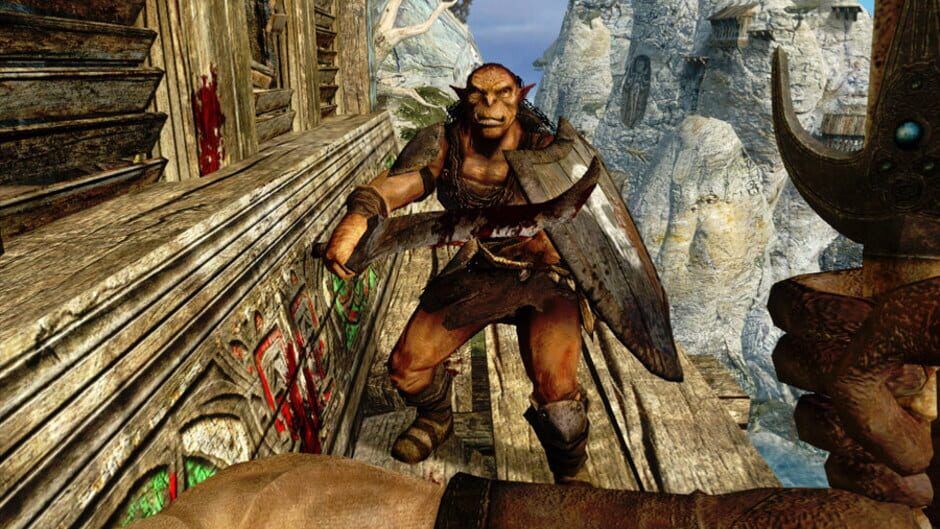
Arkane’s 2006 first‑person action RPG never became a mainstream hit, but its physics‑driven combat, ropey yet loveable fantasy story, and endless opportunities to drop or kick or impale goblins turned it into a fixture of PC folklore. The problem is that folklore does not patch bugs, fix compatibility issues, or make a creaky Source build behave on modern hardware.
That is where Dark Messiah of Might and Magic: Community Edition comes in, and why this project matters beyond one cult classic.
What Community Edition Actually Is
Despite the name, Community Edition is not a remake and not a full remaster. The team at wiltOS Technologies describe it as a port and clean‑up of Dark Messiah onto the latest version of the Source 1 SDK, with Ubisoft’s official approval and Valve’s support.
In practical terms, they are taking a 2006 Source branch that was frozen in time and moving the entire game onto modern tooling. Dark Messiah already ran on Source, but it did so in a heavily customised, partially locked‑down form that made deep fixes and new features painful for modders. With Community Edition, the team gets direct access to current Source 1 code and tools, which should solve a lot of the problems long‑time players have simply learned to live with.
The result is not a new Dark Messiah. It is the same game, re‑based onto technology that lets people keep working on it for another decade or more.
Why Ubisoft’s Blessing Is A Big Deal
Unofficial community patches are nothing new, and Dark Messiah already has plenty of fan tweaks scattered across ModDB and Nexus. What makes this project different is that Ubisoft has not only tolerated it, but has explicitly signed off on it, and even provided access to internal assets and support.
That backing started a couple of years ago when the same modders received permission to build an Advanced SDK for Dark Messiah. Ubisoft and Valve helped them untangle old code, restore cut content, and ship a toolkit that opened the game up for deeper modding work. Community Edition is the next step in that collaboration.
Official approval changes what is possible. It lets the team target a Steam release, expect proper Workshop support, and build on the latest Source SDK without having to hide what they are doing. It also means they can safely integrate things like the in‑development RTX Remix upgrade and co‑op support instead of leaving them as fragile side projects.
For Ubisoft, this is a low‑risk way to extract value from a dormant IP and keep Might and Magic in circulation without committing an internal team. For the community, it is a rare case where a major publisher is not just permitting modding, but actively helping an old game become moddable in ways it was never originally designed to be.
The Source Upgrades That Matter
Because Community Edition is still running on Source 1, expectations need to be pointed in the right direction. This is not Dark Messiah remade in Unreal Engine with modern animation systems and shiny new assets. It is Dark Messiah ported to a fresher, better behaved version of the tech it already uses.
That still means some meaningful upgrades.
First is stability. Dark Messiah has a reputation for crashy behavior, scripting glitches, and bizarre physics problems that go beyond the fun kind of slapstick. A lot of that is baked into the custom 2006 code branch and the way it talks to modern operating systems and drivers. By moving onto the latest supported Source 1 SDK, the team can address engine level problems, not just slap fan patches on top.
Second is compatibility. Modern Source builds understand new hardware, new operating systems, and modern input and display setups much better than a mid‑2000s fork. That is crucial for keeping an old game playable without forcing players through arcane config guides and community wrapper tools.
Third is room for graphics upgrades. The modders have already shown Dark Messiah running with RTX Remix features, bringing path‑traced lighting and modern effects to Arkane’s hard edged fantasy levels. A cleaner, supported Source base makes it much easier to plug those kinds of visual overhauls into the game without breaking everything else.
Finally, Source itself becomes a friend again. Mappers, scripters, and tinkerers who know Source from Half‑Life 2 or Garry’s Mod will find a much more familiar environment. That should encourage new projects built on top of Dark Messiah’s unique combat and world, rather than leaving it as a weird one‑off that only a handful of people understand.
A New Home For Mods
The long game for Community Edition is not just to make Dark Messiah run better, but to turn it into a stable platform for modding.
The team has already been busy on that front. There is an existing co‑op mod that lets players cut through the campaign together, a Restoration Mod that pulls cut content back into the game, and the RTX project that re‑lights the whole experience. These are not side curiosities any more. The plan is for Community Edition to be the place where they live, with proper integration, better support, and eventually Steam Workshop distribution.
That matters to preservation as much as it does to convenience. Right now, Dark Messiah’s best fan work is scattered across forums and mod portals, often dependent on fragile installers, abandoned loaders, and undocumented tweaks. When an operating system update breaks one of those chains, a mod can effectively vanish for new players.
Bringing the game onto a modern Source base and shipping it in a structured way on Steam gives everyone a common target. Modders know which build they are working against. Players know where to find and update their mods. Documentation and tutorials can be written against a stable platform instead of whatever unique stack of patches a given player happens to be running.
If the team also lands full Workshop integration, Dark Messiah goes from a cult classic you have to wrestle with to a game you can meaningfully curate and customize in a couple of clicks.
What Fans Should Realistically Expect
It is important not to oversell what a community‑driven overhaul can do, even with Ubisoft looking over its shoulder.
Community Edition is unlikely to rewrite Dark Messiah’s story, overhaul its campaign structure, or suddenly turn its very mid‑2000s faces into something unrecognisable. It will still be a linear, chapter based fantasy action RPG with a fairly short runtime, some awkward stealth, and level designs built around physics traps and that infamous kick.
You should expect cleaner performance, fewer show‑stopping bugs, and a game that simply behaves more like a current PC release. You should also expect a much smoother path into modded play, whether that means a co‑op campaign, restored content, or more ambitious total conversions down the line.
What you should not expect is the kind of art overhaul, animation pass, or UI redesign that requires a full internal development team and a publisher budget. The people working on this are modders, not Arkane, and they are also supporting other Dark Messiah projects in parallel. Progress will be steady but not instantaneous.
The upside is that this pace usually brings the community with it. Tools get documented as they are made. Mods are iterated in public. Feedback from long‑time fans can directly shape the work instead of disappearing into a support ticket system.
Community‑Led Revivals As Preservation
Dark Messiah’s Community Edition is part of a larger pattern on PC, where modders and small teams quietly become the custodians of games that publishers have no concrete plans for.
Ports to new engines, fan remasters, widescreen and ultrawide fixes, controller overhauls, fan translation patches, and massive mod frameworks are already doing the unglamorous work of keeping old games alive. The difference here is that these efforts have stepped into the light, with Ubisoft’s explicit blessing and Valve’s technical help.
That shift matters. It sets a precedent that letting the community take a formal role in maintaining older titles does not have to be a legal headache. It can be a way for a publisher to keep their back catalogue playable, keep goodwill alive around a franchise, and open the door to future projects that build on that work, all without tying up internal studios.
For players, it is a reminder that buying a PC game is not just about the box copy or the initial download. The long tail of patches, tools, wikis, and mods is what makes a game feel alive years after it drops off a publisher’s release slate. Community Edition is that long tail for Dark Messiah, given an official name and a real chance to grow.
If it works, Arkane’s experiment in physics‑kick combat will not just be a fond memory shared through YouTube clips and forum stories. It will be a living, moddable, shareable game that still feels worth installing in another ten years, and a model for how other cult PC classics can be handed over to the people who care about them most.