
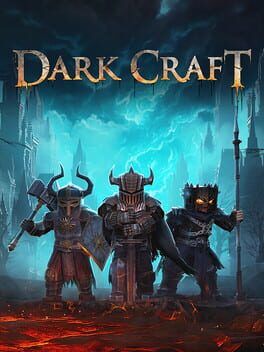
Dark Craft pitches itself as a free-to-play MMORPG blending Soulslike combat with Minecraft-style block building and destructible worlds. We break down what the game is promising, how it plans to monetize, and which parts should excite or worry MMO and Souls fans.
Dark Craft has stepped onto the scene promising something a lot of players have dreamed about for years: a full MMORPG built around Soulslike combat, with the freedom to shape, destroy, and rebuild the world using block-based construction. Developed by Kazakh studio Take Top Entertainment and listed as free to play on Steam, it is positioning itself as “the first MMORPG in the Souls-like genre,” while borrowing heavily from Dark Souls’ tone and design and mixing it with a softer, Minecraft-style visual identity.
That pitch alone is enough to make both MMO veterans and FromSoftware fans sit up and take notice. The question is how much of it is realistic for a small team working on a free-to-play game, and which parts are bold innovation versus red flags.
What Dark Craft Is Actually Promising
Dark Craft’s Steam page lays out a familiar but enticing core loop. You explore an open world full of ruined castles and forgotten temples, fight challenging enemies, team up with friends for co-op boss hunts, join guilds, and clash in PvP as you try to carve out your place in a grim fantasy setting. The presentation, from armor silhouettes to the way enemies loom out of the fog, wears its Souls inspiration on its sleeve.
What sets Dark Craft apart from most Soulslikes is its self-declared identity as a true MMORPG. It is not pitched as a 4-player co-op game or a shared-world lobby title. It is tagged as an MMO, promising persistent servers, social structures, and the kind of long-tail progression you expect from online worlds. On top of that, the game leans heavily into block-based environments that can be destroyed and rebuilt, hinting at player-driven fortifications, terraforming, and emergent dungeon spaces that look closer to Minecraft or other voxel sandboxes than the often static maps of traditional MMOs.
Soulslike Combat at MMO Scale
The most eye-catching claim is still the combat. The developers describe Dark Craft as the first MMORPG to truly adopt Soulslike combat design. That implies weighty stamina-based attacks, strict timing on dodges and parries, brutal punishments for mistakes, and bosses that feel more like intricate duels than simple MMO rotation checks.
Pulling that off in an MMO context is far from trivial. Souls combat is incredibly sensitive to latency and animation readability. MMO infrastructure, especially in large-scale encounters or crowded zones, tends to introduce input delay, interpolation, and server-side corrections that work fine for tab-target or hotbar systems but can feel awful in a precision-focused action model.
The early trailer footage for Dark Craft does not yet prove that the studio has solved this problem. Animations look stiff and timing appears off in places, which is not unusual for a game at this stage but is something Souls fans will immediately scrutinize. If Take Top can tighten animation locks, hitboxes, and netcode to deliver reactive, punish-heavy duels in a crowded online world, it would be a genuine technical and design achievement. If not, the game risks landing in an uncanny valley where combat feels like an imitation of Souls without the necessary precision.
Destructible Worlds and Minecraft-Style Building
The other big hook for Dark Craft is its block-based world and implied building systems. Visually, the environments and terrain adopt a chunky, almost voxel style that will look immediately familiar to anyone who has played Minecraft, Dragon Quest Builders, or similar sandboxes. The Steam pitch and early coverage emphasize destructible environments and the ability for players to shape the world themselves.
In an MMO, that kind of system raises exciting possibilities. Imagine guild-built fortresses that change the silhouette of a region, player-created strongholds that function as PvP targets, or temporary barricades and siege works erected during live events. Combine that with Soulslike progression and boss design, and you could have raid entrances that literally get dug out or walled off by players, ambush points carved into canyons, or resource wars over key building materials.
But those same systems are a technical and cultural minefield. Persistent destructible worlds are expensive to maintain, and developers often have to choose between allowing radical change and keeping zones recognizable for new players. Player-driven building also invites griefing, spam structures, and ugly landscape scarring unless there are strict rules, upkeep costs, or instanced areas. Dark Craft’s materials so far gesture at the dream more than they explain the rules, so it is worth treating this as a concept to watch rather than a solved feature.
Game Masters and a “Living” Virtual World
Another intriguing idea on Dark Craft’s Steam page is the promise of a dynamic virtual world shaped in part by human game masters. The team talks about systems and events being influenced by live GMs, which conjures memories of old-school MMOs where staff would possess NPCs, launch one-off boss attacks on cities, or weave player guilds into the story.
If realized, that would make Dark Craft stand out in a market where scripted seasonal events and pre-planned content drops have largely replaced spontaneous GM storytelling. A world where a live team is regularly orchestrating invasions, guiding emergent story arcs, or even punishing notorious griefers in-character could be a huge draw for community-focused players.
At the same time, this is one of the most labor-intensive promises any MMO developer can make. Constant GM involvement requires a staffed live team across multiple time zones, with tools, training, and tight oversight. Large-budget MMOs have drifted away from this model precisely because it is expensive and difficult to scale. If Dark Craft truly leans on GMs as a pillar of its experience, it will need to show how that support will be funded and sustained over years instead of months.
Free-to-Play Monetization and Lootbox Concerns
Dark Craft is listed on Steam as a free-to-play MMORPG, with both in-game purchases and chance-based in-game purchases. That last phrase all but confirms some kind of lootbox or gacha-style system, where players pay for randomized rewards rather than straightforward cosmetics or expansions.
From a business perspective, this aligns with the team’s mobile background, where gacha and random reward systems are common. For players, especially those coming from Soulslikes that are typically sold as premium single-purchase games, this immediately raises eyebrows. Aggressive monetization can undermine the feeling of fair progression that is central to Souls-style design. When death is punishing and every point of power matters, the perception that someone can swipe a credit card to bypass effort or risk is especially toxic.
We do not yet know the exact implementation. There is a big difference between optional cosmetic lootboxes and pay-to-win stat boosters, consumables that trivialize bosses, or random gear chests that gate competitive viability. But the presence of chance-based purchases in a hardcore combat MMO is a clear point of caution. It is one of the key systems fans should examine closely when more details emerge or beta tests begin.
Production Values and Inspirations
The reaction to Dark Craft’s reveal trailer has been mixed. Visually, the game’s world design sometimes lands in an interesting space between grim fantasy and soft, blocky charm. In motion, however, the trailer currently looks rough. Performance appears uneven, animations lack weight, and the English narration in particular comes across as flat and oddly detached from the action.
The other talking point from early coverage is just how closely Dark Craft seems to mirror Dark Souls’ cast and lore. Names and designs that evoke famous FromSoftware characters are sprinkled throughout its marketing, to the point that some observers see it less as “inspired by” and more as a direct homage that sails very close to the wind. Legally, the studio will have to be careful here. Creatively, they will need to prove that the game is more than a collage of recognizable Souls ideas.
On the flip side, the smaller budget and rough edges could work in Dark Craft’s favor if the underlying systems are strong. Many beloved MMOs and action RPGs have grown from humble or awkward first showings. The key will be whether the team can iterate quickly, improve the feel of combat, and communicate a clear vision that goes beyond a mashup of popular genres.
What MMO and Souls Fans Should Watch
For genre fans, Dark Craft sits at the intersection of several long-standing wishlists. If you have ever wanted a shared-world Souls experience with guilds, social hubs, emergent building, and live-run events, this is aiming squarely at you. But it is important to keep your expectations tempered until the team shows more than a concept trailer and broad promises.
Souls players should watch for signs that the combat reaches the standard they expect: responsive inputs, readable animations, punishing but fair enemy behavior, and invasions or PvP that feel skill-based rather than gear- or latency-driven. If the game leans too far into MMO-style stat inflation or monetized power, it could lose the tense, deliberate pacing that defines the genre.
MMO veterans should pay attention to the bigger-picture systems. How persistent and impactful is player building? Are the destructible environments truly global, or limited to instances and specific zones? Do GMs actually appear in the world and run bespoke events, or is that more marketing flavor than everyday reality? And critically, what does the free-to-play model look like in practice?
There are encouraging signs. The concept is genuinely fresh, the combination of block-building and Soulslike combat is underexplored, and the idea of an MMO with active game masters has nostalgic appeal. At the same time, the studio’s limited track record on large-scale online worlds, paired with mobile-style monetization signals and a very rough first trailer, should temper hype with healthy skepticism.
Dark Craft is one to wishlist if the pitch speaks to you, but it is not yet a game to stake your dream Souls MMO hopes on. As development progresses, the real story will be told by hands-on previews, public tests, and a closer look at how its ambitious systems work together in a live, shared world.