
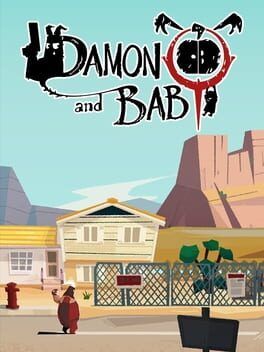

Arc System Works’ DAMON and BABY fuses twin-stick shooting, light puzzle-platforming, and character swapping between a demon lord and a child. Here’s how its structure, tone, and genre mix could help it break through on Switch and PlayStation.
Arc System Works is billing DAMON and BABY as “a new type of action adventure,” which sounds like typical PR fluff until you lay eyes on it. Beneath the splashy cel-shaded art and goofy demon‑meets‑toddler premise is a surprisingly layered hybrid: a top‑down twin‑stick shooter wrapped around exploratory, puzzle‑driven stages where movement and combat are defined by the physical link between its two leads.
On paper it is a simple pitch. You play as Damon, a would‑be Archdemon King who loses his power and ends up magically bound to an ordinary human baby after a demonic contract goes sideways. Practically, that curse is the spine of the entire design. Damon and the child can never move far apart, and the way the game treats and bends that rule is what turns it from a stylish shooter into a more thoughtful, almost puzzle‑platformer like experience.
A Twin‑Stick Shooter Built Around Distance And Position
Strip away the demon lore and you get an isometric twin‑stick foundation. Damon moves with the left stick and aims with the right, laying down focused fire in tight combat arenas. Early footage shows familiar genre beats: strafing around telegraphed bullet patterns, weaving through waves of projectiles, and using rapid dodges or skills to reset your position.
What sets DAMON and BABY apart is that your hitbox is not just Damon’s bulky demon frame. The child is always in the picture, usually riding on his back, and the game constantly reminds you that protecting them is as important as tagging enemy weak points. In crowded fights, the baby’s position forces you to think more about routes and angles than a typical fast‑twitch shooter would require. Damon can’t simply slip through the smallest gap because the pair moves as a single, awkwardly shaped unit.
That technical focus shows in the moveset. Rather than flooding you with loosely defined abilities, Arc System Works leans on fewer but more exact tools: directional shots, tight dodge windows, and skills that manipulate spacing or enemy placement. Swapping powers at your base and customizing Damon’s build pushes it even further toward a character‑action mindset, where damage output, survivability, and mobility can be tuned to fit how aggressively you want to play.
Seen from above, firefights start to look like improvised puzzles about controlling real estate. You’re not only dodging attacks but also steering the demon‑baby duo into spots where the child is least exposed while still having enough breathing room to track targets with the right stick.
Turning A Tether Into Puzzle‑Platforming
Most overhead shooters use traversal as connective tissue between arenas. DAMON and BABY instead builds many of its exploration segments around the curse that keeps the two leads close together. That simple “you can’t separate” rule quietly gives it a puzzle‑platformer flavor.
Environmental layouts push you to treat Damon’s bulk and the baby’s vulnerability as mechanical constraints. Narrow ledges, moving platforms, and gauntlets of traps do not just test your reflexes. They test how well you can read the environment and thread an ungainly silhouette through it without clipping spikes or collapsing floors.
The level design leans on layered routes where you need to think a step ahead. A swinging axe might block the “obvious” path, but with the right timing, you can roll through as the arc rises and keep the baby just behind the danger zone. Crushing pistons become spacing problems where you line up your body and then commit to a burst of movement, knowing the baby’s trailing position matters as much as Damon’s leading foot.
Puzzle beats take this idea further. Switches sit behind hazard patterns that require careful timing. Elevators and moving platforms demand that you manage where both characters will end up when the motion stops. Sometimes the safest answer is not to rush through, but to reposition Damon in a way that changes how opponents approach, then use their attacks to your advantage.
It is not a platformer in the strict, side‑view, jump‑focused sense. Instead, it borrows the feeling of plotting “routes” through space, where each bend in a corridor is a small traversal problem. The constant awareness of the duo’s shared body turns even basic environmental navigation into something closer to a light puzzle sequence than a simple walk between arenas.
The Swap: Demon Lord Versus Child
The hook that immediately jumps out in trailers and early impressions is the ability to swap focus between the demon lord and the child. Damon is your main avatar, but the game finds ways to temporarily flip the spotlight to the baby, changing both how you move and how you think about encounters.
In pure combat terms, Damon is the bruiser. He wields the firepower, uses skills, and soaks up hits. When the baby is the “active” perspective, things shift. The child is not suddenly a tiny turret mowing down mobs. Instead, sequences that hand control to the baby emphasize vulnerability, stealth, and utility over raw damage.
In some rooms, this looks like threading the child through narrow gaps or vents while Damon waits behind, using their separation to trigger distant switches or lure enemies into traps. In others, the baby becomes a sort of mobile key, able to interact with angelic devices or human artifacts that demons cannot touch. The swap transforms familiar twin‑stick arenas into multi‑stage challenges where the first step is thinning the herd with Damon, and the second is finishing the objective with the child while your demonic body covers their escape.
Traversal benefits even more from this duality. Where Damon’s path is blocked by holy barriers or cramped shafts, the child can slip through, nudging the stage toward Metroid‑lite territory. You might clear a route with Damon, park him in a relatively safe pocket, then flip to the baby to run a quick errand under pressure. Success depends on how well you have prepared the room as Damon, carving out safe lines for the kid to cross later.
The effect is a rhythm that oscillates between power and fragility. Moments where Damon tears through mobs feel that much more satisfying because you know you will eventually have to relinquish control and babysit, literally, your own progress through more delicate sequences.
Structure: An Action Adventure Wrapped Around A Shooter Core
DAMON and BABY does not present itself as a stage‑select arcade shooter. It pushes toward a broader action‑adventure structure built around a home base, character progression, and a semi‑open set of regions.
Your base functions as a mechanical and tonal reset between excursions. This is where you strengthen Damon using currency gathered in the field, unlock new skills, tweak loadouts, and change outfits. That loadout work matters because different parts of the world emphasize different aspects of the design. Dense, trap‑heavy dungeons reward mobility and defensive tools that keep the baby safe, while wider, enemy‑packed zones benefit from crowd‑control skills and wider firing arcs.
Stages themselves blend exploratory sprawl with handcrafted arenas. You wander through zones peppered with side paths and secrets, but bottlenecked by set piece rooms that test your mastery of the current toolkit. This structure lets Arc System Works ramp difficulty with some nuance. Optional routes, environmental puzzles, and hidden upgrades give more seasoned players something to chew on without locking basic progression behind brutal clear times or fragile escort objectives.
That balance is important for standing out in the Switch and PlayStation indie scenes, where games like Hades, Enter the Gungeon, and Neon White have already set expectations for how twin‑stick spaces can be structured. DAMON and BABY chases a different rhythm, one that privileges exploration and puzzle‑like traversal just as much as sharp shooting.
A Tonal Line Between Cute And Morbid
The other clear differentiator is tone. While a demon chained to a baby sounds dark, Arc System Works frames everything with an exaggerated, Disgaea‑like comedy. Damon’s fall from terrifying monarch to full‑time babysitter is played for laughs. Supporting characters include a ministry‑of‑health angel moonlighting for Hell’s insurance bureaucracy, a Seattle vampire mobster who joins as an ally, and a legendary demon hunter stuck in the body of a furious goose.
That silliness keeps the premise light without undermining the stakes. Demons still hunt the child, and Damon still needs to reach the Celestial Realm to break his curse. But dramatic beats are filtered through slapstick banter, overacted line reads, and visual gags. The contrast between the grim implication of “everyone in Hell wants this kid” and the reality of an exhausted demon chasing a runaway toddler gives the game a flavor that cleanly differentiates it from the usual brooding roguelite or minimalist mood piece.
Visually, the exaggerated cel‑shading and bold outlines echo Arc System Works’ fighting game pedigree. It looks closer to a playable anime than a typical low‑budget indie shooter, with punchy hit effects and expressive character models that sell both action and comedy. In crowded storefronts like the Switch eShop or PlayStation Store, that immediacy can matter as much as any mechanical innovation.
Can It Stand Out In A Crowded Indie Space?
On both Switch and PlayStation, “twin‑stick shooter” is no longer a selling point by itself. For DAMON and BABY to cut through, its hybrid structure and tone have to do the heavy lifting.
Mechanically, there is reason to think it can. The constant awareness of a vulnerable attached partner gives familiar moment to moment shooting a fresh, almost escort‑puzzle identity. Swapping functional focus between Damon and the child creates natural peaks and valleys in pacing that many shooters lack, letting it pivot from confident carnage to delicate traversal in the span of a single stage.
Structurally, the decision to ground everything in a base‑driven action‑adventure loop helps it avoid feeling like just another wave‑clear score chase. Persistent progression, exploration, and a story that actually uses its premise give it more of a “campaign” feel, which still carries weight among players browsing for something to sink a weekend into rather than a pure arcade challenge.
Most importantly, its sense of humor and visual identity make an immediate first impression. Between Ishiwatari’s character designs, crossover cameos from Guilty Gear and BlazBlue, and the simple image of a hulking demon king anxiously ferrying a giggling toddler through bullet storms, DAMON and BABY has a hook that screenshots and trailers can sell in seconds.
If Arc System Works can keep later stages from slipping into pure gimmickry, and if the puzzle‑platformer‑lite traversal keeps evolving instead of repeating early tricks, DAMON and BABY is positioned to be something rarer than yet another twin‑stick release. It could be the coziest demon babysitting road trip on Switch and PlayStation, and a shooter whose clever use of character swapping and environmental problem‑solving helps it earn more than a fleeting spot in crowded indie libraries.