
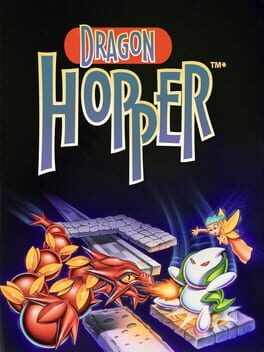
How Dragon Hopper, a cancelled Intelligent Systems top-down adventure for Virtual Boy, has re-emerged as D-Hopper on Virtual Boy – Nintendo Classics, what its brief Switch trailer reveals about its structure and mechanics, and why this kind of preservation matters for Nintendo history buffs.
When Nintendo announced Virtual Boy – Nintendo Classics for Switch, most fans zeroed in on the usual suspects: Virtual Boy Wario Land, Space Invaders Virtual Collection, even the curiosity factor of 3D Tetris. But buried at the end of the overview trailer is something far more tantalizing for historians and Intelligent Systems devotees: D-Hopper, a reborn version of the long-cancelled Dragon Hopper.
After nearly three decades in limbo, Intelligent Systems’ lost top-down adventure is finally stepping into the spotlight, and the Virtual Boy catalog suddenly has a new centerpiece.
From Dragon Hopper To D-Hopper
In the mid‑90s Intelligent Systems was already a quiet powerhouse inside Nintendo. The studio had cut its teeth on internal tools, then broken out with Famicom Wars and Fire Emblem, and was starting to hone the playful, expressive design chops that would later define Paper Mario. Dragon Hopper was part of that transitional era, a game that sat somewhere between the studio’s tactical rigor and its growing talent for characterful, approachable adventures.
Originally planned for a 1996 release, Dragon Hopper was a Virtual Boy exclusive starring Dorin, a young dragon prince who tumbles into the world of Faeron while his family and princess are captured by a duplicitous minister. The premise is pure Nintendo fantasy, but the structure leaned closer to a compact action adventure than a linear platformer.
According to period reports and later documentation, Dragon Hopper was largely complete when Nintendo pulled the plug on Virtual Boy. It appeared in playable form at trade shows, then vanished into the company’s vault. Fans only had magazine scans, a handful of screenshots, and scattered impressions to work with. That changed with the Virtual Boy – Nintendo Classics overview trailer, where the game resurfaced under a streamlined title: D-Hopper.
The rename fits the pattern of Nintendo tidying up cancelled projects for modern release, but it also subtly emphasizes what the game is about. The “Dragon” brand recedes and the “Hopper” part, the idea of vertical movement and layered stages, takes center stage.
Intelligent Systems’ Design DNA
Looking at D-Hopper in context, you can see the same design fingerprints that would later define Intelligent Systems staples.
From Fire Emblem it inherits a fondness for clear, readable top-down spaces. Even in the brief Switch trailer cutaways, stage layouts are clean and gridded, with platforms and hazards arranged in a way that almost looks like a tactics map. The game is not a strategy title, but there is a familiar sense that every tile matters. Elevation is a puzzle, enemies are placed deliberately, and the environment is the core of the challenge.
From what would later become Paper Mario you can feel the push toward approachable, toy-like feedback. Dorin’s proportions, the snappy hop between platforms, and the exaggerated knockback on enemies all read in a single glance even through the Virtual Boy’s stark color palette. That emphasis on clarity and charm within technical constraints is exactly what Intelligent Systems would lean into on Nintendo 64.
Even the premise evokes the studio’s long-running interest in compact, character-driven stakes. You are not saving an abstract world but rescuing family and a princess from a corrupt official. It is a tidy, fairy-tale setup that supports short, punchy stages and a brisk pace rather than epic exposition.
What The Switch Trailer Shows
Nintendo’s Virtual Boy – Nintendo Classics overview trailer is not a deep dive, but there is enough in a few seconds of footage to sketch how D-Hopper actually plays.
The camera is locked in a birds-eye view, but the space is stacked vertically. Dorin hops between platforms on different height layers, using jumps to traverse gaps and climb toward exits. This multi-tiered structure lines up with old descriptions of Dragon Hopper’s “tower-like” stages, where reading depth was as important as reading distance.
Collectibles appear to be the connective tissue of each level. Stars and fairy-like icons sparkle on isolated platforms or behind enemy groupings, implying that completion is about more than reaching the door. You are encouraged to scour every corner, test risky jumps, and clear out threats to fully “solve” a stage, not just survive it.
The combat shown is simple but tactile. Dorin closes distance quickly, crashes into foes, and the knockback sends them tumbling from platforms or out of the arena. Attacking is less about depleting giant health bars and more about using positioning and level geometry to your advantage. It fits the Virtual Boy’s limitations and echoes the physicality Intelligent Systems would later bring to Paper Mario’s bouncey, timed-hit battles.
The trailer also confirms elemental powers and spells returning from Dragon Hopper’s original design. Brief UI flashes show icons that resemble elemental sprites, suggesting that rescuing these spirits still grants movement or attack upgrades. On Virtual Boy this would have been a way to layer mechanics gradually, turning early simple hops into late-game sequences of chained jumps, mid-air corrections, and puzzle-like enemy encounters.
All of this is now framed by Nintendo Switch Online’s modern wrapper. Rewind, save states, and custom controls are present across the Virtual Boy – Nintendo Classics library. For D-Hopper this is more than convenience. It encourages experimentation with tricky vertical jumps and lets players poke at the game’s layered stages without the friction of starting over from scratch.
Top-Down Adventure On A 3D Curiosity
Virtual Boy’s catalog leans heavily on gimmicks that emphasize popping objects toward the player or pushing them deep into the screen. D-Hopper uses the same stereoscopic trick but in a much more systemic way.
Early descriptions of Dragon Hopper talked about “stacked floors” and shifting layers. The 3D effect was there to help players understand which platforms were in the foreground and which were higher or lower. Rather than making a rollercoaster of parallax, Intelligent Systems built a dense, almost board-game-like environment where depth is part of the rules.
This puts D-Hopper in an unusual place for the system. It is not a racing spectacle like Zero Racers and not a pure platformer like Virtual Boy Wario Land. It is closer in spirit to a top-down Zelda filtered through Virtual Boy’s constraints. Short, discrete stages combine spatial puzzles, light combat, and collection goals, delivered in a form that could only really exist on a depth-based display.
On Switch that 3D illusion becomes optional. The Virtual Boy – Nintendo Classics app lets players swap color palettes and adjust how aggressively the effect is simulated. Yet even flattened onto a 2D screen, D-Hopper’s layered design still reads as a clever use of vertical space. The cancellation froze it in time as a mid-90s experiment in depth-aware adventure design. Its resurrection lets players finally judge how well that experiment works in practice.
Why Its Release Matters For Preservation
For Nintendo history buffs, D-Hopper is more than a quirky curiosity. It is a concrete example of how much fully formed work can disappear when hardware stumbles.
Virtual Boy was a commercial misfire, and that failure abruptly cut off a pipeline of in-development software. Zero Racers, D-Hopper, and other projects were shelved not because their mechanics failed, but because the platform lost its future. For years that meant entire design directions from teams like Intelligent Systems were locked away.
Bringing D-Hopper to Virtual Boy – Nintendo Classics is a direct correction. It turns a piece of ephemera, preserved only in magazine previews and fan documentation, into a playable artifact that can be studied, replayed, and appreciated. Researchers can map its stages, compare its enemy behaviors to contemporaneous Intelligent Systems titles, and trace ideas that might have migrated into later Fire Emblem or Paper Mario entries.
It also broadens the story of Virtual Boy itself. The platform is often remembered as a dead end, a rough draft of 3D gaming that never went anywhere. Seeing a fully fledged top-down adventure arrive three decades later challenges that narrative. Virtual Boy was on the cusp of hosting more ambitious, systemically interesting software than its thin launch lineup suggested.
On a practical level, the release also shows that Nintendo is willing to do more than dump ROMs. D-Hopper’s inclusion in a modern subscription service implies the company is prepared to clear rights, finish packaging, and quality-check games that never shipped. For preservationists this opens the door, however slightly, to other unreleased curios lurking in the archives.
A New Cornerstone For Virtual Boy – Nintendo Classics
Within the Virtual Boy – Nintendo Classics library, D-Hopper is positioned as a late-year highlight alongside Zero Racers. The launch lineup provides the historical baseline, the games most collectors already know. D-Hopper is something else: a fresh text for fans and critics to dissect, a missing link in Intelligent Systems’ evolution that finally slots into place.
For Fire Emblem and Paper Mario fans curious about how the studio approached action adventures on constrained hardware, it is a chance to see familiar design instincts taking shape. For Virtual Boy diehards it is vindication that the system had more to offer than its short life allowed. And for anyone invested in game preservation, it is a clear argument that unreleased work can and should be given a second life.
Virtual Boy may never escape its reputation as Nintendo’s strangest experiment, but D-Hopper’s long-delayed debut makes that history feel sharply alive again. What was once a footnote in magazine previews is finally becoming what it was always meant to be: an actual adventure players can pick up, poke at, and, perhaps for the first time, finish.