

First Cyberpunk Edgerunners Season 2 reactions from Anime Expo point to a harsher, more intimate return to Night City, with CD Projekt Red and Studio Trigger framing the new anime through a Scorsese lens.
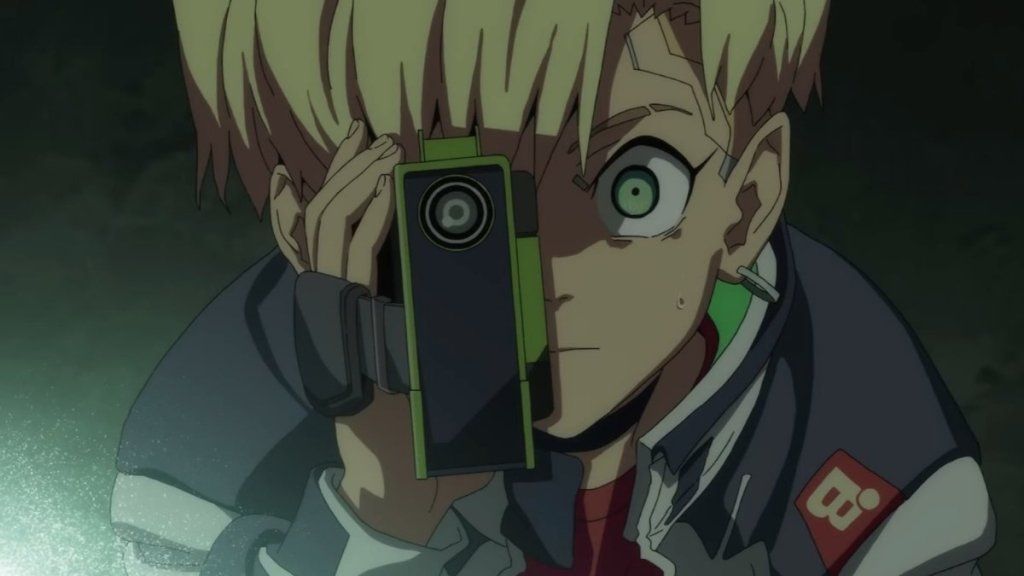
Image: comingsoon.net
The first Cyberpunk Edgerunners Season 2 reaction wave is unusually specific
The first episode of Cyberpunk: Edgerunners Season 2 has already screened for an Anime Expo 2026 crowd, and the early response points toward a different kind of Night City story rather than a simple repeat of David Martinez’s run. Eurogamer reports that the new season is set to premiere on Netflix in fall 2026, follows an all-new cast and storyline, and remains rooted in Night City.
That first screening was not a closed-door industry whisper campaign. According to Eurogamer’s summary of Gizmodo’s reporting, roughly 6,000 people at Los Angeles’ Crypto Arena watched the premiere episode during Anime Expo. Gizmodo’s Isaiah Colbert described the debut as a sequel that expands outward while still feeling intimate and small-scale, and called it “exhilarating.” Polygon’s Ryan Epps, also cited by Eurogamer, called the first chapter darker and praised its color, framing, and sound design.
The tension in this first Cyberpunk Edgerunners reactions wave is that the praise is coming with a tonal warning. The anime is still being described as visually loud, stylish, and aggressive, but the early read is less fireworks-first and more character-pressure-cooker. For anyone coming from Cyberpunk 2077 Edgerunners because of the speed, heartbreak, and spectacular violence of Season 1, the message from the premiere is clear enough: Studio Trigger and CD Projekt Red appear to be chasing a harsher rhythm this time, one that asks the audience to sit longer with the damage Night City leaves behind.
What the Scorsese comparison signals about the new season’s tone
The most revealing line from the premiere coverage is the comparison CD Projekt reportedly used to frame the season. Kotaku’s James Galizio wrote that, during the Anime Expo premiere, CD Projekt wanted to make clear that if Season 1 was being treated like a Michael Bay movie, Season 2 was aiming closer to Martin Scorsese. Kotaku also described the premiere as “a very different beast from its predecessor.”
That comparison does not confirm plot outcomes for the full season, and it should not be treated as a promise that Cyberpunk Edgerunners Season 2 will mimic a specific Scorsese film. What it does suggest, based on Kotaku’s report and the premiere’s described opening, is a shift from explosive ascent to moral erosion, neighborhood texture, consequence, and crime-story intimacy. Season 1 had romance in its acceleration, with David’s rise carrying the terrible momentum of a kid believing he could outrun the city’s machinery. The reported Season 2 opening sounds less like a launch and more like a collapse already in progress.
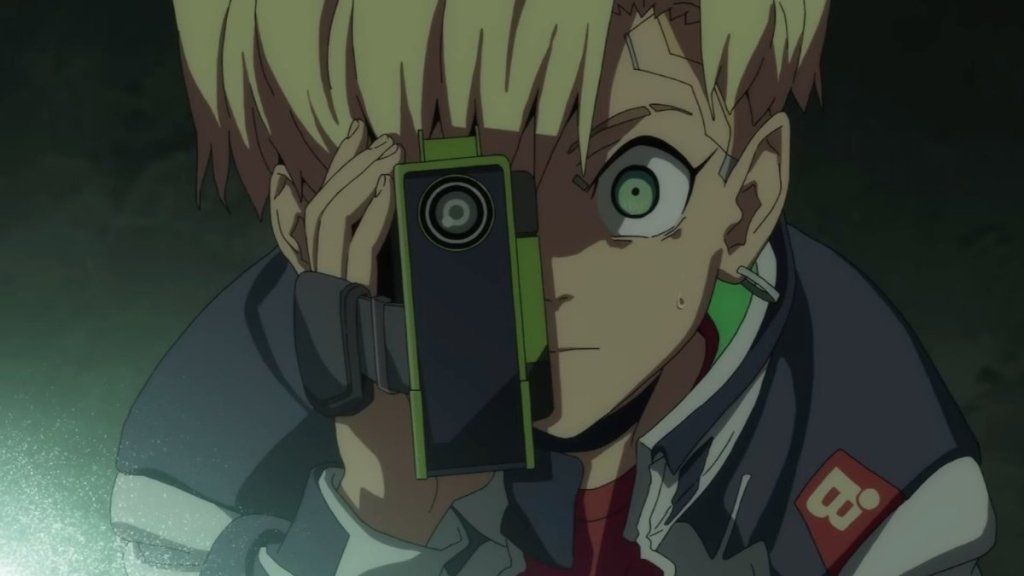
Kotaku describes the episode beginning with a job gone wrong. “King,” whose real name is Weak, nearly tips over the edge of cyberpsychosis during a heist. The reason he survives, according to Kotaku’s account, is that he had bought the highest level of health insurance available. Survival does not read as salvation in that description. His crew, home, implants, and everything around him are stripped away as part of dragging him back from the edge. Roman, another new character, happens to be filming the neighborhood at the right moment and captures the chaos on camera.
That is the Scorsese signal in practical story terms: crime, witnesses, memory, class pressure, and the ugly bill that arrives after violence. The Bay comparison points toward impact and escalation. The Scorsese comparison points toward aftermath, identity, and people trapped inside systems they partly choose and partly inherit. In a Night City anime, that is a meaningful adjustment in pacing.
A new cast changes the stakes around Night City
Eurogamer reports that the new Cyberpunk anime season 2 introduces an all-new cast and storyline while staying in Night City. That matters because it resets audience expectations without disconnecting the series from the world that made the first season land. CD Projekt’s view, as reported by Kotaku, is that Edgerunners can be understood as bringing individual Cyberpunk tabletop campaigns to life on screen rather than building one continuous connected narrative.
That tabletop framing is useful. It means Season 2 does not need to answer the emotional questions left by David’s story in a direct sequel structure. It can instead test a different crew against the same citywide logic. Night City becomes the constant antagonist, the stage manager, and the arena. The cast changes, but the rules remain cruel.
Roman’s presence also gives the new story a different camera angle in the literal sense. Kotaku describes cinema as a core theme of the episode, with Roman’s camera contrasting against a world where braindance-style entertainment lets people passively experience someone else’s memories. According to Kotaku, the episode closes with a visual flourish in which a signal is lost and the Cyberpunk logo bounces around the frame like a DVD logo before the credits.
That choice, if it carries through the season, could make Season 2 less about becoming a legend and more about who records the legend, who edits it, who remembers it, and who gets erased from it. Kotaku notes that preservation and memory appear to be central to the new narrative, while also making clear that some of those ideas are only partially established in the first episode. It reports that Weak loses memory of his actions after the heist and coma, leaving witnesses as reminders of what happened and what he lost. That is a sharp setup for a season built around damage that cannot be fully reconstructed by the person who caused or suffered it.
Studio Trigger’s spectacle may be changing shape rather than shrinking
A darker, more intimate Edgerunners does not mean a visually restrained one. The early reaction wave repeatedly points to a show that still understands motion, color, and impact. Polygon, through Eurogamer’s report, called the first chapter a stunner and highlighted its colors, framing, and sound design. Gizmodo’s reaction, also relayed by Eurogamer, described the debut as ambitious while still intimate.
Kotaku adds a production-side detail that explains the texture of that reaction. Studio Trigger’s Kai Ikarashi said the studio tried to capture the flair of 90s animation for Edgerunners Season 2, and Kotaku wrote that the result comes through in motion while still giving the season a visual identity separate from David’s story.
That separation is important for a series with such a recognizable first season. Cyberpunk: Edgerunners became strongly associated with sharp edits, high-velocity combat, garish city light, and emotional freefall. The second season’s challenge is to avoid sanding off that identity while also giving its new cast a different pulse. Based on the first episode reports, the action may be less about constant forward propulsion and more about ugly interruptions: a heist collapsing, a body failing, an insurance policy becoming the only reason someone survives, and a camera catching the moment before the city metabolizes it.
For action storytelling, that is a meaningful difference. A set piece can be spectacular because it is fast, but it can also be spectacular because every cut makes the cost clearer. The Cyberpunk Edgerunners Season 2 reactions suggest Studio Trigger is still building around impact. The open question is whether the full season can maintain that sharper, more grounded cadence after the premiere’s shock has worn off.
The renewed Cyberpunk 2077 context gives the anime a bigger runway
The timing of the Cyberpunk Edgerunners Season 2 news lands during another visible upswing for the wider Cyberpunk 2077 world. Eurogamer reports that Cyberpunk 2077 has crossed 40 million sales. The same Eurogamer article notes that the action RPG has seen a new boost in player numbers, with SteamDB showing a one-year peak of 101,558 concurrent players.
Those numbers do not prove the anime alone caused renewed interest, and the available source material does not isolate one driver for the player spike. What can be said is that CD Projekt Red is bringing Edgerunners back at a moment when Cyberpunk 2077 is no longer defined solely by its troubled launch reputation. The game’s world has become a platform for renewed attention across games, anime, and future franchise planning.
Eurogamer also points to the announced Cyberpunk 2077 sequel context, including comments that the next game will feature a second city described by series creator Mike Pondsmith as like “Chicago gone wrong.” That future is still separate from the concrete details of Edgerunners Season 2, but it frames why another strong Netflix season matters to CD Projekt. A well-received Night City anime keeps the setting culturally active while the next major game is still somewhere ahead.
For viewers, the practical takeaway is simpler. You do not need a confirmed direct continuation of Season 1 to justify paying attention. The sources indicate that Season 2 is designed around a fresh cast, a new story, and a different tonal target. For Cyberpunk 2077 players, it is another route back into the city’s social machinery: corpos, crews, implants, exploitation, spectacle, and the bodies caught between them.
What is confirmed, and what is still being held back
The confirmed picture is still limited. Cyberpunk: Edgerunners Season 2 is coming to Netflix in fall 2026, according to Eurogamer. The first episode has screened publicly at Anime Expo 2026. The season follows a new cast and storyline in Night City. Early press and fan reactions are positive, with outlets describing the premiere as darker, visually impressive, and distinct from the first season.
The rest should be handled carefully. The Scorsese comparison is a reported creative framing from the premiere, not a full-season review. The opening events described by Kotaku reveal a harsh setup involving Weak, a heist, cyberpsychosis, insurance, and Roman’s camera, but they do not tell us how the season resolves those ideas. Kotaku’s comments on memory and preservation point to apparent themes from the first episode rather than a complete map of the story.
There is also a spoiler gap by design. Eurogamer notes that CD Projekt Red global PR director Radek Grabowski thanked attendees for not recording footage and for trying not to spoil surprises for people waiting for the Netflix release. That means the current Cyberpunk Edgerunners Season 2 conversation is built around controlled first impressions, not a broad critical consensus on the full season.
Still, the first reaction wave gives viewers a useful read on expectations. If Season 1 pulled audiences through Night City with the force of a doomed sprint, Season 2 appears to open with the camera held closer to the wreckage. The violence is still there. The neon is still there. The difference, according to the premiere reports, is that this return to Night City may be more interested in who remembers the damage after the noise cuts out.