
Early Cyberpunk Edgerunners 2 review coverage points to an ambitious, divisive return to Night City as Netflix, CD Projekt Red, and Studio Trigger keep Cyberpunk visible beyond the game.
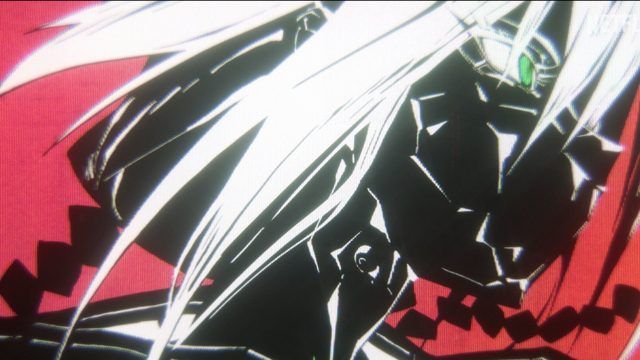
Image: in.ign.com
Early reviews find a bigger, riskier return to Night City
Cyberpunk: Edgerunners 2 arrives on Netflix on Oct. 20 with a rare kind of pressure: the first season was widely treated as a breakout adaptation, and the new reviews suggest CD Projekt Red, Studio Trigger, and Netflix have chosen expansion over repetition.
The early critical response is broadly positive, but less unanimous than a clean victory lap. Polygon’s Cyberpunk Edgerunners 2 review calls the new 10-episode season “richer, more rewarding, and downright better,” praising director Kai Ikarashi and writers Bartosz Sztybor and Masahiko Otsuka for turning familiar Night City ingredients into a more hopeful ensemble story. GamesRadar+ also frames the season as a worthy follow-up, pointing to its “ambitious ensemble story,” “retina-melting animation,” and implications for the wider Cyberpunk world.
Other outlets are more measured. Kotaku argues that the mostly standalone second season never reaches the devastating highs of David Martinez and Lucy’s original arc, while Gizmodo says the show falls short of season 1’s distilled tragedy even as it widens the aperture of Night City. Nerdtropolis similarly praises the new emotional stakes and action but describes the corporate conspiracy as uneven.
That tension is the story. Cyberpunk Edgerunners season 2 is being received as a visually forceful, lore-conscious return, but one that trades the clean tragic propulsion of season 1 for a wider cast, more intersecting plotlines, and a different rhythm. For a franchise that has already lived through a notorious game launch, a major recovery arc, and a prestige anime breakout, that shift matters because Netflix and CD Projekt are no longer selling the anime as a surprise. They are using it to keep Cyberpunk Night City alive between major game releases.
The new season replaces one doomed climb with a fractured ensemble
The clearest point of agreement across the reviews is structural: Edgerunners 2 is not another David Martinez story. IGN describes it as a new standalone sequel in the larger Cyberpunk universe, while noting that it ties into David’s story in key ways and also connects to Cyberpunk 2077. Gizmodo stresses that the marketing makes clear David is not coming back, which sets the season up as a test of whether Night City can carry new characters without leaning on its most famous tragedy.
The new center is deliberately split. Reviews identify Weak Kingsley, voiced by Clancy Brown, as a former edgerunner who survives a cyberpsychosis incident and has his chrome stripped or downgraded. Polygon finds that survival crucial, because following someone who lived through the breakdown gives a familiar Cyberpunk setup a different shape. Instead of another merc who burns out and disappears into legend, Weak becomes a damaged veteran forced to navigate the aftermath.
Roman Carax, voiced by Valeria Rodriguez, is another major lens. IGN and Polygon both describe him as a 12-year-old filmmaker drawn to analog cameras and old-school image-making in a world saturated by braindance technology. In action terms, that choice changes the camera inside the story. Roman is not another chrome-heavy fighter built for the city’s meat grinder. He is a witness, which lets the season stage violence as something observed, recorded, and interpreted rather than only survived.
Talia, voiced by Kimoy Lee according to GamesRadar+ and Nerdtropolis, brings the body-horror side of Cyberpunk back to the front. GamesRadar+ describes her as a gravely ill young woman who has replaced failing body parts with chrome until she is more machine than human. IGN frames Weak’s involvement through a mission to rescue Talia from Maelstrom, the modification-obsessed gang familiar to Cyberpunk 2077 players. D, voiced by Nazeeh Tarsha per GamesRadar+, is described as a nomad seeking revenge after the massacre of his clan.
That is a lot of machinery for 10 episodes. Polygon sees the interwoven threads as a strength, arguing that the ensemble relationships make the new season richer. Kotaku sees the same design as a risk, saying the show has a harder time making its disconnected threads feel like one story before they are forced together. The divide comes down to pacing: whether Edgerunners 2 feels like a controlled multi-character set-piece, or several high-speed chases trying to merge onto the same road at once.
Studio Trigger’s Cyberpunk style still gives the season its momentum
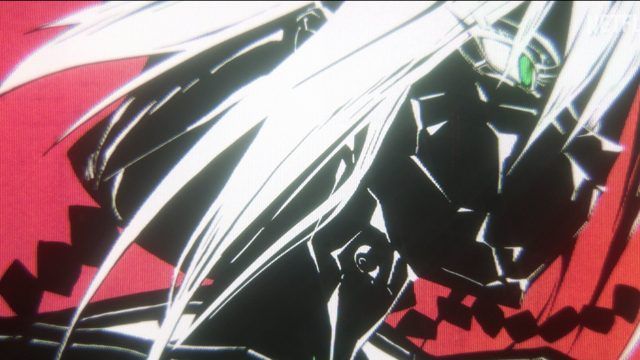
Even the more cautious reviews do not describe Edgerunners 2 as visually timid. IGN says director Kai Ikarashi keeps the expressionistic aesthetic, bright colors, and sharp angles associated with the first series while adding his own visual signature. The review specifically points to changes in art style that reflect character psychology or show how technology alters the way people perceive the world.
That matters for this franchise because Cyberpunk’s best action has always depended on overload. Night City is neon, chrome, blood, signal noise, and corporate branding stacked until the frame feels hostile. A Studio Trigger Cyberpunk project has room to push that hostility into animation language: silhouettes, sudden abstraction, kinetic violence, and the sense that a fight scene can become a nervous system shorting out.
Polygon praises the season as another “spectacular collision” of corporate cruelty, dangerous technology, and people pushing past their limits. GamesRadar+ highlights the animation as one of the season’s strongest reasons to watch. Nerdtropolis also credits the sequel’s action while finding the broader conspiracy less consistent.
The interesting shift, based on the reviews, is that the new season’s action is no longer built around one doomed protagonist accelerating toward a final impact. With Weak, Roman, Talia, D, and other figures moving through different parts of the city, the set-piece rhythm appears more distributed. That can create scale, but it can also dilute catharsis. Kotaku’s disappointment rests partly on that comparison: season 1’s biggest moments hit because every thread seemed to build toward them. Edgerunners 2, by contrast, seems to favor a wider tactical map over a single emotional detonation.
Critics are split on whether the anthology approach deepens the franchise
The new season’s anthology-style expansion is both its selling point and its fault line. Polygon argues that season 2 finds something “far more hopeful” in the same brutal world that made season 1 such a devastating romance. Gizmodo echoes part of that, saying the sequel tells a more expansive story and feels more ambitious, consequential, and warmly aspirational than its predecessor, even though it does not burn as brightly as David’s tragedy.
Kotaku pushes back hardest against the comparison. Its review says it waited for moments that could match season 1’s defining emotional peaks, such as Maine’s cyberpsychosis or Lucy reaching the moon, and felt they never arrived. GamesRadar+ lands between those positions, calling the new season “another nova Night City story” while listing the shadow of season 1, Roman as a weak link, and limited main-character crossover as drawbacks.
That spread is useful for viewers because it clarifies the likely experience better than a simple thumbs-up consensus. If the original Edgerunners worked for you because of its laser-focused romantic tragedy, the new season may feel looser. If what you wanted was a wider look at how Night City crushes different kinds of people, the sequel sounds more equipped for that.
IGN’s review adds another practical layer: prior knowledge is not required, but it pays off. The outlet says viewers do not need to have experienced either the first anime season or Cyberpunk 2077 to enjoy the new story, though knowing Night City’s systems and history helps. That positions the Netflix Cyberpunk anime as an entry point and a reward track at the same time, which is exactly the balance CD Projekt needs from a transmedia extension.
Netflix and CD Projekt are keeping Cyberpunk active without a new game
The timing around Edgerunners 2 is important. GamesRadar+ explicitly frames the season as something to fill the long wait for a Cyberpunk 2077 sequel. That is a reader-service line, but it also describes the franchise strategy visible in these reviews: Cyberpunk is being kept in circulation through animation, character mythology, and worldbuilding while the next major game remains outside the scope of these sources.
The first Edgerunners proved the value of that approach. Gizmodo notes that the original Netflix series exceeded expectations, won anime-of-the-year recognition at the 2023 Crunchyroll Anime Awards, and reinvigorated interest in Cyberpunk 2077 before the game’s later repair arc fully settled. The source text also recalls that expectations for the first anime were not high because the game badly needed positive attention at the time.
Edgerunners 2 arrives in a different environment. The franchise no longer needs an anime to rescue its image in the same way. Instead, the sequel has to prove Night City can function as a recurring setting for new casts. That is a more durable goal. A single tragic story can become beloved. A setting that can generate multiple compelling tragedies, rival crews, corporate plots, and visual identities becomes a platform.
The reviews suggest Netflix, CD Projekt Red, and Studio Trigger are testing that platform with a bigger board. IGN notes connections to Cyberpunk 2077 and David Martinez’s story. GamesRadar+ mentions major implications for the world of Cyberpunk. Polygon points to CD Projekt Red and Studio Trigger delivering another collision of corporate violence and human desperation. None of the provided sources announce a game tie-in update, a price, or a new playable release alongside the season, so the confirmed development here is cultural visibility rather than a new product drop inside Cyberpunk 2077.
How to approach Cyberpunk Edgerunners 2 when it hits Netflix
Based on the cited reviews, Cyberpunk: Edgerunners 2 is best approached as a new Night City ensemble rather than a direct emotional replacement for season 1. It releases Oct. 20 on Netflix, according to IGN and Polygon, and the season runs 10 episodes, as noted by multiple outlets. The provided sources do not mention theatrical availability, separate purchase options, or a game bundle, so Netflix is the confirmed destination here.
Viewers who have not played Cyberpunk 2077 can still start here, according to IGN, but the show appears to reward familiarity with the setting’s language: cyberpsychosis, Maelstrom, braindance, nomads, corpos, chrome, and the constant trade between power and personhood. For players, those terms are part of the city’s combat grammar. For newcomers, the reviews suggest the characters carry enough human stakes to make the world legible.
The early consensus points toward a season with spectacular animation, a strong voice cast, and a broader sense of Night City’s machinery. The main caution is focus. Polygon reads the ensemble as a major improvement, while Kotaku and GamesRadar+ both signal that the absence of season 1’s concentrated arc leaves a shadow over the sequel. Nerdtropolis’ reaction fits that same middle ground: fresh stakes and strong action, but not every corporate plotline lands evenly.
For Cyberpunk fans, that makes Edgerunners 2 less of a victory parade and more of a stress test. Netflix, CD Projekt Red, and Studio Trigger are asking whether Night City can keep generating stories after David Martinez, after the first anime’s surprise impact, and during the wait for the franchise’s next major game chapter. The early reviews do not answer that with one voice, but they do agree on the essential point: Cyberpunk is back in the conversation because the city still has new ways to hurt, dazzle, and trap the people moving through it.