
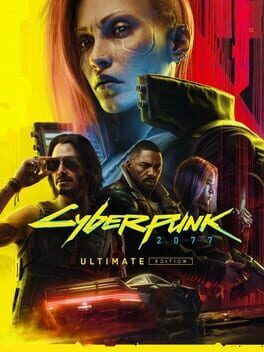
CD Projekt Red says Cyberpunk 2077: Ultimate Edition’s huge Nintendo Switch 2 eShop discount was an error, but it is honoring the bargain price anyway. Here is what happened, why CDPR is choosing goodwill over clawbacks, and what the incident reveals about late‑generation premium ports and the Switch 2’s growing library of big PC and console RPGs.
Cyberpunk 2077 has spent years rebuilding its reputation after a disastrous launch. Now the Switch 2 version has stumbled into a very different kind of controversy: being too cheap.
In late December, Nintendo Switch 2 owners noticed a shockingly low price for Cyberpunk 2077: Ultimate Edition on the eShop. The complete package of Night City and its acclaimed Phantom Liberty expansion was briefly listed at around $17.49, a discount of roughly 75 percent from its $69.99 launch price. The Witcher 3: Wild Hunt – Complete Edition on Switch 2 appeared with a similarly aggressive markdown.
It looked like an overly generous holiday sale, the sort of deep cut you would usually expect a few years into a game’s lifecycle, not right as a platform‑specific edition is trying to make a first impression. But CD Projekt Red quickly confirmed what many suspected: it was a mistake.
CD Projekt Red calls it an error, then chooses goodwill
On X, CD Projekt Red clarified that the steep Switch 2 discounts for Cyberpunk 2077: Ultimate Edition and The Witcher 3 were the result of an incorrect price being set on the Nintendo eShop. Soon after the post, prices were corrected. Cyberpunk 2077: Ultimate Edition moved to $39.99, a still‑healthy discount from full price, while The Witcher 3: Wild Hunt – Complete Edition settled at $14.99.
The crucial detail was not that the mistake was fixed, but how CDPR decided to handle players who jumped on the ultra‑low price before it disappeared. Instead of canceling orders or trying to recharge customers, the studio confirmed that every purchase at the erroneous price would be honored.
For anyone who grabbed Cyberpunk 2077 on Switch 2 for the price of an indie game, that meant a full copy of the Ultimate Edition locked to their account, no questions asked. For CD Projekt Red, it meant eating the financial difference while leaning into an image of a studio that will take the hit rather than punish customers for its own mistake.
Why honor a pricing error at all?
From a purely short‑term financial perspective, honoring a discount that deep makes little sense. Cyberpunk 2077: Ultimate Edition is a complete, content‑stuffed package, freshly positioned for a new platform audience. Each underpriced sale represents lost revenue that could have come from a more typical Switch 2 buyer browsing holiday deals.
The longer view tells a different story. CD Projekt Red has already been through one grueling round of reputational damage with Cyberpunk. The infamously rough console launch, refunds, and patches defined the game for years. Update 2.0 and Phantom Liberty finally pulled the RPG back into the good graces of many players, but trust is still fragile.
A pricing glitch on a brand‑new platform is a small incident compared with a broken launch, yet it arrives in that same shadow. Canceling purchases or clawing back the deal would have been legally defensible in many regions, but it also would have fed the narrative of a publisher that puts policy and profit over people.
By contrast, honoring the error signals a few deliberate priorities. CD Projekt Red gets to frame the situation as an honest mistake that it owns completely, not something players should be punished for. It turns what might have been a minor controversy into a positive story that spreads organically across social media and headlines. The cost of a batch of ultra‑discounted copies is effectively converted into marketing spend that reinforces the studio’s new, consumer‑friendly posture.
For Nintendo and the Switch 2 ecosystem, it also quietly reassures potential buyers that platform partners will handle mishaps with a lighter touch. That matters when digital storefronts are where most Switch 2 games are going to live and where most of these premium ports will be sold.
Premium pricing collides with player expectations
The pricing misstep also throws a spotlight on a growing friction point for late‑generation ports. Cyberpunk 2077: Ultimate Edition arrives on Switch 2 years after the game’s original PC and console launch. By now, deep sales on other platforms are common. On Steam and other PC storefronts, a copy of Cyberpunk 2077 plus Phantom Liberty can regularly be found at or below the price of this erroneous Switch 2 discount when stacked with seasonal sales and bundles.
That creates a strange perception gap. Even after correction, a $39.99 eShop sale price for Ultimate Edition reads as fair for a fully featured, technically ambitious RPG landing on a portable hybrid. Yet anyone who happened to see the temporary $17.49 listing cannot help comparing the two numbers and wondering what the game is really worth.
This is the core challenge for late ports of big PC and console RPGs. On paper they bring huge value: the full, patched, definitive version of a game, adapted for a new audience and often for portable play. In practice they sit side by side with years of aggressive discounting elsewhere. Publishers want to treat these releases as premium products that can stand at or near full price. Players, especially those who follow deals across platforms, see them as known quantities that have already been “priced in” on PC and previous consoles.
The fleeting Cyberpunk glitch dramatized that tension. For a few hours, the Switch 2 price of one of the generation’s most talked‑about RPGs accidentally matched what many players have mentally set as its mature discount value. When the price snapped back upward, the underlying question remained: how much of a premium should a Switch 2 port command, particularly for players who own or have already played the game elsewhere?
The Switch 2 as a new home for big RPGs
The other side of the story is what this incident hints at for the Switch 2 library itself. The original Switch fought for conversions of large open‑world RPGs. Games like The Witcher 3 arrived with impressive technical compromises and a clear novelty factor: these worlds could run, if just barely, on a handheld.
With Switch 2, Cyberpunk 2077: Ultimate Edition is not just a party trick. It is part of a broader push to bring big PC and console RPGs to Nintendo’s ecosystem in forms that feel closer to their original versions. Night City, dense with NPCs, traffic systems, and ray‑traced lighting on higher‑end hardware, is now something that a portable‑focused platform can credibly host.
Alongside The Witcher 3 and other multiplatform heavyweights that are already confirmed or heavily rumored, Switch 2 is shaping into a more viable destination for players who previously needed a gaming PC or a high‑end console for modern open‑world RPGs. That comes with several implications.
First, publishers see Switch 2 as capable of supporting premium pricing strategies. They are not merely backfilling an older install base with cut‑down conversions. They are chasing a fresh audience that may treat these ports as primary versions, not late curiosities. That is why Cyberpunk 2077 launched at a full $69.99 on Switch 2 instead of quietly sliding in at a budget rate.
Second, the portability factor gives these ports a unique selling point that can justify that premium for some players. Even if a PC or PlayStation 5 copy is cheaper, the ability to take Night City on the go, suspend and resume instantly, or play in handheld mode with no streaming or remote‑play compromise is a genuine draw.
The Switch 2 Cyberpunk pricing error did not change those fundamentals, but it highlighted how sensitive the balancing act will be. As more giant RPGs arrive, from cyberpunk futures to sprawling fantasy worlds, each new release will be weighed not only against competitor platforms and historical discounts, but also against a growing internal library of similarly ambitious games.
What this means for future Switch 2 ports
Going forward, the Cyberpunk 2077 eShop mishap is likely to be a useful reference point for both publishers and players. On the publisher side, it underlines how dangerous it is to misjudge a price in a world where storefront deals are instantly amplified and preserved via screenshots and social posts. Once thousands of players see a specific number next to your game’s icon, that number becomes part of how its value is perceived.
On the player side, the reaction to CD Projekt Red’s decision sets a soft expectation. When a major studio honors an obvious pricing error on a major platform, it becomes harder for the next company to claim it cannot afford to do the same without inviting unflattering comparisons.
The bigger takeaway is about the pressure on late premium ports as a concept. When Cyberpunk 2077: Ultimate Edition returns to standard pricing on Switch 2, it will be evaluated in light of that fleeting $17.49 moment. For some players that will simply be a lucky story they wish they had been part of. For others, it will reinforce the instinct to wait, to treat every full‑price Switch 2 RPG as something that will eventually slide into a deep discount bracket.
Cyberpunk’s journey on Switch 2 is only just beginning, and the game’s actual performance and technical quality on the new hardware will matter more than a single mistaken sale. But this episode has already framed the conversation around what late‑generation AAA RPGs are worth in a maturing digital marketplace, and how much goodwill a studio is willing to buy when things go wrong.
If Cyberpunk 2077’s troubled launch taught CD Projekt Red how much trust can be lost with one bad moment, its Switch 2 price glitch shows how a smaller mistake can be turned into a modest victory by choosing the customer over the ledger. As the Switch 2 library fills with big PC and console RPGs that have already lived full lives elsewhere, that kind of goodwill might be one of the few clear advantages a publisher can still control.