
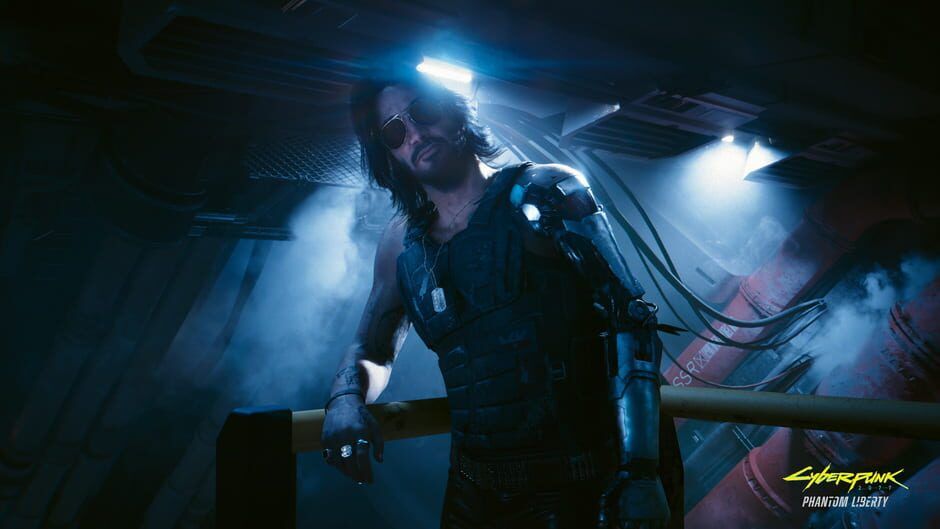

CD Projekt Red’s move from male V to female V in Cyberpunk 2077 and Phantom Liberty marketing is less about culture war and more about how RPGs with custom protagonists pick a “face” for the brand – and what that means for Cyberpunk 2.
CD Projekt Red has finally put a clean, simple label on a debate that has followed Cyberpunk 2077 for years: what happened to male V?
If you were there for the original 2020 marketing blitz, male V was everywhere. He was on the box, in the key art, on giant trade-show banners, front and center in trailers with Keanu Reeves’ Johnny Silverhand at his back. Fast forward to the 2.0 relaunch and Phantom Liberty and suddenly the face of Cyberpunk had changed. Night City’s new poster child was female V, leaning on a car in Dogtown or staring down the New United States’ problems with Solomon Reed.
That visual pivot sparked predictable arguments online, but Cyberpunk 2 creative director Igor Sarzyński has now spelled out why it happened. His explanation turns out to be less about any external pressure and more about a very specific marketing problem that every RPG with a customizable protagonist has to solve: when your hero can be almost anyone, who do you put on the poster?
“One game for each V”
Answering fans on social media, Sarzyński described the decision in straightforward terms. Male V already had the base game’s entire launch campaign. When it came time to relaunch Cyberpunk 2077 with patch 2.0 and to sell Phantom Liberty as a self-contained spy thriller, the team chose to “switch it up” and let female V be the visual lead. Their internal shorthand for it was effectively “one game for each V.”
In practice that meant:
Male V carried the pre‑release fantasy of Cyberpunk 2077 as it was originally pitched. He represented the scrappy merc on the rise, the promise of a next‑gen open‑world RPG and the studio’s first major step away from The Witcher.
Female V took over once the dust had settled and the game had been patched, expanded and partially reintroduced to the world. The 2.0 update and Phantom Liberty were framed almost like a second launch, and CD Projekt used that “second chance” to give the other version of V a turn as the brand’s primary face.
This is not a retcon or a narrative rewrite. In the game itself, both Vs share the same story framework, the same life paths and the same lethal brain implant problem. What changed is the layer that sits on top of the game: the thumbnails you see on YouTube, the key art for storefronts and the hero shots in trailers.
The branding problem of a customizable hero
Cyberpunk 2077 is hardly the first RPG to wrestle with this. Any game that lets you sculpt your protagonist’s face is trading some marketing clarity for player expression. Publishers typically respond with one of three strategies.
Some studios stick to a single canonical look, even if the character is technically customizable. Commander Shepard in Mass Effect is the obvious example. You can change Shepard’s appearance in‑game, but marketing locked in a specific, square‑jawed male image for the original trilogy’s early years before FemShep began to share that spotlight later.
Others try to show both or all options at once. Think of Dragon Age: Inquisition’s box art, where the Inquisitor is almost a silhouette, or Saints Row IV materials that collage multiple avatars together. This preserves the idea of choice but tends to blur the character’s identity in the public imagination.
A third approach is rotational: define several equally valid “faces” of the protagonist, then surface different ones at different times or for different products. That is essentially what CD Projekt Red ended up doing, even if they only fully articulated it after players started asking, years later, “where did male V go?”
With Cyberpunk, this challenge was amplified by how iconic V needed to be. Night City is noisy by design, full of loud NPCs and louder neon. The game’s main character needed a silhouette and attitude that could compete with Johnny Silverhand’s already highly recognizable presence, and that pushed the studio toward more fixed, memorable versions of V for marketing.
Why female V works so well for Phantom Liberty
Once you look at the Phantom Liberty campaign as a semi‑separate product, female V as the lead begins to make specific sense beyond simple parity.
Phantom Liberty is structured as a paranoid spy thriller. It drops V into Dogtown, a militarized district under the thumb of local strongman Kurt Hansen, and wraps them up in a conspiracy involving the NUSA President and sleeper agents like Solomon Reed. The tone is more claustrophobic and fatalistic than the base game’s broader tour of Night City.
Female V, as CD Projekt presents her in trailers and artwork, leans hard into that mood. Her design is more tightly focused on personal wear and tear, often framed in close shots that emphasize worry, resolve and exhaustion rather than swagger. In video, that facial performance plays well against Idris Elba’s stoic Reed and the escalating stakes of an espionage plot where everyone is lying to everyone else.
It also quietly signals that this is still V’s story, not a Johnny or Reed spin‑off. Putting a different‑looking V in front of the camera helps old footage and new footage separate cleanly in players’ minds. If you remember male V turning down Corpo suits on TV ads in 2020, female V staring down a burning shuttle wreck in 2023 is a clear visual cue: this is the new arc, the new “season” of Cyberpunk.
From confusion to case study
Because the shift happened gradually, many players interpreted it as something more drastic: an attempt to replace or erase male V as the default. But taken at face value, CD Projekt’s explanation lines up with how the campaign actually unfolded.
Pre‑launch, there was a strong incentive to pick a single, memorable look and stick to it across every billboard and gameplay demo. The studio went all in on one version of V in order to cut through the noise around new hardware, a new setting and the constant comparisons to The Witcher 3.
Post‑launch, especially once the game’s technical issues became its defining story, the marketing goals changed. Winning people back required a fresh pitch. That is where female V came in: a new face to attach to a well‑publicized redemption arc, a different visual shorthand for “Cyberpunk 2077, but now it works, and it has a prestige expansion attached.”
The fact that a lot of players had already gravitated toward female V in their own saves only reinforced the shift. Cherami Leigh’s performance drew consistent praise, and storylines like Judy’s romance helped cement this V in community fan art and discussion. When your audience organically treats one option as their mental image of the character, it is natural for marketing to lean in that direction for the second wave.
What this means for Cyberpunk 2
All of this points toward a key question for Project Orion, the codename for Cyberpunk 2: how do you market a sequel when the protagonist is even more established and even more flexible in the minds of players?
CD Projekt Red now has a few hard‑earned lessons.
First, they know that picking a singular, consistent face works well for establishing a new IP in the mainstream. It gives the press a character to put in thumbnails, helps storefronts snap to a single visual identity and makes tie‑in art and merchandise easier to produce. If Cyberpunk 2 features a new customizable merc, it is very likely we will see a clear “default” again, at least for the first big campaign beat.
Second, they also know the value of rotation. The “one game for each V” idea is elegantly simple, but nothing says it has to stop at one switch. A sequel could commit to a more deliberate cycle: one wave of trailers built around one look, another around an alternate, and key art that changes across platforms and regions. Players now expect this kind of flexibility and are quicker to pick up on which choices feel acknowledged.
Third, CD Projekt has a clearer view of how quickly fans connect marketing images to identity. When half your audience associates V’s voice, personality and relationships with a particular version, a sudden shift with no explanation will always trigger speculation. For Cyberpunk 2, getting ahead of that with transparent messaging about why a specific avatar is being used could keep the conversation focused on the game’s actual design changes instead of on perceived subtext.
Finally, the studio has lived through the downside of tying a brand too tightly to a single face before the game actually ships. Male V’s presence on the box became part of the story of Cyberpunk 2077’s troubled release simply because he was everywhere that story was told. A sequel might benefit from more flexible branding that can evolve if the conversation around the game changes, without making any one version of the protagonist feel disposable.
A blueprint for future RPG marketing
Stripped of the online noise, the male‑to‑female V shift is a straightforward case study in solving a modern RPG marketing puzzle. Cyberpunk 2077 needed a face that could anchor its initial pitch. Phantom Liberty needed a different one to sell a redemption arc and a more focused story. Both are V, both are canon and both will now live side by side in the series’ visual history.
For players, the upside is simple: whichever V you chose still belongs to you. For CD Projekt Red and for other studios building ambitious, customizable protagonists, the lesson is more practical. When you ask millions of players to define who the hero is, you still have to pick someone to stand under the logo. How and when you change that someone might matter just as much as the character creator those players see when they finally boot the game.