
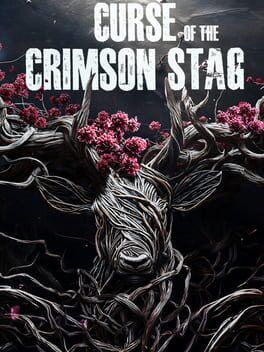

A closer look at Curse of the Crimson Stag for Nintendo Switch, its supernatural hotel investigation, psychological storytelling, and how it slots into the latest wave of narrative horror-adventure indies.
A cursed hotel, a local legend, and a camera rolling
Curse of the Crimson Stag is the kind of horror announcement that instantly feels at home on Switch. Developed by ONE-O-ONE GAMES and published by Daedalic Entertainment, it is pitched as a story-driven mystery thriller set in the abandoned Whiteroot Hotel, a once-luxury escape tucked away in the American Northwest. The hotel closed its doors 18 years ago after a string of unexplained deaths, leaving behind rotting corridors, conflicting testimonies, and a local legend about an antlered spirit in the surrounding forest.
You arrive there as Brit, a teenager desperate to get out of her small-town orbit. Her ticket out is a job on a shoestring documentary shoot, tagging along with a seasoned ghost hunter named Emily as they film inside the derelict hotel. At first it looks like a standard paranormal tourism gig, all shaky cameras and rehearsed lines, but the early footage in the reveal trailer hints that something at Whiteroot pushes far beyond staged bumps in the night.
The pitch is clear: film crew drama meets folk horror, where the question is not only what happened at Whiteroot, but how badly the hotel wants to be remembered.
Walking the blurred line between ghost story and crime scene
The hook that makes Curse of the Crimson Stag stand out is how it frames its mystery. Rather than picking a side between ghosts and human evil, it leans into uncertainty, promising a constant blur between supernatural occurrences and past tragedy. Every creak in the hotel could be a specter, a guilty conscience, or a very human attempt to keep old secrets buried.
In practical terms that means exploratory investigation across the hotel, piecing together fragmented histories from rooms that look frozen in time. Early descriptions point to searching the grounds, sifting through clues, and decoding the symbolism behind the Crimson Stag itself, a folkloric figure tied to the surrounding woods and the community’s unspoken fears.
Because Whiteroot’s downfall came with a series of mysterious deaths, the hotel is both haunted house and crime scene. Expect to pore over old guest books, damaged VHS tapes, and leftover props from the tourism boom, then weigh them against what Brit and Emily experience in the present. The tension lies in never being fully sure whether the building is operating on paranormal rules or if someone is actively manipulating the investigation from the shadows.
Psychological horror framed through a teenager’s eyes
ONE-O-ONE’s previous work, The Fading of Nicole Wilson, already experimented with first-person psychological storytelling, and that DNA is clearly present here under the new title. Curse of the Crimson Stag is not marketed as combat-heavy survival horror. Instead it is a narrative-focused thriller that wants to live in your head, not your reflexes.
Brit’s perspective is central to that. As a teenager stuck between childhood and adulthood, she is a natural fit for a story about unreliable perception. The team is promising adult themes and character-driven drama, so the horror is likely to be as much about strained relationships, manipulation, and guilt as about spectral deer skulls staring at you from the treeline.
The presence of Emily, a professional ghost hunter, sets up a deliberate clash of worldviews. Brit is looking for escape and maybe validation, Emily is looking for evidence. When the hotel starts to push back, their different understandings of what is happening could tilt the story toward paranoia. Is Emily exploiting Brit for good television, or is Brit reading too much into routine scares? The promise of “schemes, secrets, and lies” suggests that the most dangerous forces in Whiteroot might be the people holding the cameras.
The hotel itself is treated as a psychological pressure cooker. Tight corridors, decaying banquet halls, and long-neglected guest rooms give the level design a lived-in quality that makes hallucination and reality harder to distinguish. Combine that with moments of audiovisual distortion, and Curse of the Crimson Stag is poised to lean heavily into subjective horror, where the player is constantly questioning how much of what Brit sees is real.
Sound, space, and the feel of being watched
Another detail that hints at psychological intensity is the use of binaural audio. This recording technique simulates how our ears naturally perceive 3D sound in the real world, and in a horror context it is a powerful way to mess with the player’s sense of safety.
On Switch with headphones, that could become one of the game’s biggest strengths. The idea of standing alone in a pitch-dark hallway while something scrapes softly just over your left shoulder, or hearing a muffled argument behind a locked hotel room door, plays directly into the feeling that Whiteroot is always listening. Environmental audio can also subtly convey when the hotel is shifting from mundane to hostile, whether through distant antler-clacking, distorted PA announcements, or the faintest drip of water beneath the floorboards.
Visually, the game leans into grounded environments rather than surreal abstraction. The Whiteroot Hotel looks like a place that genuinely could have thrived as a tourist trap before decaying into ruin, with faded wallpaper, sagging carpets, and functional yet unsettling lighting. That grounded approach leaves room for smaller, more intimate scares: a chair that has clearly been moved since you last checked a room, a TV that switches channels in sync with Brit’s heart rate, the sudden flash of antlers in a mirrored surface.
Part of a growing wave of narrative horror adventures
Curse of the Crimson Stag lands in a busy moment for narrative horror-adventure indies on Switch. In recent years the system has hosted a steady stream of story-first chillers, from walking-sim style hauntings to detective-driven ghost stories. What separates this new project is how deliberately it straddles folk horror and investigative thriller, embracing both slow-burn atmosphere and structured mystery.
Where some horror adventures focus almost entirely on environmental storytelling, Curse of the Crimson Stag foregrounds the investigative process. It is not just about admiring a creepy hotel; it is about testing each legend you hear against evidence you can actually find, then sitting with the uncomfortable gaps that remain. That gives it a kinship with games that treat the player as a researcher, rather than a tourist, which fits nicely with the documentary framing.
At the same time, the folk-horror angle connects it to the broader indie fascination with regional myths and liminal rural spaces. Instead of cosmic horror or urban decay, Whiteroot’s fear comes from the woods just beyond the property line, from the sense that the land itself remembers what happened. For horror fans on Switch who have already made their way through the usual mansion and asylum settings, a cursed Pacific Northwest-style resort tied to a stag spirit is a welcome twist.
With Daedalic backing the project and ONE-O-ONE refining ideas from The Fading of Nicole Wilson, there is a sense that Curse of the Crimson Stag is not starting from zero. It arrives as part of a maturing subgenre where players expect meaningful choices, layered performances, and an ending that lingers in your thoughts long after the credits roll.
Why Switch players should keep an eye on Whiteroot Hotel
What makes this announcement worth watching, especially for Switch owners, is how carefully it appears to target mood and pacing over spectacle. There is no sign of action set pieces overshadowing the narrative, and the focus on exploration, puzzle-solving, and interpersonal tension feels well suited to handheld sessions where you can sink into headphones and let the hotel swallow your attention.
If ONE-O-ONE can balance its supernatural elements with a grounded look at trauma, exploitation, and the stories communities tell to mask tragedy, Curse of the Crimson Stag could end up as one of the more distinctive horror adventures in Nintendo’s 2026 lineup. It is not trying to reinvent the haunted hotel, but it is very much trying to make you question every story that has ever been told about one.
For now, Whiteroot’s doors are scheduled to swing open on Switch sometime in 2026. The teaser suggests the hotel will not give up its secrets easily, and that might be exactly what narrative-hungry horror fans are looking for.