
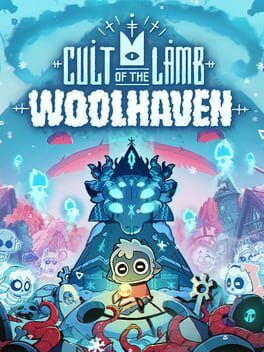
How the Woolhaven expansion quietly turns Cult of the Lamb into a late‑game sequel, reshapes roguelike runs and cult management, and why now is the best time for lapsed players to return.
Woolhaven is being sold as an expansion, but it plays like Cult of the Lamb 2 slipped into your existing save.
Massive Monster’s newest DLC bolts a frozen mountain, a forgotten lamb god and a full town‑rebuild campaign onto a game that already blended roguelike dungeons with colony sim cult‑keeping. What it delivers is less a side story and more a late‑game reimagining of how you run your flock and how you tackle runs, framed as a “what really happened to lambkind” epilogue.
With the base game hitting its lowest‑ever prices on Switch and steep discounts on other platforms, Woolhaven lands at a moment that feels engineered to pull lapsed cult leaders back in.
A late‑game expansion that behaves like a sequel
Woolhaven is locked behind late‑game progress. You are summoned by Yngya, a forgotten god of lambs, to a sacred mountain that used to be a spiritual home for your kind. In practice, that means it only truly opens up once you have already built a reasonably stable cult in the Lands of the Old Faith.
This starting point changes the tone a lot. Instead of climbing from nothing, you arrive as an established prophet confronting the buried history that enabled your rise. Siliconera’s impressions highlight how the new mountain arc, complete with its own hub town, feels like starting a whole new campaign for a different flock that just happens to live alongside your existing cult. The fiction is an epilogue, but the structure and breadth of new systems are closer to a second act.
Crucially, Woolhaven is not a one‑and‑done dungeon. It is a self‑contained progression ladder built around restoring the ruined town of Woolhaven, redeeming the spirits that once lived there, and slowly pushing higher up the mountain as the Rot spreads. Layered on top of that is a winter survival model and a ranching system that alter how you think about resources everywhere, not just on the mountain.
The effect is that if you load an old save, your familiar base becomes the warm lowlands to a whole new frontier. You are still running sermons, cooking, and arranging follower beds back home, but the real decisions live in how far you are willing to push Woolhaven’s restoration and corruption in parallel.
How Woolhaven reshapes cult management
Cult of the Lamb has always been about balancing devotion, faith and bodies in the ground. Woolhaven changes that triangle by adding cold, hunger and livestock.
Instead of purely cosmetic seasonal vibes, winter in Woolhaven is a real pressure point. The mountaintop is a place where blizzards and frostbite can wreck your followers if you do not build for warmth and food. New buildings and structures exist explicitly to keep your flock alive in the cold and to stabilize a second community up on the mountain.
At the same time, the new ranching system turns your compound into a working farm. Breeding rare animals introduces a second layer of “followers” that do not attend sermons but do demand space, care and infrastructure. They pay you back with wool and warmth, and in desperate times they can become meat for the pot.
That single change is subtly huge. Base game resource loops leaned heavily on farming plots, outhouses and devotion shrines. Ranching pushes you to re‑zone your grounds, invest in animal enclosures and think of long‑term productivity instead of just surviving the next crusade. Followers can be assigned to help tend these beasts, which creates a new min‑max question: do you dedicate more lambs to faith and work, or divert them into ranching to weather the mountain’s demands?
Then there is the Rot. Every soul you save and return to Woolhaven nudges the corruption further along. In mechanical terms, this is a progression system that pushes new threats and enemy mutations into the mountain, but thematically it reframes your usual loop. Cult of the Lamb has always been about transactional faith. Woolhaven makes that transaction more explicit by tying town restoration to a broader risk for the Lands of the Old Faith.
For day‑to‑day cult management, it translates as a new tension between pushing Woolhaven’s story forward and keeping your main base functional. You may find yourself rebuilding schedules so that work shifts, sermon times and crusade windows support regular trips into the snow without your original cult collapsing while you are away.
Roguelike runs with a mountain‑scale twist
On the run side, Woolhaven does not simply add more rooms to the pool. It gives you a new realm with its own rhythm, topping out in two substantial new dungeons that escalate the Rot, the storm‑warped wildlife and the political problems of the gods.
Structurally, runs into the mountain feel like a variant campaign. The same pick‑up‑and‑go deck of weapons, curses, tarot cards and relics returns, but these tools are now balanced around the harsher conditions and new enemy patterns. The developers have packed in new equipment and tarot modifiers that lean into survival and aggressive mobility, which help support a higher‑stakes style of play than some of the base game’s early crusades.
Because Woolhaven is post‑game territory, it is comfortable asking more of you. The new bosses and elite enemies are tuned to players who already understand when to roll, when to commit, and how to leverage relic synergies. Combined with the moral pressure of the Rot spreading each time you make progress, mountain runs feel more like a roguelike “season two” than a thin add‑on.
The rebuilding of Woolhaven itself sits in the middle of this loop. Successful expeditions feed resources back into the mountain town, unlocking more buildings, decorations, fleeces, outfits and structural upgrades. In return, that infrastructure buffs your runs and gives you more levers to pull back at your original cult base. The full list is huge: dozens of new follower forms, nearly seventy decorations and over a dozen new buildings. Most of them are not just dressing, but little nudges that alter your economic and faith curves.
Taken together, it starts to resemble a new campaign layer that runs parallel to the original story, with its own difficulty climb and reward structure.
Why Woolhaven feels like Cult of the Lamb 2
When people talk about Woolhaven feeling like a sequel, they are reacting less to a single headline feature and more to how many small systems have been added at once.
The base game already pulled from colony sims, Binding of Isaac‑style roguelikes and management games. Woolhaven does not reinvent those pillars. Instead, it thickens every layer at the same time. There is a fresh hub town to rebuild, a twist on the cosmology of the gods, winter survival rules, ranching that blends city‑builder logic into your base, and a pair of heavyweight dungeons with bespoke stakes.
That accumulation gives the expansion a sense of newness similar to starting a sequel campaign where the UI is familiar but the cadence of play is not. You are still the lamb, still preaching, still sprinting through randomised maps, yet the problems you are solving now feel different. You are no longer just overthrowing bishops to free your god. You are managing the legacy of lambkind itself while watching the cost of revelation leak into the snow.
It also helps that Woolhaven is not trivial side content. It is priced and presented as a major chapter, coming after multiple free updates and cosmetic packs. If you last checked in when the Relics of the Old Faith update landed, this new mountain arc can feel like a spiritual sequel layered on top.
Timed with the deepest discounts yet
All of this arrives just as Cult of the Lamb hits its steepest discounts so far. On Nintendo Switch, the current eShop sale marks the base game’s lowest price since launch, and similar deals are running on other platforms. That timing is not accidental.
For new players, it makes the base game plus Woolhaven bundle a more approachable entry price for something that now plays like a full two‑phase campaign. For lapsed cult leaders who bounced off after the first credit roll, it lowers the friction of reinstalling and catching up on both free updates and this new paid chapter.
If you have been waiting for a reason to return, this discount window plus Woolhaven’s scope makes a strong case to slot Cult of the Lamb back into your rotation.
How lapsed players should prepare their saves
If you stepped away months ago, you do not need to restart to see Woolhaven, but you will enjoy it more if your old cult is in decent shape. Before you leap into the snow, it is worth spending a session or two cleaning up your existing file.
First, stabilise your main base. Make sure you have a reliable loop of food and faith. That usually means refreshed farms or plots producing crops, upgraded cooking setups, functional outhouses, and a sermon routine that keeps faith from tanking if you vanish on a long crusade. The mountain’s winter pressures will pull your attention away; you want your original cult to survive brief neglect.
Second, tidy follower logistics. Reassign anyone who was on temporary jobs you no longer need, repair or upgrade sleeping quarters, and cull particularly troublesome dissenters if you left things in chaos. The smoother your home cult runs on autopilot, the easier it will be to focus on learning the new systems without bouncing between fires.
Third, brush up on combat. Take a few runs through the existing dungeons or the Relics content to re‑learn dodge timing, weapon preferences and how different curses feel. Woolhaven expects you to be comfortable with the fundamentals and will throw faster, nastier enemy patterns at you early.
Finally, consider your doctrine and building choices. Leaning into doctrines that boost work efficiency, reduce food stress and soften faith penalties when you are away will pay off during the expansion. Similarly, any structures that automate your economy or keep followers happier with less micromanagement will free you to spend more time in Woolhaven’s mountain dungeons and town‑building screens.
Once you feel like your old cult could survive a few days without you, answer Yngya’s call. Treat the first few trips to Woolhaven as scouting runs, not hard pushes. Learn which winter buildings you rely on, how ranching meshes with your base layout, and how far you can safely progress the Rot before things start to bite.
Do that, and Woolhaven will not just be more content. It will feel like you have stepped into the second season of a show you loved, created using the characters you already raised from nothing.