
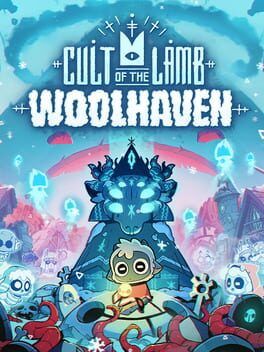

A deep preview of Cult of the Lamb: Woolhaven, covering the new Woolhaven region, ranching and mounts, fresh dungeons, buildings, weapons, and how this paid DLC could shift the tug-of-war between roguelike crusades and cult management when it launches in January.
When Cult of the Lamb first launched in 2022, its magic came from a precarious balance. Half your time was spent sprinting through twitchy roguelike runs, half was a grimly adorable cult-management sim about feeding followers, scrubbing vomit, and preaching darker and darker doctrines.
With Woolhaven, Massive Monster is finally breaking from its post-launch diet of free updates for the game’s first chunky paid expansion. Framed as the largest content drop the game has seen, Woolhaven adds an entirely new mountain region, multi-part questlines, dungeons, buildings, weapons, and a surprisingly deep ranching system built around livestock and mounts. The result looks set to tug the series’ focus back toward day-to-day cult stewardship, without abandoning the thrill of a good crusade.
A frozen pilgrimage to Woolhaven
The expansion whisks the Lamb away to the new Woolhaven region, a wintry mountain whose storms and biting cold echo the game’s mix of cozy and sinister. A lost god’s call lures your cult to this isolated peak, where the flock has splintered and winter itself needs to be reawakened.
Structurally, Woolhaven works like a second campaign layer. You still travel from your village hub, but now there is a dedicated Woolhaven track of story beats, NPCs, and side activities that grow across multiple in-game days. The region introduces its own social loop around rebuilding a scattered flock, warming the mountain, and uncovering what really happened to the lambs that came before.
Importantly, this is not just a visual reskin of the base map. Weather and seasonal theming underpin the encounter designs, the new buildings you unlock, and the way you move through the mountain. Where the base game’s biomes pushed you through short arcs toward a single Bishop, Woolhaven feels more like a layered pilgrimage, with recurring characters and quests slowly transforming the region.
Ranching: food, mounts, and a calmer kind of cruelty
The headline systemic addition is ranching. Your cult is no longer just about indoctrinating wide-eyed woodland critters and working them to the bone. Woolhaven asks you to manage herds of animals, and each creature represents a practical and sometimes uncomfortable choice.
Livestock can be raised for traditional cult needs such as food and resources. Keeping them fed and healthy means more reliable ways to keep your followers from starving, and potentially new ritual hooks as the expansion leans into darker agricultural themes. Where the original game’s farming focused on crops and cooking, ranching wraps additional layers of care, breeding, and harvesting around living animals.
The twist is that some of these beasts can serve as mounts. Instead of sacrificing or slaughtering them, you can train them to carry the Lamb into combat and around Woolhaven. Mounts are teased as more than a cosmetic flourish. Think faster traversal through the mountain’s harsher zones, new mobility options during crusades, and potentially special attacks and evasive moves that complement the Lamb’s arsenal.
Moment to moment this introduces a new axis of decision-making. Do you keep your flock of animals as a strategic food source that smooths over hunger back at camp, or invest in turning your most promising creatures into speedy mounts that tilt combat in your favor? For returning players who have already solved the base game’s food and faith puzzles, this added layer is poised to re-complicate their optimized routines.
Ewefall and The Rot: dungeons with a sharper identity
Woolhaven anchors its combat offering around two new dungeons: Ewefall and The Rot. They expand the roguelike side of Cult of the Lamb, but in more curated, thematic ways than the original four Bishop realms.
Ewefall is a mountainside gauntlet under the rule of Marchosias, a self-styled mad scientist whose experiments bend the weather to his will. He commands a wolf pack that serves both as his army and as proof of his plan to, as the expansion’s marketing puts it, cancel the gods. Expect arenas filled with blizzards and visibility tricks, enemies that rush you in coordinated packs, and set-piece encounters that play up the contrast between a frail scientist and his vicious hounds.
Deeper into the mountain lies The Rot, a more grotesque contrast. Enemies here are described as so consumed by pain that they tear themselves apart, mutating and duplicating mid-fight to stop the Lamb’s advance. That reads like an evolution of the base game’s enemy design, leaning harder into body horror as limbs split, bodies double, and projectiles fly from unexpected angles.
For players who felt that late-game crusades in the original release fell into a comfortable rhythm once you learned the tells, these two dungeons promise more chaotic, read-and-react combat. Thematically they also reinforce Woolhaven’s broader story about past sins and broken divinity, as each dungeon personifies a different kind of spiritual decay.
New buildings and weapons to rebuild the flock
On the cult management side, Woolhaven layers in fresh buildings and tools for reshaping your settlement around the new mountain economy. The expansion hints at gardening and winter-facing structures that sync with ranching, giving you more control over food, warmth, and the daily rhythms of your flock.
Garden-focused additions should give late-game players more interesting choices than simply spamming the most efficient farms and kitchens. You will be able to fold livestock, crops, and new seasonal buildings together into production chains that keep your followers fed while freeing your schedule for longer dungeons.
Weapons and combat upgrades are also part of the package. Although specifics are being kept deliberately vague, the presence of mounts and more aggressive, mutating enemies practically guarantees new synergies. You can imagine heavier crowd control options to manage splitting foes in The Rot, or precision tools that let you snipe priority targets while darting around on a mount in Ewefall’s stormy arenas.
The big question is whether these additions deepen the original’s satisfying build roulette or risk overwhelming players with too many variables. With Woolhaven positioned as endgame or post-game content for many returning cult leaders, there is room to push the complexity ceiling a little higher.
Quest structure and storytelling in a colder world
Where the base game’s narrative overarched each biome with a single Bishop showdown, Woolhaven carves up its story into a sequence of quests that weave between the new dungeons and your evolving settlement.
You will assist an ancient dragon whose eggs need hatching, a classic Cult of the Lamb twist on biblical and mythic imagery filtered through plushy horror. There is also a moth character chasing their self-described sexy destiny, a joke that matches the game’s taste for camp and creepiness colliding.
These characters appear to be threaded through Woolhaven’s wider narrative about lost gods, fallen lambs, and the consequences of devotion. Instead of a straight sprint through four difficulty spikes, you will be nudged back and forth between Woolhaven, your cult, and the new dungeons, making narrative progress in smaller but more frequent increments.
Quest design looks set to push you toward experimenting with ranching and new buildings. Objectives around raising specific animals, shaping your mountain enclave, or surviving particularly nasty runs of Ewefall and The Rot all feed into your sense of rebuilding a shattered religion rather than simply checking off another boss.
Shifting the balance between crusades and cult management
The biggest design question surrounding Woolhaven is how it will rebalance the time you spend on crusades versus tending the flock. Previous free updates generally nudged combat forward with incremental weapons and gimmicks while polishing the management layer. Woolhaven, though, explicitly doubles down on systems that live in your cult rather than in the dungeons.
Ranching is a slow-burn activity that rewards attention across many in-game days. Garden expansions and winter structures demand planning and resource investment. Even the new questlines are structured to pull you back to camp between deeper Woolhaven runs. For lapsed players who leaned into the roguelike side and treated the cult mostly as a pit stop, this expansion pushes you to care about the village as an ever-changing machine again.
That does not mean crusades are sidelined. Ewefall and The Rot look like some of the most bespoke combat zones the series has offered so far. Mounts, new weapons, and more expressive enemy behaviors all refresh the feel of each run. Yet even those combat upgrades feed back into the management layer, as the decision to divert animals into mounts instead of meals becomes another story about how far you will go for power.
The likely outcome is a more deliberate rhythm. Instead of binging three or four quick runs back to back, Woolhaven encourages alternating between a big Woolhaven push and a stretch of ranch-focused, quest-driven cult tending. It is a structure that suits returning players who already know the basics and are looking for a more intricate, interlocking web of responsibilities.
Why Woolhaven matters for returning cult leaders
As a paid expansion arriving in January, Woolhaven is clearly pitched at players who have already wrung most of the surprise out of Cult of the Lamb’s base campaign and its generous free updates. The new region is less about introducing the game to fresh converts and more about deepening the fantasy of running a living, breathing cult in a world that keeps getting stranger.
For lapsed leaders the promise is simple. When Woolhaven lands, restarting your cult will not just mean a few new decorations and weapons folded into old routines. Instead, you will be rebuilding your flock under an entirely different climate, negotiating between hungry mouths and powerful mounts, pushing into dungeons that mutate around you, and chasing quests that stitch combat and management together more tightly.
If Cult of the Lamb once felt like two great games glued together, Woolhaven aims to melt that seam. By the time winter returns to the mountain in January, the line between crusading for your god and caring for your herd might feel thinner, colder, and more compelling than ever.