
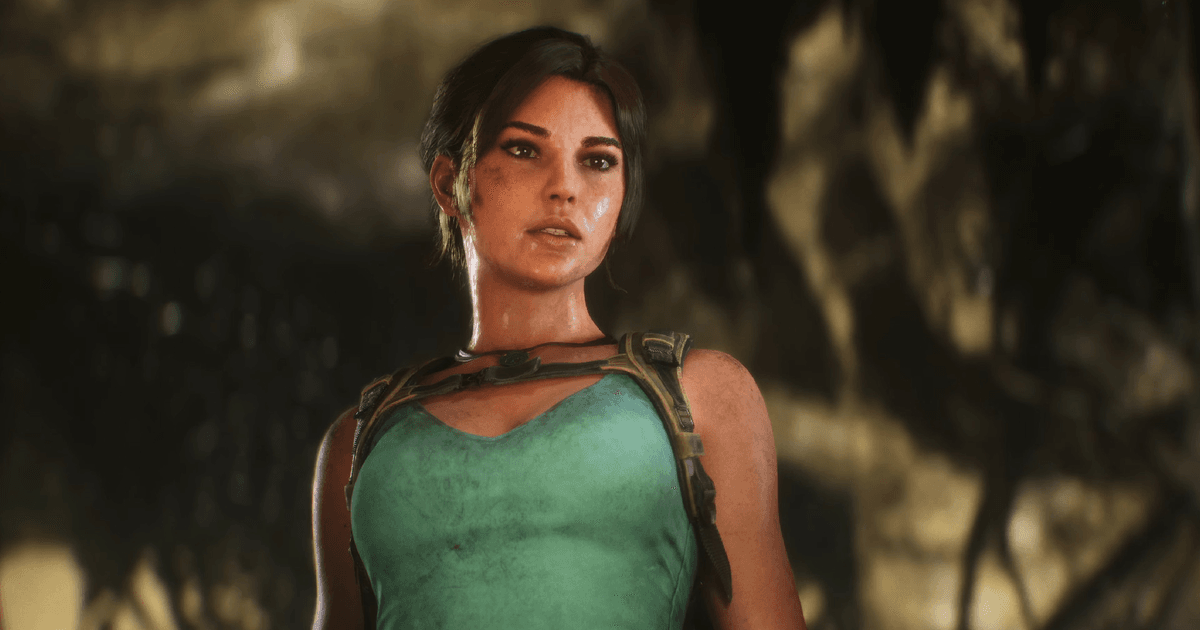
Crystal Dynamics has reportedly begun another layoff round under Embracer while Tomb Raider: Legacy of Atlantis and Tomb Raider: Catalyst remain in development.
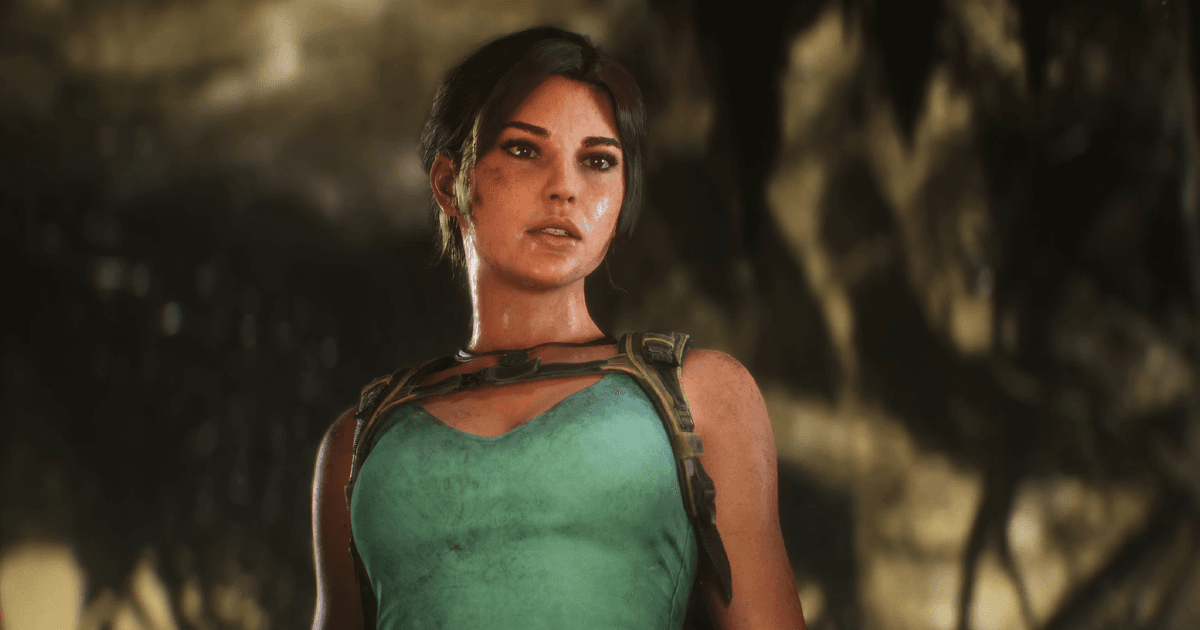
Image: eng.pressbee.net
Another cut hits Crystal Dynamics during Tomb Raider development
Crystal Dynamics is facing another round of layoffs while it is still attached to two Tomb Raider projects, creating a fresh point of anxiety around Lara Croft’s next era. Rock Paper Shotgun, citing an initial report from Vertical Slice, reports that the latest Crystal Dynamics layoffs are part of a new staff reduction by owner Embracer. The outlet says three affected developers have publicly shared news of their redundancies on LinkedIn: senior game designer Joshua Mitchell, senior environment technical artist Kevin Baker, and UI software engineer Garin R. K. Richards.
Neither Crystal Dynamics nor Embracer had offered comment on the staff reduction at the time of Rock Paper Shotgun’s report, and the full scale of the cuts has not been confirmed. That absence matters. A layoff round with only a few publicly visible names can still represent a larger restructuring, but the current record only supports naming those developers and saying there may be more affected.
The tension is immediate because Crystal Dynamics is not a dormant label being trimmed after shipping a game. Rock Paper Shotgun says Tomb Raider: Legacy of Atlantis and Tomb Raider: Catalyst are still in production. For action adventure fans, that puts the series in an uneasy place: two announced or publicly listed projects are moving through development while the studio most associated with modern Tomb Raider is being reduced again.
The latest round follows a punishing Embracer pattern
Rock Paper Shotgun describes this as Crystal Dynamics’ fifth round of layoffs since Embracer acquired the studio in 2022. The outlet points to previous cuts in March 2025, August 2025, November 2025, and March of this year before the newly reported round. That sequence is the core fact behind the current concern. Layoffs have become grimly common across the games business, but five rounds at one studio across roughly two years is a severe development environment for a team carrying a franchise with Tomb Raider’s expectations.
The Crystal Dynamics record also gives this moment a different weight than a single project-specific adjustment. According to the studio’s public Wikipedia entry, Crystal Dynamics was founded in 1992 and became responsible for Tomb Raider under Eidos in 2003, later developing Tomb Raider: Legend, Tomb Raider: Anniversary, and Tomb Raider: Underworld. The same entry lists the studio as having 273 employees in 2022, the year Embracer took ownership through CDE Entertainment. That 2022 employee number is not a current headcount, but it provides a useful reference point for why repeated reductions raise the question Rock Paper Shotgun asks directly: how many staff are left?
Embracer’s wider restructuring history is also part of the atmosphere around these Tomb Raider layoffs. Rock Paper Shotgun frames the cuts as consistent with Embracer’s recent conduct, citing earlier coverage of Piranha Bytes and Eidos Montreal layoffs. The source material does not confirm that Crystal Dynamics is at risk of closure, and it would be irresponsible to state that as fact. What is confirmed is repeated workforce reduction under the same owner while major Tomb Raider development continues.
What is confirmed about the two new Tomb Raider games
The clearest confirmed point is that two Tomb Raider titles are identified in the source material as in production: Tomb Raider: Legacy of Atlantis and Tomb Raider: Catalyst. Rock Paper Shotgun names both and says they are still in production. Beyond that, the information is uneven.
Legacy of Atlantis has the larger public footprint. Rock Paper Shotgun links to its Steam page and cites that page’s disclosure about generative AI use during development. The Steam disclosure says generative AI was used “to support some early exploration and temporary development content,” and that “any AI-assisted assets were either replaced or refined by humans in order to maintain the creative and artistic vision of the development team.” That is a store-page fact, not a promise about final quality, staffing levels, or production efficiency.
The public Wikipedia entry for Tomb Raider: Legacy of Atlantis describes it as an upcoming action-adventure game developed by Crystal Dynamics and Flying Wild Hog and published by Amazon Game Studios. That entry lists a worldwide release date of February 12, 2027 and platforms including Nintendo Switch 2, PlayStation 5, Windows, and Xbox Series X/S. Because the assignment’s source packet does not include a direct publisher announcement confirming those details, they should be treated as public listing information rather than independently verified publisher guidance.
Catalyst remains much more opaque in the provided material. Rock Paper Shotgun says Tomb Raider: Catalyst is still in production, but the source text does not include platforms, a release window, a Steam page, publisher details, gameplay descriptions, or price information. For readers searching for new Tomb Raider games, that is the practical distinction: Legacy of Atlantis has public store-page language and a broader listing trail, while Catalyst is presently a name attached to ongoing production in the available reporting.
The AI disclosure is a flashpoint, but the staffing question is separate
The Legacy of Atlantis Steam disclosure adds a second layer to the story because it appears next to, and not separate from, the latest staffing anxiety. Rock Paper Shotgun quotes the page as saying AI-assisted tools were used for early exploration and temporary content, with assisted assets either replaced or refined by humans. That wording matters because it draws a boundary around the disclosure: the claim is not that final assets were shipped untouched from generative tools, and it is not that AI is developing the game in place of artists, designers, or engineers.
At the same time, the timing invites suspicion from players and developers who have watched studios talk about efficiency while cutting staff. Rock Paper Shotgun explicitly raises the concern that Embracer could be cutting employees under a mistaken belief that generative AI can replace people, while also admitting that no one can say whether that is the case here. That is the correct line to hold. The Steam page confirms limited AI-assisted development use as described by the listing. The layoff report confirms known affected staff. The source material does not prove a causal link between the two.
For a Tomb Raider game, that distinction is especially important. The series lives or dies by authored spaces: the angle of a ledge after a jump, the pacing of a tomb reveal, the hand-authored readability of ancient machinery, and the way combat pressure interrupts exploration without flattening it. AI disclosure alone does not tell us whether those elements are in good shape. Repeated staffing losses, however, can affect the people who tune those moments, maintain tools, fix UI flow, build environments, and keep a project coherent across years of iteration.
Action adventure fans have reason to watch the craft, not the logo
Tomb Raider’s appeal has always depended on a difficult balance. Lara needs movement that feels confident without turning traversal into autopilot. Tombs need spectacle, but they also need spatial logic. Combat needs impact, yet too much shooting can drown the archaeology, puzzle solving, and lonely tension that define the series at its best. Those are production problems as much as creative goals, and they are solved by teams with enough time, continuity, and authority to revise.
That is why the Crystal Dynamics layoffs land harder than a normal corporate update for action adventure players. A studio can keep a franchise name alive while losing the institutional memory that gives encounters their rhythm. Senior designers, environment technical artists, and UI engineers do different jobs, but each role touches the feel of play. Level flow, traversal clarity, interactable spaces, menus, input feedback, and combat readability are all part of the same player-facing machine.
There is also recent context around Crystal Dynamics’ workload. A public listing for the cancelled Perfect Dark reboot describes Crystal Dynamics as having co-developed that project with The Initiative before Microsoft announced in July 2025 that production would cease and The Initiative would close. That listing attributes Perfect Dark’s troubled production to issues including personnel turnover and creative differences. The circumstances are separate from Tomb Raider and involve a different publisher, but they reinforce a broader point: Crystal Dynamics has spent recent years attached to high-pressure, high-expectation projects while the industry around it has been cutting aggressively.
Release timing, platforms, and what players can safely assume
Players looking for purchase guidance should separate what is visible from what is settled. For Tomb Raider: Legacy of Atlantis, the provided sources support saying that a Steam page exists, that it includes a generative AI disclosure, and that public listing information describes the game as an upcoming Crystal Dynamics and Flying Wild Hog project. The Wikipedia entry lists February 12, 2027 and platforms of Nintendo Switch 2, PlayStation 5, Windows, and Xbox Series X/S, but without a direct publisher statement in the supplied material, those details should be read cautiously.
For Tomb Raider: Catalyst, the safe statement is narrower: Rock Paper Shotgun says it is still in production. The provided source material does not confirm a release date, price, platforms, Steam page, collector’s edition, performance target, or upgrade path. Anyone making plans around Catalyst should wait for Crystal Dynamics, Embracer, Amazon, or an official storefront to publish specific details.
The latest layoffs do not confirm a delay for either project. They also do not confirm cancellation. The concern is about capacity and continuity, not a reported schedule change. Until Crystal Dynamics or Embracer comments, the most accurate reading is that Tomb Raider development is continuing under unusually heavy staffing turbulence.
The unanswered question is whether Crystal Dynamics can stabilize
The strongest fact in the story is also the simplest: another group of Crystal Dynamics developers has been affected by layoffs while two Tomb Raider projects remain in production. Everything else flows from that. Legacy of Atlantis has public-facing traces, including a Steam disclosure about AI-assisted tools. Catalyst is known from the reporting as an active production, but little else is confirmed in the provided material. Embracer’s repeated cuts form the business backdrop, and the lack of comment from the company or studio leaves the scale of this round unresolved.
For fans of action adventure games, the worry is not abstract loyalty to a corporate name. It is whether the people making the next Tomb Raider games will be given enough stability to build the kind of set-piece pacing, traversal confidence, puzzle texture, and combat rhythm the series demands. Tomb Raider can survive reinvention. It has done that before. What it cannot fake is the human precision behind a dangerous jump, a readable ruin, or a finale that feels earned.
Until the companies involved provide clearer statements, the responsible position is caution. The new Tomb Raider games are still in development according to current reporting, but the future of the studio behind them remains one of the most important open questions for players who care about big-budget action adventure design.