
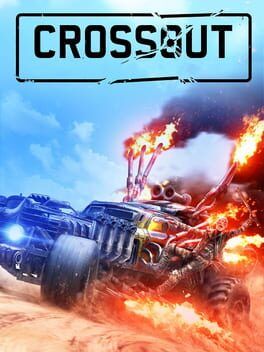
Crossout’s Track to the Future update introduces a two-mode hover wheel system, Dawn’s Children parts, plasma weapons, and new movement questions for vehicle builds.
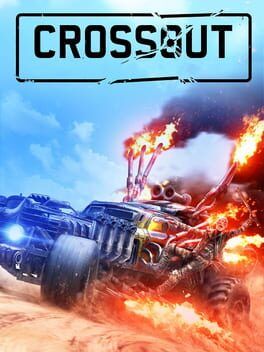
Image: IGDB
Store links: Crossout Remastered on Steam, Crossout: Horsemen of Apocalypse - War on Steam, Crossout: Ronin on Steam
Crossout’s new mobility part is the real headline
Crossout’s Track to the Future update adds a new hybrid movement option that can operate as both a wheel and a hover, giving players a way to change how their vehicle moves during a fight. SteamDB’s November 26, 2026 update entry for Crossout Remastered describes the part as having “2 modes of operation: as a wheel and as a hover,” with hover mode allowing the car to lift above the ground, move in any direction, and partially ignore bumps.
That is the concrete change that should get builders’ attention first. Crossout has always lived or died on the choices players make in the garage, but movement parts are among the most defining choices because they decide how quickly a rig can take angles, recover after contact, survive terrain, and keep weapons on target. The Crossout hover wheel addition does not simply add another part category in the sources provided. It creates a mode-switching tool, and that makes mobility a live decision during combat rather than a fixed identity chosen before queueing.
What Track to the Future actually adds
The supplied sources agree on the broad shape of the Crossout Track to the Future update. HappyGamer reports that the update adds Dawn’s Children parts, plasma weapons, and the first hover-and-wheel combination that can switch modes on the go. A PlayStation trailer listing summarized by Abancommercials describes the update as a major Crossout Remastered release for PS5 and PS4, with Dawn’s Children technology in focus and hybrid hovers and wheels shown switching movement modes mid-action.
The trailer listing also identifies new plasma weapons, an engine, and a cabin as part of the Dawn’s Children package. Those details matter because the mobility part is arriving alongside hardware that affects role and handling, not in isolation. A new cabin can change the kind of vehicle players build around. An engine can change acceleration, power budget, or overall feel depending on its in-game tuning. Plasma weapons can push players toward different engagement ranges and firing rhythms. The sources do not provide full stats, crafting requirements, energy costs, rarity, balance numbers, or unlock paths, so any hard meta ranking would be premature.
How hover-wheel switching could change Crossout vehicle builds
Confirmed first: SteamDB says the new part can function as a wheel or as a hover, and the hover state allows movement in any direction while partially ignoring bumps. The PlayStation trailer summary says vehicles transition from driving on wheels to lifting off with hovers during action. That combination points to a sharper build question than usual: do players design around ground traction, hover strafing, or the ability to swap between both?
The competitive read is straightforward. Wheels usually reward forward momentum, steering discipline, and line choice. Hover-style movement, based on the SteamDB description, opens lateral movement and terrain smoothing. A vehicle that can shift between those profiles could use wheels to travel, rotate, or conserve a familiar driving feel, then switch into hover mode when it needs to strafe, dodge, peek, or keep weapons aligned while moving across uneven ground. If the part’s final balance allows fast and reliable switching, builders may start treating mobility mode as part of their weapon cycle: drive into the fight, hover to trade, then drop back into wheel mode to reposition.
That does not mean every build becomes obsolete. The sources do not state durability, mass, power drain, acceleration, handling penalties, or whether the part has restrictions that prevent it from replacing existing movement options. Those hidden numbers will decide whether the Crossout update creates a broad meta shift or a specialized tool for Dawn’s Children-themed builds.
Combat flow may get faster, less predictable, and harder to pin down
From a shooter perspective, movement is pressure. A player who can change direction without committing to a traditional turn can make tracking harder, break aim assist expectations on console, and punish opponents who pre-aim predictable lanes. SteamDB’s note that hover mode allows movement “in any direction” is the key phrase here. If that behavior is responsive in live matches, fights could become less about chasing a wheeled target through a curve and more about reading short strafes, elevation changes, and sudden lateral disengages.
Terrain is the other part of the equation. SteamDB says hover mode lets the car partially ignore bumps, and the trailer summary mentions maneuvering across rough terrain. In Crossout terms, that could affect how often a build loses aim stability or momentum because of the map surface. A rig that can smooth out bad ground has more freedom when choosing routes, especially around industrial structures or broken lanes shown in the trailer summary. It also gives designers a reason to build vehicles that take fights in rougher sections of a map instead of avoiding them.
The risk is pacing creep. If the strongest builds gain both wheeled travel and hover-style strafing without a meaningful tradeoff, fights can tilt toward evasive rigs that are annoying to finish. If the part is fragile, costly, or difficult to mount efficiently, it may sit in a narrower role. The sources confirm the mechanic, but they do not confirm the balance levers that will determine whether it becomes a core competitive movement option.
Dawn’s Children tech gives the update a clear build identity
The Dawn’s Children focus gives Track to the Future a clean thematic lane. HappyGamer identifies Dawn’s Children parts and plasma weapons as part of the update, while the PlayStation trailer summary frames the faction around science and technology in the war against the Ravagers. The same listing references a distress call from a research facility on the northern road, the Ravagers’ attack, Mobius, the Brotherhood, Eclipse, Aris, and Oracle modules as story elements shown or referenced in the trailer.
For players who care mostly about the garage, the faction framing still has practical value. Crossout updates often land hardest when a new part package suggests a complete archetype rather than a single toy. Here, the confirmed package is mobility, plasma weapons, an engine, and a cabin. That gives builders the pieces to test whether a hover-wheel rig wants to play as a skirmisher, a mid-range plasma platform, a terrain-abusing harasser, or a more traditional vehicle that only uses hover mode when the fight gets messy.
The unanswered question is how tightly those pieces are meant to work together. The sources do not say whether the engine or cabin directly supports the new movement part, whether plasma weapons are tuned around hover mobility, or whether Dawn’s Children parts have synergies that push one obvious setup. Until those details are visible in player testing or full patch data, the safest read is that Track to the Future expands the build language rather than handing players a solved loadout.
Platforms, timing, and what to check before rebuilding
The update timing is supported by multiple listings around November 26, 2026. SteamDB lists Crossout Remastered: Track to the Future as an update for that date, and the PlayStation trailer listing supplied in the source material gives the same release date while naming PS5 and PS4. The PlayStation-focused sources describe the trailer and update in the context of Sony’s platforms, while SteamDB provides a PC-facing patch listing. The supplied material does not include price, download size, performance targets, server downtime, full patch notes, or store-page monetization details.
For returning players, the smart move is to treat the hover wheel as a test bench before tearing apart proven builds. Check how quickly it switches modes, how it handles weapon recoil and aim alignment, how much mass or power it demands, and whether hover mode exposes vulnerable parts differently than a low wheeled frame. Also watch how it behaves under pressure from ramming, explosive splash, and sustained fire. A mobility part can feel broken in a trailer and merely useful once it is carrying armor, weapons, ammo, modules, and cabin weight.
For active builders, Track to the Future is still worth immediate attention because the confirmed mechanic attacks one of Crossout’s most important decisions: how a vehicle moves while fighting. A mode-switching hover wheel gives players a reason to rethink chassis layout, firing angles, terrain routes, and disengage plans. Whether it becomes the new standard or a high-skill niche will come down to stats the provided sources have not yet detailed, but the direction is clear. This Crossout update puts movement back at the center of vehicle builds.