
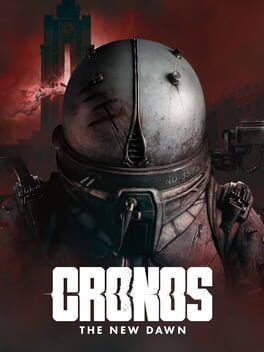

Bloober Team’s 2026 “Temporal Diver” easy mode halves enemy health, doubles Traveler health, and loosens resource pressure, dropping Cronos: The New Dawn directly into the modern debate over how forgiving survival horror should be.
Cronos: The New Dawn has never pretended to be friendly. From its launch, Bloober Team’s time‑warped survival horror asked players to live with poor visibility, ruthless enemies that merge into tougher forms if you fail to burn their bodies, and a resource economy that punishes every missed shot.
In early 2026, that tension is getting a pressure valve. A free update across all platforms will add Temporal Diver Mode, a full easy‑mode rebalancing that quietly makes Cronos one of the most interesting games in the ongoing survival‑horror difficulty debate.
How Temporal Diver Mode Actually Changes Combat
Bloober is not just slapping a “Story Mode” label on the same tuning. Temporal Diver is a structural change, anchored on two headline numbers that define every encounter.
First, enemy health is cut in half. Every shambler, hybrid, and timeline freak that used to soak up entire magazines now falls in roughly half the time. The studio confirms that damage output is effectively the same patterns, tells, and attack ranges still demand respect but the time‑to‑kill drops dramatically.
Second, Traveler health is doubled. Your suit can now absorb about twice as much punishment before you go down. Combined with weaker enemies, this flips Cronos’s default math. Where Anvil of the Collective often turned a single mistake into a death spiral, Temporal Diver lets you tank an extra hit or two, correct your positioning, and still walk away.
The net effect is that Cronos stops feeling like a razor’s edge where one missed dodge ends a run, and starts to resemble a tense but forgiving horror shooter. You still have to aim, still have to watch for enemies fusing into stronger horrors, but the margin for error is significantly wider.
Less Resource Squeeze, Same Survival Loop
While Bloober’s official notes focus on health values, Temporal Diver inevitably softens Cronos’s signature resource pressure.
On current settings, survival hinges on making every bullet count. Enemies have chunky health pools, ammo caches are tight, and healing items feel like rare artifacts. Because enemies now die in half as many hits while your Traveler can survive more damage, the whole economy stretches in your favor.
You burn through fewer rounds per fight, which naturally means more ammo left over between set‑pieces, and you do not need to chug healing items after every scrape. The same pick‑ups go further, and risky rooms that previously demanded perfect route knowledge become playable even if you are learning patterns on the fly.
Crucially, Bloober is not reworking the encounter layouts or the survival structure. You still sweep abandoned labs, juggle timelines, and decide whether to fight or slip past. Temporal Diver simply lowers the cost of choosing “fight” and cushions the punishment when your timeline management slips.
Why Bloober Is Adding Easy Mode Post‑Launch
Bloober’s own announcement leans hard on community feedback. The trailer for Temporal Diver tongue‑in‑cheek shows a weary Traveler intercepting fan complaints about the difficulty, before cutting to the promise of a new, more relaxed way to experience Cronos.
The message is direct: “We’ve heard your voices.” The studio calls Temporal Diver a mode for players who "prefer to enjoy the story without struggling with challenging encounters," and pitches it as a way to actually see the full arc of its time‑fractured narrative without hitting a wall halfway through.
Several factors likely pushed this post‑launch pivot:
Cronos built a reputation as a punishing survival horror game even by genre standards. Dark environments make situational awareness tricky, the body‑burn system can snowball fights if you are even slightly slow, and the default Anvil of the Collective difficulty leans heavily on attrition. Reviews praised the atmosphere but flagged the tuning as aggressively unforgiving.
At the same time, Cronos has quietly sold respectably, with Bloober reporting hundreds of thousands of copies moved and a healthy long‑tail audience discovering it after launch. That creates new pressure: streaming, word‑of‑mouth, and late adopters bring in players who are more curious about the time‑travel story than mastering harsh combat.
Temporal Diver is Bloober’s answer to both sides. Hardcore players keep Anvil of the Collective and the post‑game Forged in Fire mode intact. New or time‑poor players get a clearer, softer on‑ramp. The studio is not touching enemy behavior, encounter scripting, or puzzle design instead, it is pulling numerical levers that keep Cronos recognizable while drastically lowering its mechanical stress.
Where Cronos Fits in the Survival‑Horror Difficulty Debate
Every few years, survival horror circles back to the same argument: How brutal should these games be?
On one side are purists who view harsh combat and scarcer resources as the core of the genre’s identity. On the other are players who love horror aesthetics and stories but do not want runs derailed by two bad dodges. Cronos lands right in the middle of that fight.
At launch, it clearly courted the purist crowd. Limited ammo, strict healing, multiphase enemies, and a focus on mastering systems across multiple runs put it closer to Dead Space and classic Resident Evil than to cinematic horror adventures.
Temporal Diver does not abandon that lineage, but it does signal a shift in priorities. Bloober is implicitly acknowledging that accessibility and completion rates matter, even in survival horror. If a majority of players never see the late‑game time‑rift payoffs because they bounced off a spike in Sector C, then the game’s narrative design is not doing its job, no matter how lovingly tuned the hardest fights are.
Where some studios fence off story modes that dramatically declaw enemies or remove death altogether, Temporal Diver feels more like a carefully pulled brake. Combat is easier, but you still need to engage with the systems. Enemies do not turn into walking props. You can still die, still run out of ammo, still get overwhelmed if you ignore the body‑burn mechanic.
That balance puts Cronos in conversation with the wider trend: survival horror is increasingly multi‑track. There is a path for players who treat every encounter like a puzzle box, and another for players who mainly want the dread, the soundscape, and the unfolding mystery. Temporal Diver plants Cronos firmly in that modern, flexible camp after starting life as a much sharper, more niche experience.
Sidebar: How Cronos Compares to Resident Evil Village and The Callisto Protocol
Bloober’s new mode does not exist in a vacuum. It joins a growing list of survival‑horror games that are more explicit about letting players tune the experience.
Capcom’s Resident Evil Village launched with several difficulties, including the approachable Casual and Standard modes, plus the punishing Village of Shadows. Later patches went further on the accessibility side with tweaks to aim assist and extra options, all without resetting the series’ reputation for challenge. Village’s lower settings widen ammo supplies, soften enemy aggression, and shrink damage values, helping players push through even if they never fully learn the castle layouts or boss patterns.
Striking Distance’s The Callisto Protocol took a different route. Its default tuning was controversial for spongy enemies and high damage, but the studio responded with balance patches that altered enemy health, adjusted drop rates, and generally eased the grind without formally branding it a “story mode.” It was a live rebalancing of the core experience more than a distinct difficulty identity.
Cronos threads a line between those examples. Like Village, it names and isolates its easier setting. Temporal Diver sits alongside Anvil of the Collective and the unlockable Forged in Fire as a clearly framed choice. Unlike The Callisto Protocol’s broad tuning updates, it does not rewrite the center of gravity for everyone who boots the game it adds a new lane.
What distinguishes Cronos is how transparent its change is. By explicitly halving enemy health and doubling Traveler health, Bloober makes it clear that this is still Cronos, just with the numbers tilted toward exploration and story. For players used to Resident Evil’s granular options or Callisto’s stealth rebalancing, Temporal Diver is a refreshingly straightforward pitch: same horror, same timelines, less punishment.
A New Timeline for Travelers Who Bounced Off
Temporal Diver Mode will arrive as a free update in early 2026 on all current platforms, and it is likely to spark a second life for Cronos: The New Dawn.
For players who already completed the game on Anvil of the Collective or braved Forged in Fire, it is a chance to revisit favorite sequences without the same constant tension. For everyone who bounced off an early boss, or never made peace with Cronos’s harsh ammo math, it is an invitation to return, see the late‑game time fractures, and appreciate Bloober’s art direction and sound design without dreading every corner.
In a genre that used to equate accessibility with compromise, Cronos is the latest proof that you can design for both fear and flexibility. Survival horror is no longer a single narrow corridor it is a branching timeline, and Temporal Diver is Bloober’s way of saying every Traveler deserves a path through.