
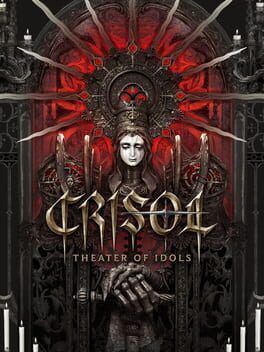

How Vermila Studios built a nightmare from Spanish Catholic imagery and folk tales, why your own blood is your primary weapon, and where Crisol sits in Blumhouse Games’ first wave of modern horror alongside Fear the Spotlight and Grave Seasons.
Note: This feature contains light mechanical and thematic spoilers for Crisol: Theater of Idols.
Crisol: Theater of Idols does not waste time telling you what kind of horror game it is. Within minutes, you are bleeding yourself to survive on the cursed island of Tormentosa, staring up at baroque statues that feel ripped from a fever-dream version of Spain’s religious processions. It looks like a classic survival horror shooter, but Vermila Studios is pulling from something far older, stranger, and more specific than the usual gothic grab-bag.
This is a game that exists because its creators refused to sand down their culture. In interviews, executive producer and Vermila CEO David Carrasco has talked about early publisher conversations where they were asked to tone down or remove the deep Spanish Catholic and folk elements that define Crisol. They walked away instead. That decision, plus a later partnership with Blumhouse Games, turned Crisol into one of the most distinct horror pitches in Blumhouse’s first publishing wave.
A twisted Hispania built from real Spanish folklore
The setting of Crisol is Hispania, a nightmarish reimagining of Spain whose beating heart is Tormentosa, an island-city that feels like Seville’s Holy Week collided with a plague pilgrimage. Carrasco and the team have cited Semana Santa processions, village patron-saint festivals, and the architecture of Andalusian towns as key inspirations. Rather than copy cathedrals and plazas 1:1, they exaggerate them into something oppressive.
You can see it in the level design. Narrow streets bend around looming churches that resemble reliquaries turned inside out. Plazas are dominated by towering pasos, parade floats reimagined as grotesque idol-stages. Everyday religious objects are twisted into instruments of control, surveillance, or sacrifice. Where a Resident Evil village might lean on generalized European gothic, Crisol’s Hispania is full of details that feel rooted in specific rituals and regional superstition.
In multiple interviews, Vermila’s leads describe growing up around stories of miracle-working saints, cursed shrines, and villages defined by their patron idol. That oral tradition becomes the core of Crisol’s lore. Each major area revolves around an “idol” that feels less like a video game boss and more like a corrupted patron saint, binding the community through fear and obligation. The result is a horror world where religion is not just window dressing, but the logic that structures politics, architecture, and even combat.
Idols, relics, and the politics of devotion
Crisol’s title is not metaphorical. The island is a theater in which idols are venerated through spectacle and blood. The term “crisol” itself evokes both a crucible and a melting pot, and Vermila leans into that alchemical vibe. Idols are not just sculptures; they are living institutions that consume resources and bodies to maintain power.
From what Vermila has shown and discussed, each idol embodies a specific warped virtue: protection that curdles into control, charity that becomes coercive tithing, martyrdom that mutates into weaponized self-harm. Processions, pilgrimages, and religious pageantry are transformed into game-wide systems of oppression. NPCs do not simply fear monsters. They fear the social cost of defying rituals that have defined their town for generations.
This is where Spanish folklore matters. Much of the horror comes from the way communal life is structured around shared beliefs, from miracle legends tied to a local chapel to village gossip about who is “favored” by a patron saint. Vermila weaponizes that familiarity, building quests and encounters around rumors, relics, and unspoken obligations. Even if you are not Spanish, the specificity gives the world a texture that makes its superstition feel lived in rather than generic.
Blood instead of bullets: designing a sacrificial combat system
The most striking mechanical idea in Crisol is also its simplest: your blood is your ammo. Instead of hoarding handgun rounds or crafting shells, you literally cut yourself to fire your weapon. That concept, according to game director and producer comments, came early and never left. It is as much a thematic statement as a systems hook.
Mechanically, it turns every combat encounter into a negotiation with your own health bar. You always have the means to fight, but that power eats into your survivability. This is familiar in horror design, where health is a resource, yet Crisol amplifies it. You are constantly judging whether this corridor of robed cultists or abomination of bone and iconography is worth another chunk of your vitality.
Vermila has framed this as a conscious response to the way sacrifice is glorified in religious and folkloric stories. Saints and martyrs are often celebrated for giving everything, but the cost is abstract. Crisol wants you to feel the cost. The more you embrace your role as a weapon, the more fragile you become, mirroring how devotion in Tormentosa erodes the self.
The system also affects pacing. Traditional survival horror gating comes from limited ammunition and key items. Here, the tension is largely internal. You are almost never locked out of fighting, which lets Vermila design more aggressive enemy behavior and arena-style setpieces without turning the game into a power fantasy shooter. Players build their own difficulty curve through risk tolerance, which dovetails neatly with the game’s themes of willing sacrifice and coerced faith.
Ritual puzzles and environmental penance
Combat is not the only place Crisol leans on sacrificial design. The team talks about puzzles and exploration that require “offering something of yourself” whether that is blood, safety, or information. Locked doors might be bound by ritual rather than simple keys, demanding that you complete an act of symbolic penance in the environment.
This could mean literally marking thresholds with your blood to consecrate or contaminate them, or aligning statues and religious symbols in ways that mimic processional routes. Instead of treating folklore as set dressing, the game’s logic often follows folk beliefs. Protective charms only work if placed correctly. Altars respond to the right combinations of relics. Even notes and environmental storytelling point to local sayings and customs.
The effect is subtle but important. Many horror games borrow biblical verses or iconography to give their puzzles gravitas, then fall back on generic code locks. Crisol tries to make the act of solving problems feel like participating in the same ritual economy that sustains the idols. When you unlock a new space, you are not just moving forward as a player; you are feeding into the system that is killing Tormentosa.
Saying no to sanitizing the culture
One of the more telling anecdotes Vermila has shared is about early publisher feedback. At least one potential partner suggested downplaying or even removing the heavy Spanish Catholic and folklore influences that permeate the game, worried that overtly local religious content would limit its appeal. Vermila walked away from those deals.
Crisol exists as it does because the team insisted that their cultural specificity is the selling point, not a liability. That decision found a better fit with Blumhouse Games, which has publicly positioned its label as a home for distinct voices rather than homogenous, four-quadrant horror. In interviews, both Blumhouse and Vermila emphasize that the partnership was built on preserving Crisol’s identity, not filing it down.
This stance also lines up with a broader trend in modern horror where regional specificity has become a strength. Just as movies like Verónica or The Platform introduced global audiences to specifically Spanish modes of fear without translation, Crisol invites players to inhabit a nightmare shaped by the rituals, architecture, and superstitions of its developers’ home.
Blumhouse Games and the business of intimate horror
Blumhouse’s move into games has been framed by the company itself as an extension of what worked in film: smaller budgets, strong hooks, and a willingness to let creators own a precise vision. Their first publishing wave reflects that philosophy more in texture than in genre.
Fear the Spotlight is a retro-flavored, PS1-era-inspired psychological horror about high school trauma and stage fright. Grave Seasons remixes farming-sim coziness with a hidden-serial-killer twist, turning daily routines into paranoia. Crisol: Theater of Idols sits somewhere between those poles as a first-person shooter that still feels grounded in character, place, and a single central mechanic.
All three projects share a few key traits. They are relatively compact in scope compared to AAA blockbusters. They are mechanically legible, built around one or two strong ideas rather than dense RPG systems. And they foreground a particular aesthetic and emotional angle: analog school horror, cozy-town dread, and sacrificial Spanish folklore respectively.
Compared to other modern horror labels and trends in games, Blumhouse’s strategy has less to do with building a unified “brand look” and more to do with curating games that could easily be elevator-pitched as movies. Insert a logline and you can see the film poster: a girl alone in a ruined school; a smiling village where one neighbor is a murderer; a blood-soaked pilgrimage on a cursed island.
How Crisol stands out among modern horror labels
Blumhouse is not the only name in town cultivating horror in games. Annapurna Interactive backs layered, often art-house scares like Storyteller-adjacent experiments and atmospheric narratives. Raw Fury, Devolver, and tinyBuild all have their own horror-adjacent portfolios, while labels like Supermassive’s The Dark Pictures Anthology lean into cinematic branching stories. Even Capcom’s renewed push with Resident Evil and indie darlings like DreadXP’s collections create unofficial “horror stables.”
Crisol gives Blumhouse’s lineup a sharper identity in that ecosystem. It is more mechanically forward than something like Fear the Spotlight, yet nowhere near a bombastic shooter in the Doom mold. Its hook is not a gimmick tacked onto an action game; the blood-supply system and folkloric setting are inseparable. Where many horror labels lean into nostalgia or fandom, Crisol feels more akin to the weird, regionally specific horror that film festivals program when they want to surprise viewers.
This positions Blumhouse Games as a sort of midpoint between prestige indie horror and mass-market survival horror. Crisol suggests that the label is willing to back games that might confuse a marketing department on paper but make instant sense in motion: a first-person shooter where the player’s health is ammo, drenched in Catholic imagery and Spanish folk ritual.
A test case for Blumhouse’s promise
In discussions about the new label, Blumhouse executives often reference the importance of “creator-led” projects and the desire to find games that could not exist anywhere else. Crisol is an early test of that ethos. It is unabashedly Spanish in its architecture, rituals, and religious unease. It forces players to physically feel the cost of empowerment through blood sacrifice. And it refuses to round off its stranger edges for a safer, more export-friendly version of horror.
If it connects, Crisol could encourage other regional studios to lean into their own folklore rather than chase broadly Americanized or generically European aesthetics. For Blumhouse, that is more than a marketing win. It is a way to carve out a corner of the horror game landscape where “Blumhouse Games” means something beyond a logo: a guarantee that the terror comes from a place so specific it could only have been made by these developers, in this context.
On Tormentosa, that context is a world where faith is theater, idols demand evidence of devotion in blood, and every bullet you fire is another cut across your own flesh. In the broader horror scene, Crisol: Theater of Idols is both a cultural exorcism and a mission statement, staking out a future where the scariest games are the ones that refuse to feel generic.