
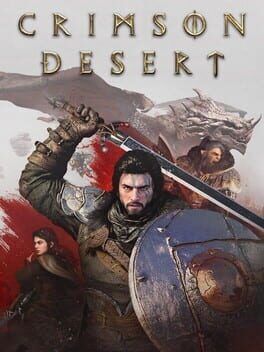

Pearl Abyss says Crimson Desert’s world is larger than Red Dead Redemption 2 and at least twice Skyrim. We unpack what that actually means for pacing, traversal, and how dense Pywel needs to be to avoid open-world bloat.
Pearl Abyss has started talking numbers for Crimson Desert’s open world, and they are not shy about the comparison. Strategic planning lead Will Powers has said that Pywel’s playable area is “at least” twice the size of Skyrim’s open world and “larger than the map of Red Dead Redemption 2.” For a genre that lives and dies by how its spaces feel to inhabit, that kind of claim does more than fuel hype. It sets expectations for pacing, traversal, and density that Crimson Desert will have to meet from the first hour of play.
How big is “bigger than Red Dead 2” in practical terms?
Pearl Abyss is avoiding hard square‑kilometer figures, but the comparisons give us a ballpark.
Rough community measurements put Skyrim’s playable space at around 37–40 square kilometers. If Crimson Desert is genuinely “at least twice” that, we are likely looking at something in the 75–80 km² range just off that metric alone. Red Dead Redemption 2’s map is trickier to pin down and depends on whether you count water and non‑story hinterlands, but it generally sits above Skyrim. If Pywel is “larger than the map of Red Dead Redemption 2,” Crimson Desert is operating in the same mega‑open‑world tier we associate with Rockstar’s western, Assassin’s Creed Odyssey, and other modern sandboxes.
The important nuance is that Pearl Abyss keeps stressing two things: this is the playable area, and the studio does not want the world to feel like a flat sprawl. Powers has described Pywel as “absolutely massive” but paired that with promises of interactivity and density instead of bragging about raw acreage alone.
Density versus distance: what a world this size demands
There are two kinds of large maps in open‑world design. There are spaces that feel big because they are full of friction, danger, and decision points, and spaces that only feel big because nothing happens between icons on the HUD. Skyrim and Red Dead 2 sit closer to the first category for different reasons.
Skyrim compresses its world into a dense lattice of dungeons, caves, ruins, and small settlements. You can set off toward a quest marker and reliably get dragged off course by a ruin on a hill or a barrow tucked into a cliff. Red Dead 2 leans more on atmosphere and simulation: long rides are padded out by encounters, emergent vignettes, and the feeling that the world continues without you. The distances are large, but Rockstar filled the gaps with behavior rather than simply more map.
If Crimson Desert truly dwarfs both, it inherits a design problem. An 80‑plus square kilometer map that is simply “more of the same” per square meter would quickly turn traversal into a chore. To avoid that, Pearl Abyss has been talking up interactivity. In interviews and previews, the studio highlights how often the game throws something at you: ambushes on the road, physics‑driven brawls, environmental hazards, public executions and rescues, bounty hunters, and dynamic events that kick off as systems collide.
The claim is that Pywel is not just a big place but a responsive one. If that holds, the increased footprint becomes less about padding hours played and more about giving the game room to stage these events in ways that feel organic instead of stacked on top of each other.
Traversal: why Crimson Desert can get away with being this big
Traversal speed is where Crimson Desert distinguishes itself from both of the games it is being compared to. Rockstar committed to the slow burn. Even at a gallop, Red Dead 2 makes you sit in the saddle and soak in the landscape. Skyrim is faster on foot and horseback but is still anchored mostly to ground travel and fast travel between discovered locations.
Crimson Desert, by contrast, is built around what Pearl Abyss calls “high‑octane” movement. From trailers and previews, we know Pywel supports grounded travel with horses and wagons, but then layers on tools that effectively compress vast distances.
You have segments with jet‑propelled mechanical suits that launch the player into the air, letting you cross valleys in seconds instead of minutes. There are sequences of airborne traversal, including clinging to gryphons or riding dragons, which massively expand your line of approach to any point on the map. Verticality also comes from climbing and parkour systems that let you cut straight up cliff faces and city walls rather than zig‑zagging along prescribed switchbacks.
This suite of traversal tools changes what “twice Skyrim” really means in terms of pacing. A world can be twice as large but feel smaller moment to moment if average player velocity is significantly higher than in a more grounded RPG. Pearl Abyss seems to be leaning into that trade: build big, then give players toys that turn long hauls into short hops, while still letting slower, on‑foot travel exist for players who want to drink in the detail.
Pacing across a continent this large
A map that outgrows both Skyrim and Red Dead 2 also changes story pacing. Linearly written RPGs risk losing tension if they constantly ask players to criss‑cross a continent for the next main quest objective. Both of the comparison games solve this in different ways.
Skyrim uses a modular main quest structure and a huge volume of side content. You almost never travel in a straight line. On the way to any primary objective, you trip over guild quest lines, Daedric shrines, and radiant side jobs. The story pacing becomes a function of how easily you are distracted. Red Dead 2, meanwhile, anchors its story progression to chapters that physically relocate the gang’s camp and subtly refocus the action across regions of the map. You work through arcs within constrained spaces, then move.
Crimson Desert appears to be chasing a hybrid approach. The story centers on Kliff and the Greymane mercenary company, which makes it natural to anchor arcs around contracts and regional conflicts. Instead of constantly ping‑ponging across Pywel, the game can stage clusters of story and side content in and around a given hub, then move the mercenaries to the next hotspot for the next act.
Pearl Abyss has also shown a taste for aggressive set‑pieces: collapsing towers, large‑scale battles, physics‑driven chaos in crowded markets. Those sequences can serve as pacing anchors across the frontier, giving each region a signature moment that breaks up stretches of exploration.
If the studio gets that rhythm right, the map’s massive size becomes a virtue. It allows story beats to breathe in different kinds of geography without requiring constant backtracking that would erode tension.
Content variety: avoiding the Ubisoft‑style content grid
Any time a studio reveals that its map dwarfs an already giant open world, the immediate worry is repetition. Players have spent the last decade clearing outcopy‑pasted enemy camps, towers, and question marks in a variety of different franchises. Sheer size is meaningless if the density is made up of the same activity reskinned.
Pearl Abyss is keenly aware of that skepticism and has repeatedly contrasted Crimson Desert’s design philosophy with check‑list open worlds. Instead of one or two activity templates stamped across the map, Pywel is pitched as a collage of smaller, bespoke scenarios.
Urban centers lean into the studio’s love of physics. Trailers show bar fights where enemies crash through tables, guards tumbling off balconies, and markets devolving into chaos as combat spills through stalls. Rural regions are more systemic, with weather and wildlife affecting encounters, hunters tracking beasts through storms, and roaming bandits setting up ad‑hoc ambushes that do not always resolve the same way twice.
Then there are the big outliers that only a large map affords. Giant monsters that stride across the landscape demand more room than a compact open world can give them. Airborne traversal lets you drop into aerial combat or mid‑air rescues. Destructible architecture means some towns and fortifications might transform over time or under the weight of the player’s choices.
The risk is that, at the scale Pearl Abyss is promising, even a generous number of handcrafted encounters can get thin if they are not supported by robust procedural systems. That is where density in Crimson Desert needs to mean more than just “lots of icons.” It needs to mean layered systems that play off each other as the player moves through them, producing new combinations of familiar ingredients.
Lessons from Skyrim and Red Dead 2
Looking at the two games Pearl Abyss is explicitly comparing itself to gives a rough template for how Crimson Desert could make its size work.
Skyrim shows how critical meaningful landmarks are. Every mountain silhouette, every lone tower on a hill, is a promise that “there is something here.” It keeps foot travel interesting by constantly dangling a new point of curiosity on the horizon. If Pywel simply stretches its geography without that same density of landmarks, the contrast with the marketing claims will be harsh.
Red Dead 2 proves the power of simulation. The map would feel dead if it did not have reactive wildlife, law responses, dynamic events, and emergent NPC behavior. Crimson Desert does not need to match Rockstar’s level of simulation, but it does need systems that respond to time of day, weather, and the player’s reputation with different factions to give travel flavor.
Pearl Abyss has one clear advantage. Where Red Dead is tightly married to grounded realism, Crimson Desert is free to be playful. Jet suits and dragon rides are not just spectacle. They are tools to vary how you traverse familiar routes once you unlock them. Revisiting an old region from the sky or blasting across its plains with new mobility can keep older content zones relevant when many other RPGs turn them into dead space.
What this means for players coming in at launch
If Pearl Abyss delivers on its claims, Crimson Desert will launch as one of the largest handcrafted open worlds in the genre. For players, that has a few clear implications.
Explorers who love wandering off the critical path could end up with a new gold standard for horizon chasing. With more physical room to hide caves, dungeons, strongholds, and secrets than Skyrim and Red Dead 2, Pywel has the potential to support that style of play for literally hundreds of hours.
Story‑first players are going to be more sensitive to pacing. If the narrative does not respect their time, the size of the world becomes a liability. How quickly Crimson Desert unlocks its faster traversal tools, how smartly it places its main quest objectives, and how flexibly it lets players fast travel will all determine whether its map feels invigorating or exhausting.
Finally, live‑service expectations hang over any game of this scale now, even if Crimson Desert is primarily a single‑player experience. A continent that starts larger than Red Dead 2 and twice Skyrim gives Pearl Abyss a lot of real estate to expand into through post‑launch updates. New regions do not have to bolt on awkwardly at the edges; they can be doors in already‑existing cities, islands off the coast, or subsurface areas beneath familiar locations.
The promise of Crimson Desert’s map is not just that it is bigger than two of the genre’s landmarks. It is that Pearl Abyss understands size alone is a trap and is willing to weaponize scale only alongside density, traversal freedom, and systemic variety. If Pywel can marry all three, that “twice Skyrim, bigger than Red Dead 2” claim may end up feeling less like marketing bravado and more like an understatement.