
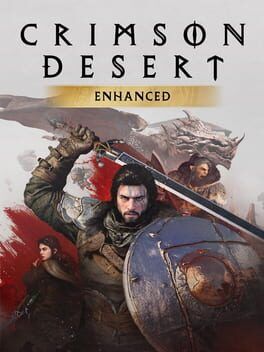
Pearl Abyss Europe CEO Lybee Park says Crimson Desert critics reviewed a pre-launch build under time pressure, while reported 6 million sales have reframed the debate around the open-world action game.
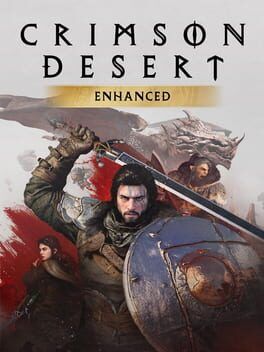
Image: IGDB
Store links: Crimson Desert Enhanced on Steam
Pearl Abyss is now arguing over context, not survival
Pearl Abyss Europe CEO Lybee Park has addressed one of the stranger gaps around Crimson Desert: a 77 Metacritic score, as cited by Video Games Chronicle, Kotaku, TheGamer and Wccftech, sitting beside reported blockbuster commercial performance. Kotaku described the game as having reached a 6 million sales milestone, while Wccftech reported more than 6 million copies sold and $427 million in revenue.
That contrast changes the conversation. A lower-than-expected review average can damage the first read on a large open-world action game, especially one sold on scale, spectacle and the promise of emergent discovery. But once a game is reportedly moving millions of copies, the question shifts from whether the reviews slowed it down to what, exactly, those reviews captured.
Park’s answer, given in an interview with The Game Business and quoted by multiple outlets, is that critics and players were not always judging the same experience. She said reviewers played a build that was “not the exact same version as the launch game,” and that the review window limited the kind of wandering Crimson Desert is built to reward. Park also explicitly said “both parties have fair points, especially the critics,” which matters. This was framed less as a dismissal of criticism than as an argument that the game’s rhythm did not fit neatly inside a pre-launch review sprint.
Park’s case rests on build timing and open-world pacing
The central claim from Pearl Abyss is straightforward: the version critics reviewed was different from the launch version, and the structure of reviews pushed many critics toward the main quest. According to Video Games Chronicle’s account of The Game Business interview, Park said Crimson Desert’s “unique charm is spread all over” its world, including hidden details and freedom to explore beyond “common expectations.”
That is a familiar defense for sprawling open-world games, but it is especially pointed here because Crimson Desert’s pitch lives in motion. Its action is built around momentum, spectacle, traversal and violent bursts of improvisation. If a player is moving from objective marker to objective marker under embargo pressure, they may still see the campaign, the combat basics and the broad shape of Pywel. They may not see the looser connective tissue that turns a map into a place.
The tension is that reviewers are also supposed to evaluate whether that connective tissue works under normal play pressure. If a game’s best ideas require dozens of unhurried hours to surface, that can be a strength for patient players and a structural problem for critics trying to assess pacing, story focus and mechanical overload. TheGamer noted that lower-end reviews criticized “lack of narrative depth” and an “overabundance of unfocused systems,” while its own review praised the game’s “massive and beautiful world” and “fluid combat.” Those are not mutually exclusive reactions. They describe a game whose high points may be easiest to find when the player is allowed to roam, but whose weaknesses can become sharper when the mainline is pushed hard.
The review build issue is stronger because Crimson Desert changed quickly
Park’s argument gains weight from the patch record cited in the reports. Kotaku noted that Crimson Desert received a day-one patch and a large update in its first week, with the latter including substantial system changes such as adjustments to inventory limitations that had frustrated many reviewers. Video Games Chronicle also reported that Pearl Abyss has continued improving the game since its March release with patches and updates, including new difficulty levels, storage changes and graphical improvements.
That does not erase launch reviews. Critics can only review the code provided under the conditions set by publishers and platform holders, and pre-release access exists precisely so buyers have independent assessments near release. If an early build has rough inventory limits, rough performance, awkward tuning or missing quality-of-life changes, those issues are part of the review experience.
But it does complicate the shelf life of a score. In action-adventure terms, Crimson Desert sounds like a game where friction matters enormously. Inventory pressure can break the tempo of exploration. Difficulty tuning can sour combat encounters that should feel like set pieces. Graphical improvements can change how a world communicates distance, spectacle and reward. A patch cannot turn a weak story into a great one overnight, but it can change the feel of the journey around it.
Kotaku also reported that some reviewers had substantial time with the game, including one cited example of over 100 hours before assessment. That is an important counterweight to the idea that critics simply rushed. Park’s broader point is less about total hours and more about the kind of hours. A hundred hours spent trying to reach a verdict under deadline is different from a hundred hours spent getting lost because the world keeps pulling back.
Six million reported sales make the score less decisive, not irrelevant
The reported Crimson Desert sales figures are the reason Park’s comments landed with force. A 77 Metacritic average can suggest a capable but uneven game. Six million copies sold, as reported by Kotaku and Wccftech, suggests an audience willing to accept that unevenness in exchange for scale, combat, exploration and spectacle.
That does not prove critics were wrong. Sales are not a clean measure of quality, and Kotaku made a similar point when discussing the lack of any necessary correlation between commercial performance and artistic merit. Strong sales can reflect marketing, curiosity, platform hunger, streamer momentum, word of mouth, genre appetite, patch improvements or a combination of all of them.
What the sales do prove, if the reported milestones are accurate, is that the review average did not define Crimson Desert’s market ceiling. The game appears to have found an audience beyond the critical consensus, particularly among players drawn to sandbox discovery and combat-driven open worlds. Kotaku reported that the game climbed to the top of the Steam charts and remained there as more players became fans. Wccftech framed the release as a major success for Pearl Abyss, especially given the Korean studio’s move into a large single-player open-world console-style production.
There is a small sourcing wrinkle worth keeping clean: Kotaku’s supplied URL slug refers to “7 million,” but the provided headline and article text cite 6 million. Wccftech also cites over 6 million. Based on the supplied material, 6 million is the supported figure here.
The console angle may be as important as the critical debate
Park’s comments also sit inside a larger platform story. Wccftech quoted her saying “console is the dream goal,” while explaining that the Korean game industry is better known for PC and that Pearl Abyss wanted to understand console fans’ needs and language. That gives the Crimson Desert reviews explained debate a business edge: Pearl Abyss is not only defending a score, it is defending a transition into a market where first impressions, performance and controller feel carry enormous weight.
For an open-world action game, console credibility is built in the hands. Combat rhythm, camera recovery, traversal, input response and cinematic scale all have to survive living-room distance and long sessions. A score in the high 70s can be survivable if players feel the game’s best moments are generous and repeatable. It becomes more damaging if the audience hears that the game is technically unstable, overstuffed or narratively thin.
That is why the patch cadence matters for Pearl Abyss Crimson Desert strategy. Continued updates can pull a live conversation away from launch-week complaints and toward the current version. Video Games Chronicle reported that Pearl Abyss has added or adjusted difficulty levels, storage and graphics through post-launch support. Kotaku described the game as already being meaningfully different by the end of its first month. For players arriving after the sales spike, the practical question is less “what did the first score say?” and more “which version am I buying now?”
Switch 2 plans raise the preservation question
Pearl Abyss is also looking beyond the initial platforms. Video Games Chronicle reported that Pearl Abyss told shareholders in August it was working on a Switch 2 version of Crimson Desert planned for the first half of the following year. The studio said the goal was to preserve the game’s “signature graphics, action, and open-world experience” rather than produce a simple port.
According to that shareholder update as quoted by VGC, the Switch 2 version had reached a “playable baseline,” with Pearl Abyss conducting technical reviews around performance optimization and quality standard compliance. That language is cautious. It confirms work, a target window and a playable state, but it does not confirm final performance, resolution, feature parity, price, upgrade path or an exact release date.
For readers weighing whether to wait, the available guidance is limited. If you want the game now, the sourced reports point to a version that has already received meaningful post-launch fixes. If you are specifically interested in Switch 2, the source material supports a planned first-half release window for next year, but not enough detail to judge whether the port will preserve the combat rhythm and open-world spectacle that Pearl Abyss says are essential.
The fairest reading of the divide
Park’s explanation is persuasive in one respect and incomplete in another. It is persuasive because Crimson Desert appears to have changed materially after the review build, and because a game built around discovery can suffer when played like a forced march. It is incomplete because review deadlines and pre-launch builds are part of the release system publishers choose to participate in. If critics are handed an imperfect version close to launch, their scores will reflect that experience.
The more interesting lesson is that Crimson Desert’s reputation is still moving. The Metacritic 77 remains part of the record. So do the complaints about story depth and system sprawl reported by outlets covering the reception. But the reported 6 million sales figure means the game’s audience conversation did not stop at that number. Players appear to be responding to the sweep of Pywel, the combat, the scale and the promise of getting lost between authored set pieces.
For an action-adventure game, that is the knife edge. Pacing is everything. Push too hard through the main path and the seams show. Slow down and the world may start doing the work Pearl Abyss says critics had too little room to see. Crimson Desert’s reviews explained, then, is not a clean case of critics versus players. It is a case study in timing, patch culture, open-world design and the commercial power of a game whose best moments may arrive off the golden path.