
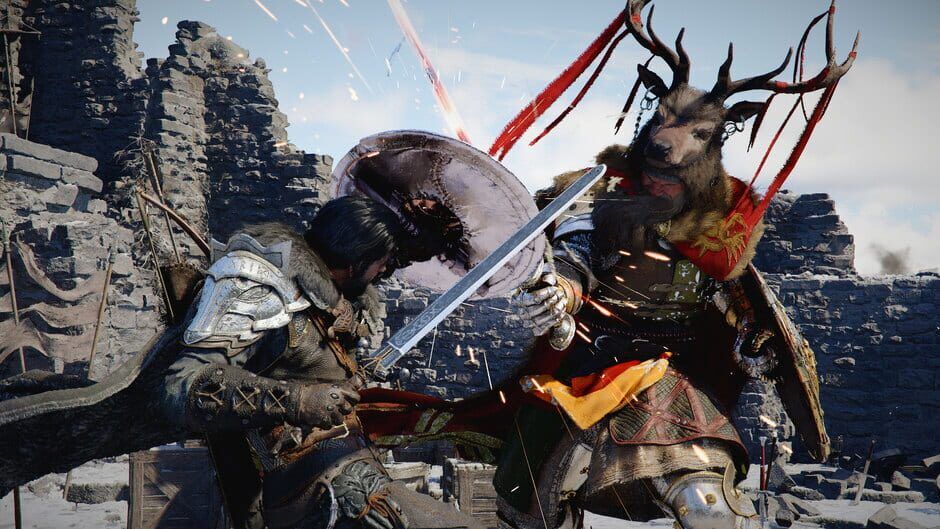

Crimson Desert’s final PC specs and console performance modes are out. We break down what they really mean for frame rate, image quality and optimization, and pick the safest platform to buy at launch.
Pearl Abyss has finally put real numbers behind Crimson Desert’s flashy trailers. PC requirements, console performance modes and even handheld targets are now public, which means we can finally answer the big question hanging over this sprawling action RPG: is it actually ready for launch, and on which platform is it safest to buy?
Below, we will walk through the new PC specs and console modes, what they imply about optimization and image quality, and then narrow it down to the versions that look most trustworthy on day one.
PC requirements: ambitious visuals, surprisingly modest baseline
Crimson Desert looks like a showpiece for Pearl Abyss’ BlackSpace engine, so many expected a hardware killer. The official requirements tell a more nuanced story.
On the low end, the minimum spec sticks to older, very common gear. Think 6‑core mid‑range CPUs from several years ago and mainstream GPUs on the level of a GeForce GTX 1060 / RTX 2060 or Radeon RX 580 / 5600 XT. That lines up with the tone from Rock Paper Shotgun and several tech breakdowns, which all stress that the minimums are not outrageous for a huge open world.
That baseline suggests Pearl Abyss has invested real time in scaling. Texture memory budgets, crowd density, foliage density and post processing should all have aggressive low presets so that older hardware is not immediately choked. It also implies that the engine is prepared to fall back to simpler lighting and lower shadow quality, rather than insisting on heavy ray tracing everywhere.
Once you move into the recommended and “high” tiers, the expectations climb in a way that makes sense for the visuals Pearl Abyss has been showing. For 1440p at 60 frames per second, the specs land around a modern 6‑core or 8‑core CPU such as a Ryzen 5 7600X or Core i5‑12600K paired with a GPU roughly in RTX 4070 / RX 7700 XT territory. That is steep, but in line with other cutting edge open world games that lean on heavy volumetrics, high quality shadows and big draw distances.
The 4K targets border on aspirational. Official guidance points toward high end GPUs of the last one or two generations and plenty of system RAM, which implies Crimson Desert is fully intending to soak up available VRAM with large textures and long distance detail. Upscaling support such as DLSS and FSR is central here, not an optional bonus. If you want 4K without sacrificing frame rate, you are expected to use those tools.
The overall picture on PC is that the game is flexible rather than brutally locked to only the newest parts. If you are willing to accept lower settings and a 1080p or 1440p target, you can get in with very reasonable hardware. Pushing visual settings towards “console quality” and beyond, especially with ray tracing enabled, will demand a much beefier machine.
Console performance modes: three very different experiences
On consoles, Pearl Abyss is offering clear choices between smoothness and spectacle. The specifics vary a little by machine, but the pattern is the same: a 60 fps driven mode, a 40 fps hybrid mode tuned for 120 Hz screens and a 30 fps quality mode that pushes ray tracing and image stability.
PS5 and Xbox Series X: the mainline experience
PlayStation 5 and Xbox Series X share the same three named modes.
Performance mode targets 60 frames per second at 1080p, with ray tracing set low and a focus on responsiveness. Pearl Abyss is also offering an uncapped option for players with VRR displays, which suggests the engine often has enough headroom to exceed 60 in simpler scenes. Image quality will not be razor sharp on a 4K screen at that resolution, but temporal reconstruction should help clean up the worst aliasing.
Balanced mode is effectively the current gen “cinematic” compromise. It renders at a lower internal resolution, around 1280p, and upscales to 4K using FSR 3. Frame rate is capped at 40 fps, which feels smoother than 30 while still leaving more GPU time for effects and draw distance. This mode assumes you have a 120 Hz capable display so that 40 fps can divide evenly into the refresh rate.
Quality mode is built for players who value image stability over responsiveness. It renders around 1440p internally and upscales to 4K, while also raising ray tracing quality to a high preset. The target here is 30 frames per second. This is where Crimson Desert should look closest to the pre‑release trailers on a living room TV, with richer lighting, more stable shadows and cleaner foliage, but combat will feel notably heavier.
The fact that PS5 and Series X share targets so closely points to a fairly evenhanded approach to optimization. Pearl Abyss does not seem to be leaning heavily into bespoke features for either platform outside of reconstruction tech. Internally, that usually suggests confidence in the engine’s scalability and a robust cross platform toolchain.
PS5 Pro: the console showcase
Where things become more interesting is on PS5 Pro. Eurogamer and IGN highlight that every mode on Sony’s upgraded machine steps up compared to the base PS5.
Performance mode still focuses on high frame rate, but now uses PSSR upscaling from a 1080p base to a much cleaner 4K presentation, while keeping ray tracing at a higher level than on base hardware. This implies the Pro’s extra GPU power is being funneled directly into better lighting and sharper reconstruction, without sacrificing responsiveness.
Balanced mode jumps to a 1440p internal resolution before upscaling to 4K. Frame rate again targets 40 fps, but Pearl Abyss notes that VRR displays can see this float higher, into the high 40s in lighter scenes. That suggests that the Pro has enough surplus horsepower that the 40 fps cap is about consistency rather than a hard limit.
Quality mode on PS5 Pro is the real headline. Pearl Abyss is promising native 4K at 30 fps plus ultra level ray tracing presets. If the developer actually holds this in heavy city hubs and large battles, it would mark Crimson Desert as one of the visually most impressive console releases in years. It also hints at a confident, late stage optimization pass, because native 4K with high end RT is not something you casually claim on fixed hardware.
The existence of such a strong Pro tier build also feeds indirectly back into PC expectations. It suggests the BlackSpace engine is efficient on AMD style hardware and that console level settings should be well tuned on PC for similar GPUs, rather than feeling like a sloppy port.
Xbox Series S: playable, but clearly compromised
Xbox Series S is the outlier and it shows. Instead of three modes, it gets a stripped down pair that tell their own story about the game’s scale.
Performance mode runs at up to 720p, targeting 40 fps and completely dropping ray tracing. That resolution is very low for a modern living room TV, so even with upscaling, you should expect soft edges and visible shimmering on fine details like foliage and distant geometry. The 40 fps target indicates that the CPU and GPU together are struggling to maintain 60 in this big open world once you factor in crowds, physics and weather.
Quality mode raises the bar to 1080p at 30 fps, still without ray tracing. This is the mode that will probably look the least rough, but it will also feel the least responsive. The lack of any ray traced lighting, even at a low preset, strongly implies that the memory and bandwidth budget on Series S is too tight for Crimson Desert’s higher end features.
In practice, this reads like a machine that is being asked to do more than it reasonably can for this particular game. If you absolutely must play on Series S you will have options and the game should be stable, but you are looking at the most visually cut back version on any platform.
What the specs say about overall optimization
Reading across PC, consoles and even the Mac and handheld specs, a picture of Pearl Abyss’ priorities starts to emerge.
First, the presence of a very forgiving minimum spec on PC and a fully supported Series S version indicates careful attention to scalability. That usually means a well structured settings menu, aggressive level of detail scaling and tuned options for shadows, reflections and crowds. Crimson Desert does not look like a brute force port that only cares about high end rigs.
Second, the proliferation of frame rate options across consoles 60 fps modes, 40 fps balanced presets and 30 fps quality settings suggests an engine that can be cleanly budgeted for different targets. Developers do not offer a 40 fps mode unless they are closely tracking GPU time per frame and know exactly how much headroom they have for effects and resolution.
Third, the heavy reliance on upscaling, even at the high end, is a clear sign that Pearl Abyss is chasing image stability rather than pure native resolution. That is a smart call for a game with huge vistas, dynamic weather and dense combat. As long as the reconstruction is stable and ghosting is kept under control, the net result should be a clean, sharp image with manageable performance costs.
Finally, the existence of a genuine native 4K, ultra RT build on PS5 Pro hints at strong low level optimization. When a developer can squeeze that much out of fixed hardware, it is usually because they have spent real time optimizing streaming, culling and CPU side systems so that the GPU can be fully dedicated to pixels.
None of this guarantees a flawless launch. Streaming hitches, bugs and unexpected CPU bottlenecks can still appear once millions of players hit the servers. But the structure of the specs themselves points toward a studio that has thought seriously about performance rather than bolting it on at the end.
Which platform is the safest buy at launch?
For anyone trying to decide where to play Crimson Desert on day one, the specs point to three tiers of “safety.”
At the top sits PS5 Pro. It has the widest range of attractive options, from a very strong 60 fps oriented mode to a native 4K, ultra RT showpiece. The fact that every mode is upgraded compared to base PS5 suggests it is the version Pearl Abyss is most eager to show off. If you own a PS5 Pro and a good 4K or 120 Hz display, this is the console build that carries the least risk and the most upside.
Right behind it is a tie between base PS5, Xbox Series X and a reasonably powerful PC. On consoles, both mainline machines offer clean 60 fps targets, solid 40 fps and 30 fps alternatives and broadly similar image quality. If history with other multi platform releases is any guide, PS5 may enjoy slightly faster loading and marginally better average frame rates, but nothing in the published specs suggests a dramatic gap. Your choice here can safely rest on controller preference, friends list and ecosystem.
On PC, if your hardware meets or exceeds the recommended spec for 1440p at 60 fps, you will likely enjoy the smoothest overall experience, provided you are comfortable tinkering with settings and using DLSS or FSR. PC also gives you the most long term flexibility if Pearl Abyss pushes out heavier RT presets or higher resolution texture packs later. The risk is variance. PCs come in countless configurations and the odds of encountering configuration specific issues at launch are always higher than on fixed consoles.
Near the bottom, but still viable, is a lower mid range PC that only just clears the minimum. The game should run, and carefully chosen settings will probably deliver a decent 30 to 45 fps experience at 1080p, but you should go in expecting to compromise on foliage, shadows and post processing.
The clear outlier is Xbox Series S. The specs say it will be playable, but the concessions in resolution, frame rate and lighting are significant enough that it feels more like a “nice to have” port than a version you should pick as your main way to experience Crimson Desert. If Series S is your only option, wait for post launch impressions and performance tests rather than pre ordering.
Verdict: a cautiously optimistic launch picture
Crimson Desert’s final specs tell a story that is more reassuring than many feared. PC players are not locked out unless they own the latest hardware, and current gen consoles get a thoughtful spread of performance options rather than a single one size fits all mode. The picture that emerges is of an engine that scales well and a studio that has learned hard lessons from the last few years of rough PC launches.
There are still question marks that only real world testing can answer. How stable is that native 4K, ultra RT mode on PS5 Pro in the busiest cities? Does the 60 fps mode on Series X and PS5 hold during massive field battles? Can mid range PCs avoid traversal stutter in heavily built up hubs?
For now, though, if you are looking to lock in a launch copy, PS5 Pro looks like the safest bet, followed closely by base PS5, Series X and a PC that lands near or above the official 1440p 60 fps tier. Everyone else should wait a few days for benchmarks and player reports before braving the sands of Pywel.